The right size for a tattoo is the size that gives every detail in the design enough room to stay clear for years, on a part of the body where it fits the shape. That is usually a little bigger than people first imagine. Ink softens and spreads slowly under the skin as it ages, so a design packed into a tiny space can look sharp on the day and blurry a few years later. There is no single correct number, but once you know what drives size, you can walk into a consultation with a much better idea of what to ask for.
The Short Answer
If you only remember a few things, make it these:
- Size follows detail. The more small parts a design has (faces, lettering, fine shading, tiny symbols), the bigger it needs to be.
- Simple designs can go small. A bold outline, a single symbol or a short word can work at a small size if the lines are clean and not too close together.
- The body part sets the frame. A design should fit the shape of the area it sits on, not just fill a square on the stencil.
- Style changes the rules. Bold traditional work holds up well small; realism and portraits need much more room.
- Your artist's advice matters. If an experienced artist suggests going bigger, it is usually about how the tattoo will look in ten years, not about charging you more.
Why Size Matters More Than It Looks
A fresh tattoo is the sharpest it will ever be. Over the following years, the ink settles and spreads very slightly in the skin, and sun, skin changes and everyday wear soften the edges a little more. On a large design with clear spacing, that softening is barely noticeable. On a tiny design, the same amount of spread can close up the gaps between lines, so letters merge, small faces lose their features and fine details turn into a smudge.
This is the reason so many artists push back on very small, very detailed requests. It is not that small tattoos are bad; plenty of small tattoos age well. It is that the design and the size have to suit each other. Our article on whether fine line tattoos fade or blur goes deeper into how delicate work ages, and the guide to preventing fading covers what you can do to slow it down.
Lines packed too tightly can also cause trouble on the day itself. Skin is not paper, and a line that goes in a fraction too deep can spread under the surface. Our guide to tattoo blowouts explains why that happens and why it shows up more on small, tight designs.
Size the Design to What's in It
The most useful way to think about size is to look at the smallest detail in the design and ask whether it has room to breathe. A few common cases:
Lettering and script
Words are where size problems show up first. The loops inside letters like "e", "a" and "o" are small, and once they fill in, a word becomes hard to read. As a loose rule of thumb, many artists prefer lowercase letters to be no smaller than about a centimetre tall (a little under half an inch), and more for thin or ornate scripts. Longer quotes need a longer space, which is why a full sentence often works better along a forearm or collarbone than squeezed onto a wrist. Our lettering and script guide covers fonts and spacing in more detail.
Faces and portraits
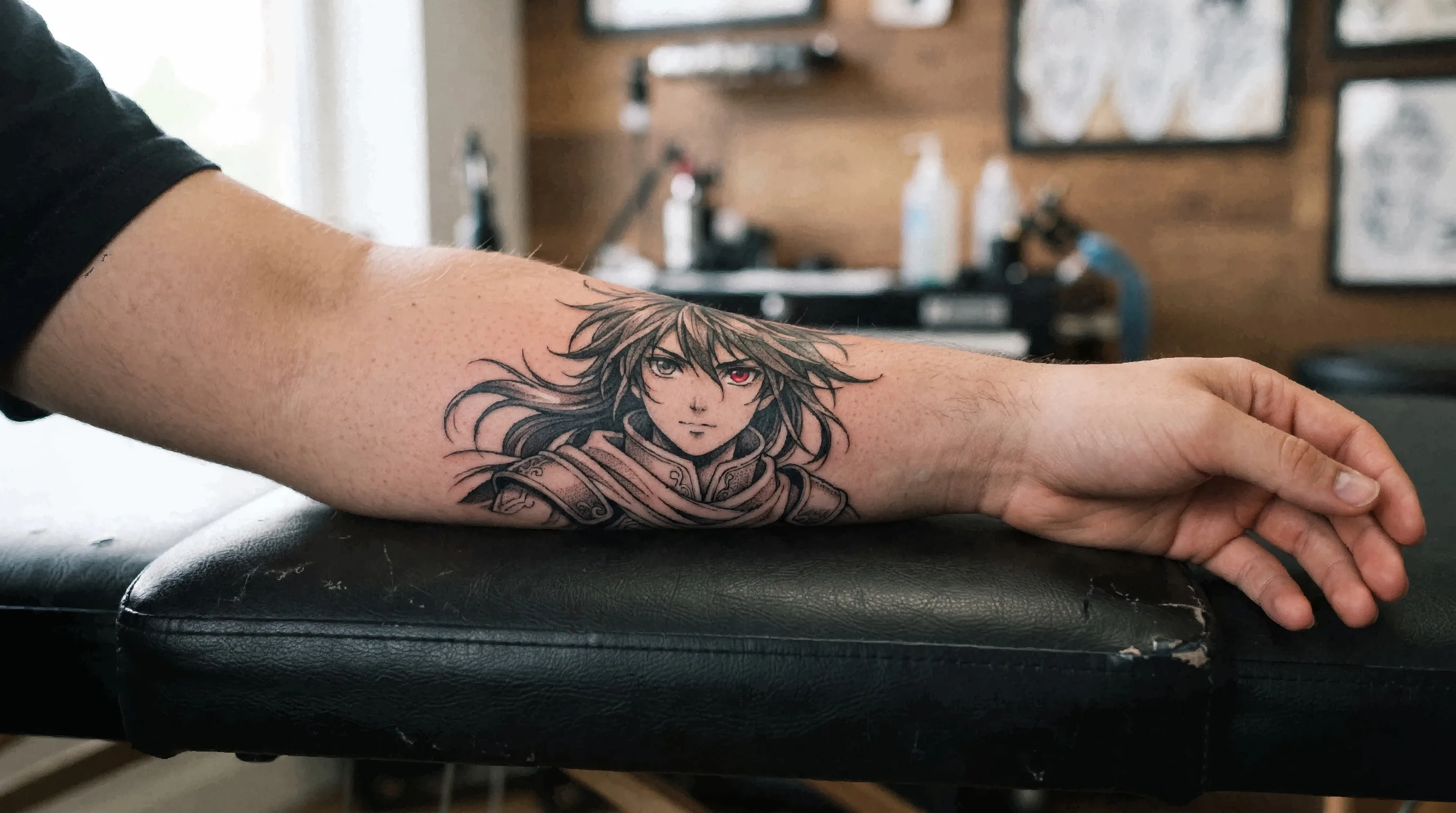
A face carries a lot of information in a small area: eyes, the shape of the nose, the corners of the mouth. Shrink a portrait too far and those features have nowhere to go, so the likeness disappears as the tattoo heals. Realistic portraits of people and pets usually need a good amount of space, often at least the size of your palm and frequently bigger. If you want something small, a simpler, more stylised version of the face (or a symbol that stands for the person) will age far better than a tiny realistic one.
Fine shading and texture
Soft gradients, fur, feathers and fabric folds all depend on small changes in tone sitting close together. At a larger size, the artist can build those gradually. At a small size, they tend to merge into one flat grey. If a design you love has a lot of texture, plan to give it room, or ask the artist to simplify it for a smaller version.
Simple symbols and outlines
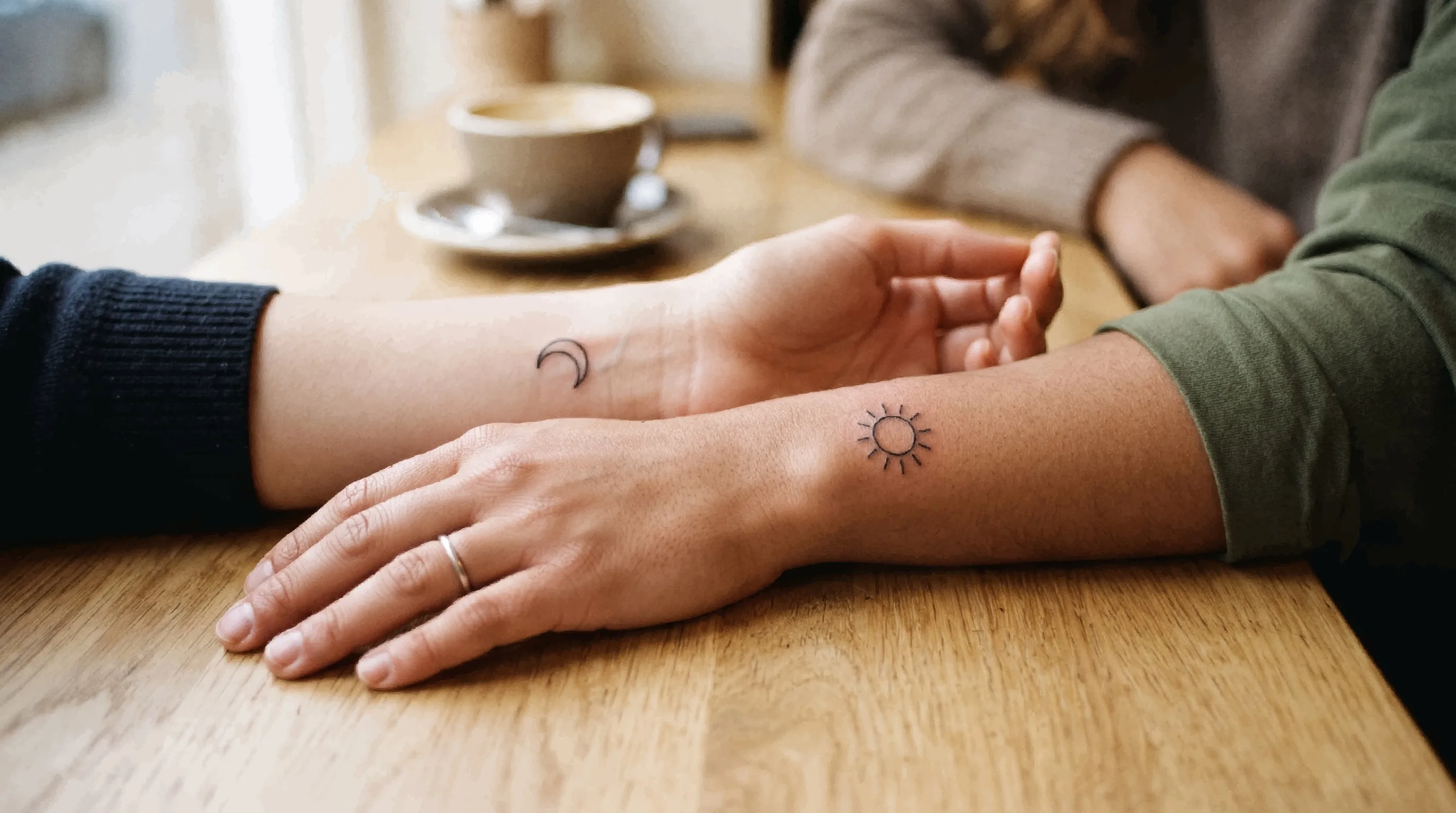
A clean outline, a small heart, a moon, an initial or a single bold shape can be tattooed quite small and still hold up, as long as the gaps inside it are not tiny. These are the designs that genuinely suit a minimalist size. Our small tattoo ideas are a good starting point if you know you want something subtle.
How Placement Sets the Size
Every part of the body has a natural shape and a natural size range. A tattoo that fits that shape looks deliberate; one that ignores it can look like a sticker. Before you settle on a number, think about where it is going:
- Inner forearm. Flat and long, good for vertical designs and lettering. Wide designs can wrap round the arm and look different from each angle.
- Outer forearm and calf. Generous, firm areas that suit medium pieces with real detail.
- Upper arm and shoulder. A shoulder cap or outer upper arm works well for rounded designs that follow the muscle.
- Ribs, sides and back. Large areas that suit tall, flowing designs. Small tattoos here can look lost in the space.
- Wrists, ankles and behind the ear. Small spaces that suit simple, small designs, not detailed ones.
- Hands and fingers. Very limited space, and the skin wears quickly, so bold and simple is the only reliable approach.
Placement also affects pain, how visible the tattoo is and how long it takes. Our tattoo placement guide covers all three, and the hand and finger tattoo guide explains why those spots in particular need extra care with size and detail.
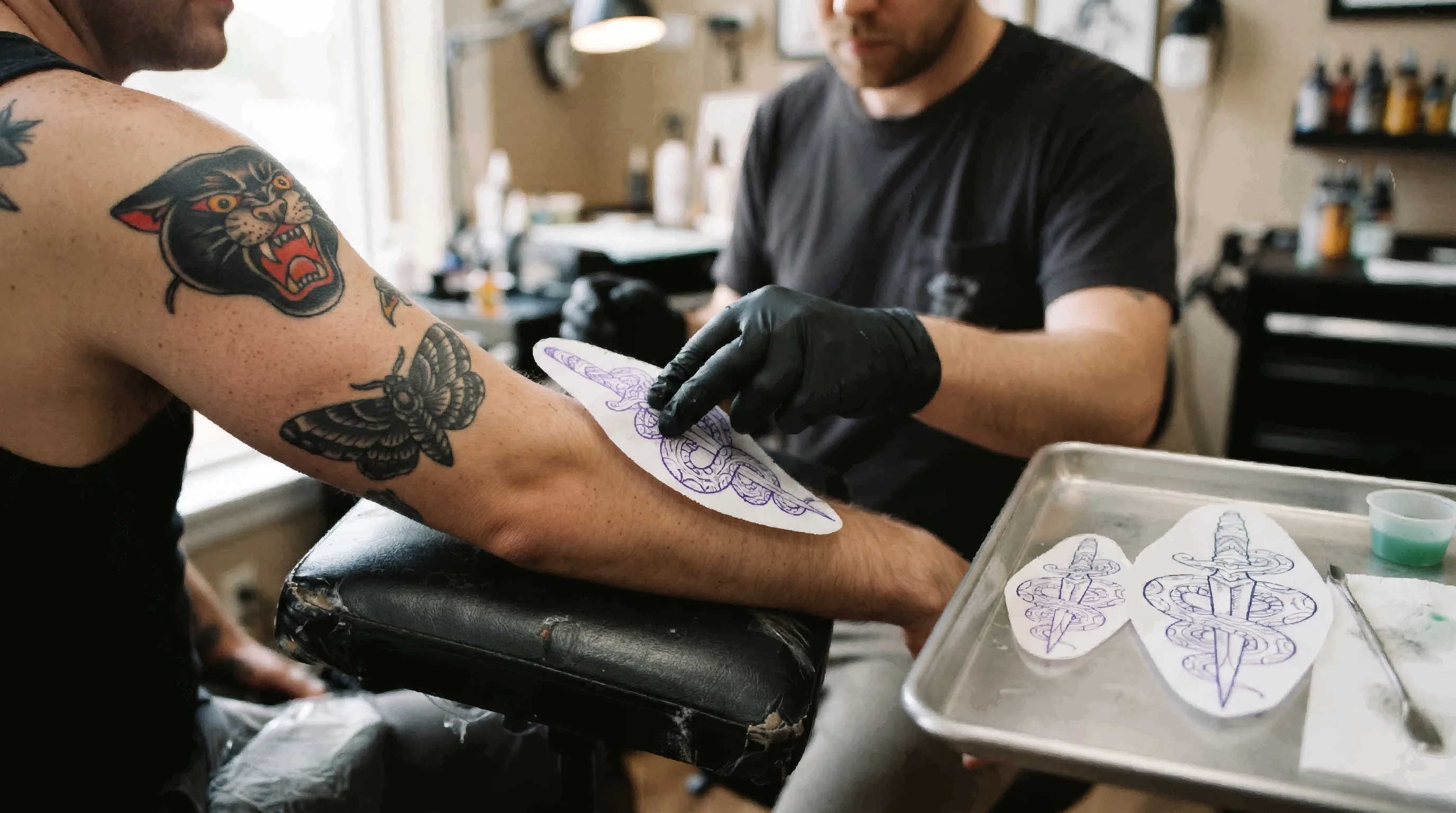
Remember that bodies are curved. A design that is ten centimetres wide on paper can look narrower on a rounded arm, because part of it wraps out of view. This is one of the reasons artists like to place the stencil on you and look at it from several angles before starting.
How Style Changes the Right Size
Some styles are built to read clearly at a distance and at small sizes. Others need room. Roughly:
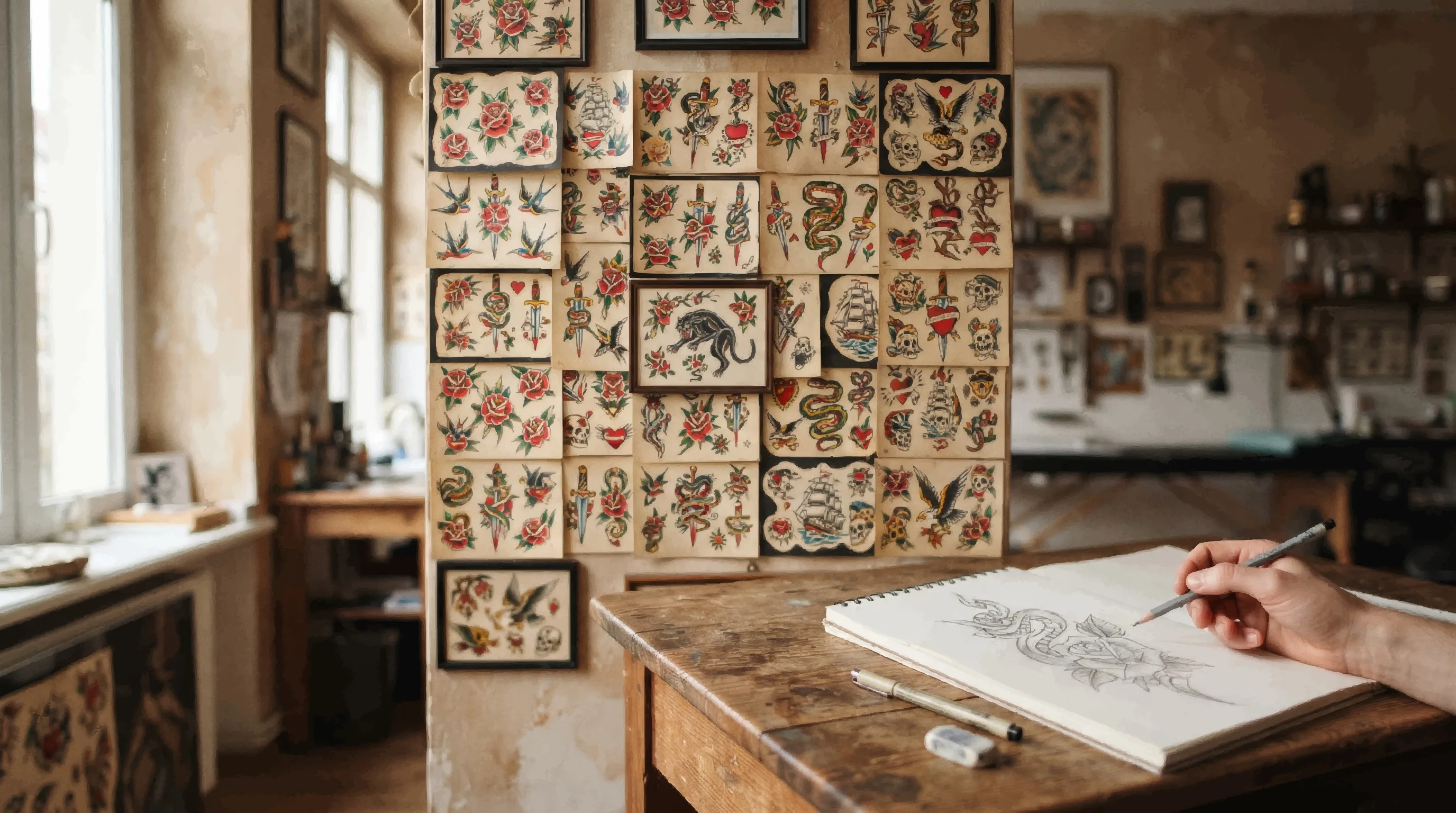
- Traditional and neo-traditional. Bold outlines and solid colour were designed to last, and they hold up well even at modest sizes. A small traditional swallow or rose can still look crisp after many years.
- Blackwork and bold linework. Strong black shapes age well and can work at many sizes, as long as the negative space (the bare skin inside the design) is not too narrow.
- Fine line and single needle. Delicate by nature. They can work small, but only if the design itself is simple. Detailed fine line work needs more space than people expect.
- Realism and portraits. Among the most size-hungry styles. Detail and soft tone need room to stay readable.
- Dotwork and geometric. Precise patterns look best when there is enough space for the dots and lines to stay distinct.
- Watercolour. Soft colour washes tend to fade faster without a strong outline, so a slightly larger design with some structure usually lasts better.
The guide to tattoo styles explains each of these in more depth, and the black and grey vs. colour guide covers how colour choice affects ageing too.
What Size Does to Cost and Time
A bigger tattoo costs more and takes longer, but not in a straight line. Doubling the width of a design roughly quadruples the area to fill, and a larger space often invites extra detail as well. On the other hand, very small tattoos rarely save as much as people hope, because most studios have a shop minimum that covers setup and materials no matter how quick the tattoo is.
A few practical points:
- Going a little bigger can be cheap. If you are already over the shop minimum, adding a couple of centimetres to a simple design often adds less than you would think.
- Going a lot bigger changes the plan. A large piece may need more than one session, which affects deposits, healing time and scheduling.
- Prices vary by city and artist. Hourly rates and minimums differ a lot, so ask for an estimate for your actual design and size.
Our guides to how much a tattoo costs and how long a tattoo takes go into both in detail.
Think About the Tattoos You Haven't Got Yet
Many people who get one tattoo end up getting more. Size and placement now can make that easier or harder later. A small tattoo dropped in the middle of an upper arm, for example, can get in the way of a half sleeve you decide on in five years, and working around it may mean a cover-up or a design compromise.
You do not need a full plan, but it is worth asking yourself:
- Is there a chance I will want a larger piece in this area one day?
- Would this tattoo work better slightly off to one side, leaving space?
- Could this be the first piece of something bigger, sized and placed with that in mind?
If you think a sleeve is in your future, our guide to planning a tattoo sleeve is worth reading before you place a single small piece on that arm. And if you already have an old tattoo that feels too small or in the wrong spot, the cover-up guide explains your options.
How to Test a Size Before You Commit
Size is hard to judge from a phone screen. A design that looks large on your phone can be tiny on your arm. These simple checks help:
- Print it at real size. Print the design at a few different sizes, cut them out and hold or tape them to the spot. Look in a mirror, from a distance and from the side.
- Draw it on. Sketch a rough outline on your skin with a washable pen or eyeliner and live with it for a day. You will quickly notice if it feels too small or too dominant.
- Check it with a mock-up. Photograph the area straight on and overlay the design to scale. It will not be perfect, but it helps with proportions.
- Try ideas digitally. The AI tattoo designer lets you try out ideas and simpler or more detailed versions of a design, which helps you see what would survive at a smaller size.
- Trust the stencil. On the day, the stencil is your last chance to change the size. If it looks wrong in the mirror, say so; it is easy to reprint at a different size, and impossible to shrink a tattoo afterwards.
Bring your printouts and photos to your consultation, and ask the artist what size they would recommend for the design and why.
When Your Artist Says "Go Bigger"
It is common for an artist to suggest a larger size than you asked for, and it can feel like an upsell. In most cases, it is not. Experienced artists have seen how their own work heals and ages, and they would rather turn down a design than put their name on something that will blur. A good artist will explain the reason: the lettering is too small, the face will lose detail, or the design will look lost on that part of the body.
If you really want to keep it small, ask what they would change to make that work. Often the answer is to simplify the design: fewer words, a bolder outline, less shading, or a stylised version instead of a realistic one. That conversation usually ends with a better tattoo than either of the original ideas.
If an artist agrees to tattoo a very detailed design at a tiny size without any comment, that is worth thinking about. Looking at their healed work, not just fresh photos, will tell you how their small tattoos actually age; our guide on how to read a tattoo portfolio shows what to look for. When you are ready, you can discover and contact tattoo artists on Tattooed.co and ask each one how they would size your design.
Tattoo Size FAQ
What is the smallest size a tattoo can be?
There is no fixed minimum, but very small tattoos only work with very simple designs, such as a dot, a small outline or a single initial. The more detail a design has, the bigger it needs to be to stay clear as the ink softens over the years. Your artist can tell you the smallest size they would be happy tattooing your design at.
How small can tattoo lettering be?
As a loose rule of thumb, many artists prefer lowercase letters to be no smaller than about a centimetre tall, and larger for thin or ornate scripts. Smaller letters can look fine at first, but the gaps inside them tend to fill in as the tattoo ages, which makes words hard to read.
Do small tattoos fade faster than big ones?
Small tattoos do not necessarily fade faster, but the same amount of softening is much more noticeable on them. On a large design, slightly spread lines barely show. On a tiny, detailed design, they can close up the gaps and make it look blurry. Simple, well-spaced small tattoos age much better than detailed ones.
Is a bigger tattoo always more expensive?
Generally, yes, because larger tattoos take more time. But very small tattoos often cost the shop minimum, so going a little bigger on a simple design may not add much. Prices vary by city and artist, so ask for an estimate for your design at the size you want.
Why does my tattoo artist want to make my design bigger?
Usually because the design has details that will blur at the size you asked for, such as small lettering, a face or fine shading. Artists know how tattoos age and want yours to stay clear for years. If you want to keep it small, ask whether the design could be simplified instead.
How do I know what size tattoo to get?
Start with the design and the body part. Print the design at a few sizes and hold them to the spot, look at them in a mirror, and think about whether you might want more tattoos in that area later. Then ask your artist what size they recommend for that design and placement.