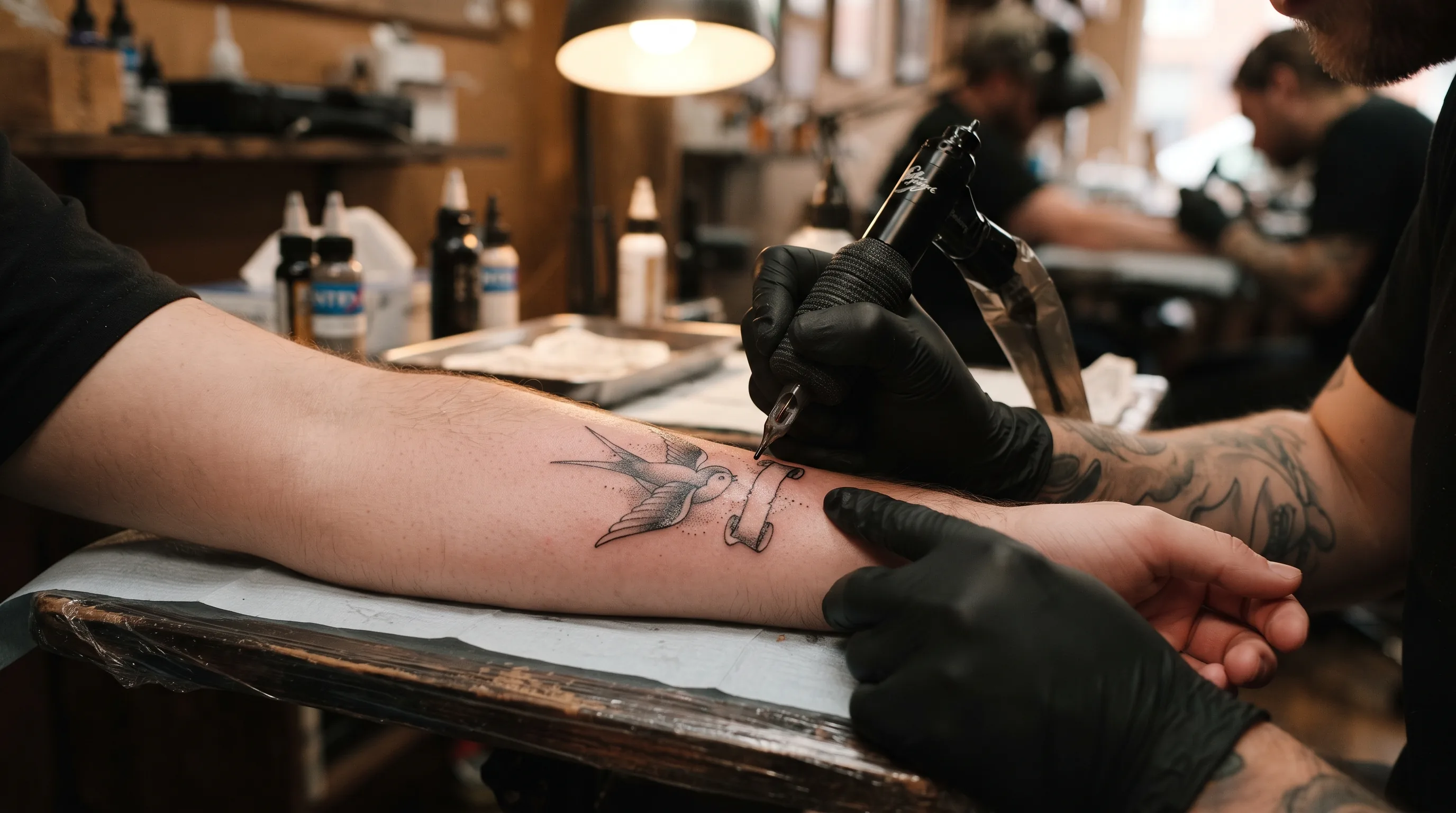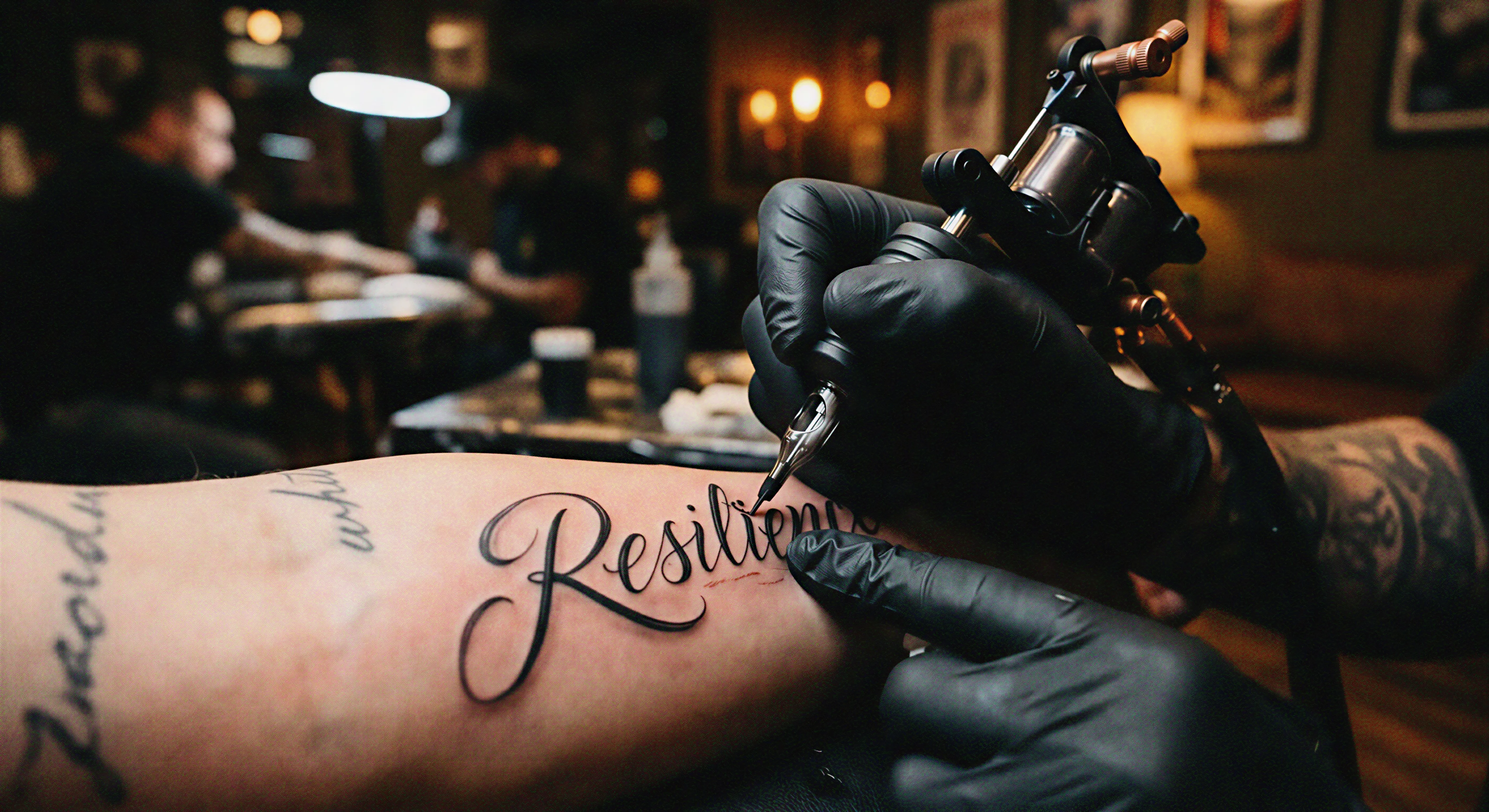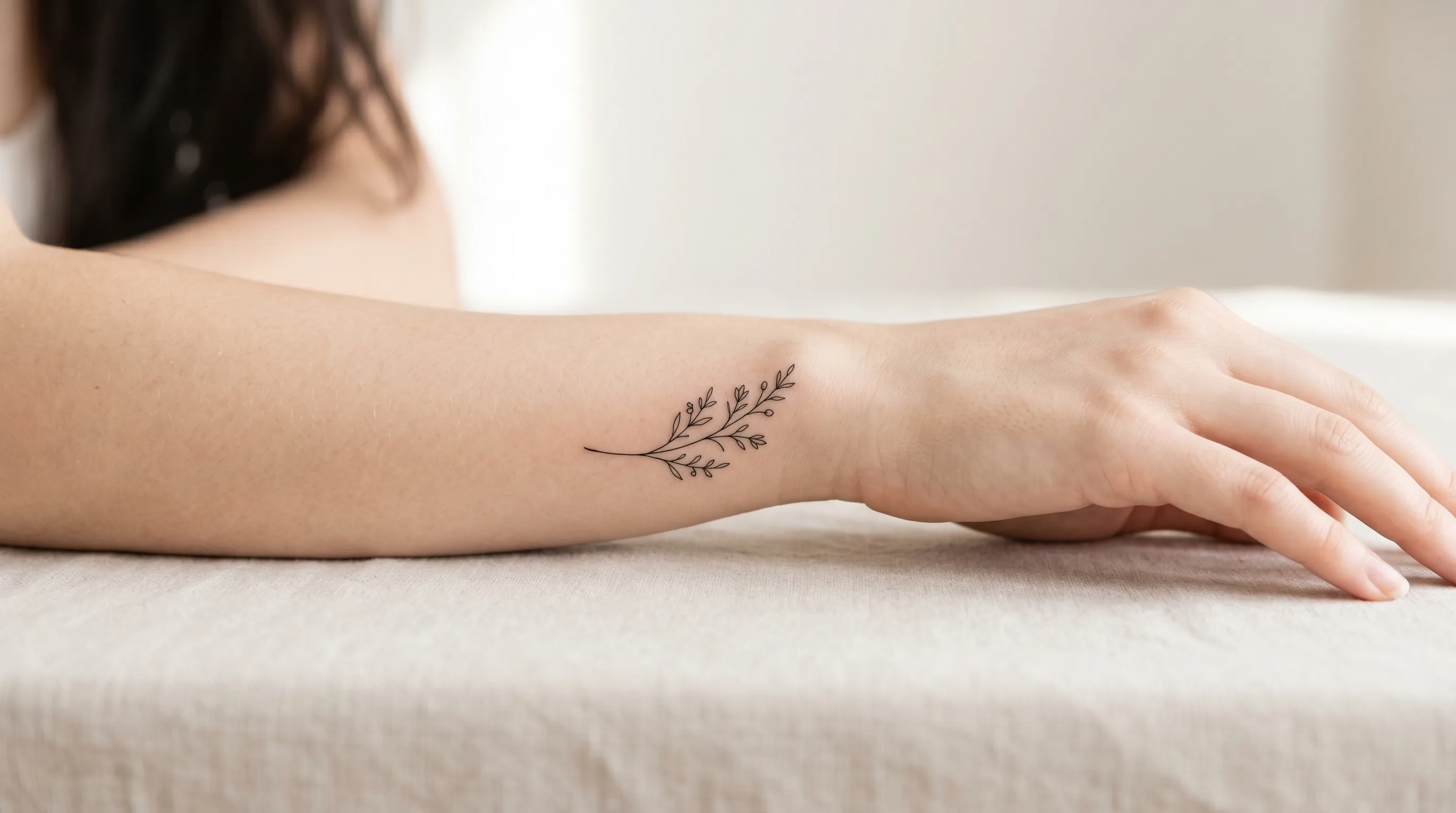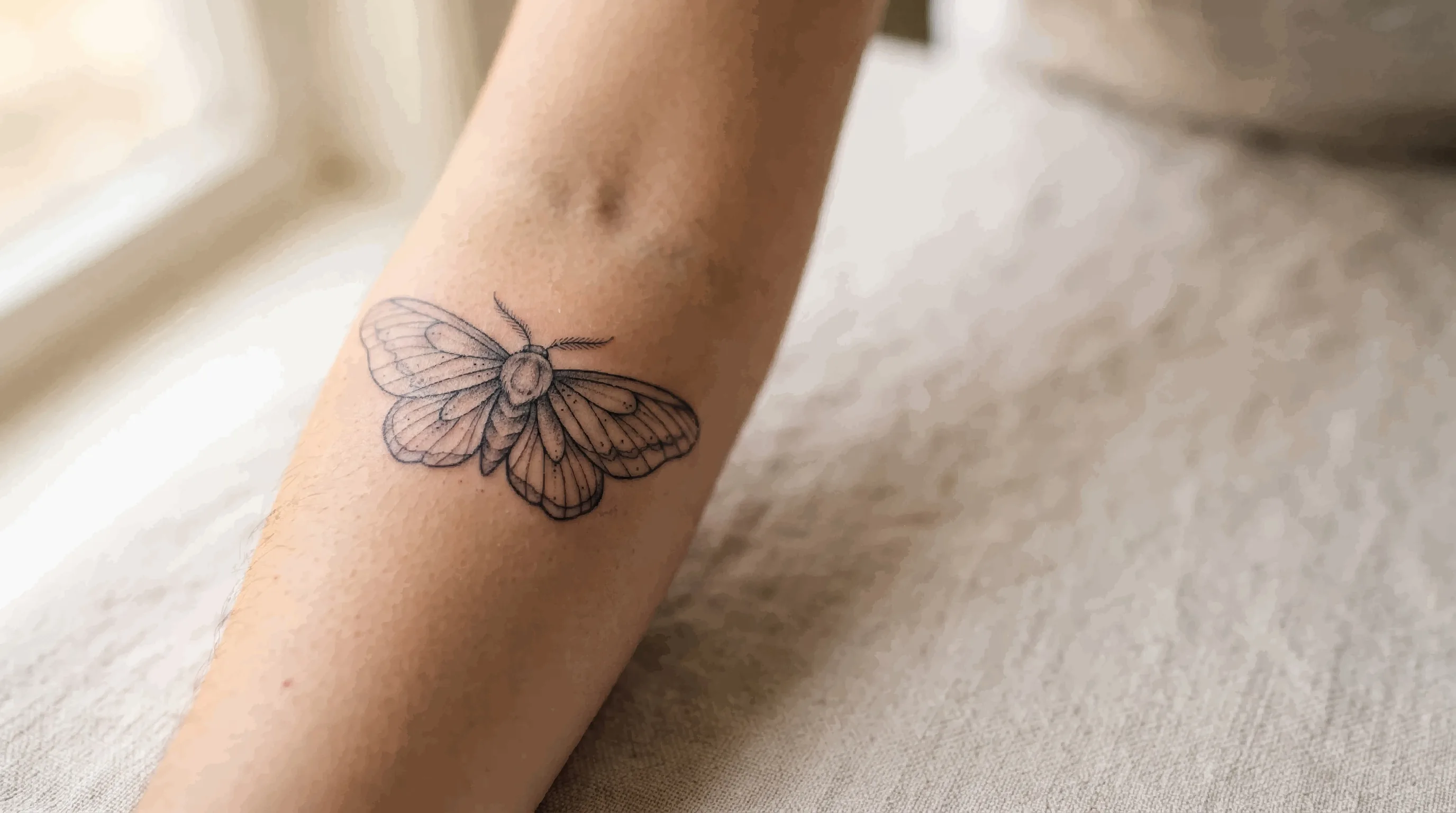
Fine line tattoos photograph beautifully. Thin, precise lines, soft shading, tiny details that look like they were drawn with a technical pen. The question almost everyone asks before booking one is whether it will still look like that in ten years. The honest answer is that it will not look exactly like that, and neither will any other tattoo. What decides whether you are happy with it later is not luck. It is the size, the spacing, the placement, and the artist, and all four are things you can choose before the needle touches skin.
The Short Answer
Yes, fine line tattoos fade and soften over time, and they usually show it sooner than bold work. That is not because the ink is weaker or the technique is a gimmick. Every tattoo line widens a little and loses some sharpness as the years pass. A bold traditional outline has room to absorb that change without anyone noticing. A line that started out thinner than half a millimetre does not.
So the useful question is not "will it blur?" but "has this design been drawn with enough room to blur gracefully?" A well-planned fine line piece softens into something that still reads clearly. A poorly planned one, with tiny lettering and details packed millimetres apart, can turn into a grey smudge within a decade.
Why Every Tattoo Line Spreads
Tattoo ink sits in the dermis, the layer of skin under the surface. The surface layer constantly sheds and replaces itself, but the dermis does not, which is why tattoos are permanent at all. Permanent does not mean frozen, though.
Your immune system treats tattoo pigment as something foreign. Immune cells called macrophages swallow the ink particles and hold them in place, and that is most of what keeps a tattoo where it was put. Over the years those cells die and are replaced, and the pigment is taken up again by new ones. Each handover is not perfectly tidy. A small amount of ink ends up a little further from where it started, some of it is carried away entirely, and the edges of every line drift outward very slowly.
On top of that, sunlight breaks pigment particles down, the skin itself loses firmness and thickness with age, and areas that flex or rub constantly take more wear. None of this is unique to fine line work. It happens to every tattoo on every body. Fine line simply has the least margin for it.
Why Fine Line Shows It First
- Less ink to begin with. Fine line work is usually done with one to three needles grouped together, where a bold traditional outline might use seven to fourteen. A thin line holds far less pigment, so the same amount of loss over time takes a much bigger share of what was there.
- Spreading is a bigger fraction of the line. Imagine the edges of a line drifting outward by the same tiny amount on two tattoos. On a thick outline that change is invisible. On a hairline stroke it can double the apparent width, and what was crisp starts to look soft.
- Details sit closer together. Fine line designs often have small gaps between lines: the petals of a tiny flower, the loops of script, the shading inside a small portrait. As lines widen, those gaps close. Once two lines meet, the detail between them is gone.
- Light shading fades first. Soft grey washes and stippled gradients are a big part of the fine line look, and diluted ink is the first thing to lighten. Contrast drops, and a delicate gradient can flatten into an even pale patch.
Fading, Blurring and Blowouts Are Three Different Problems
People use these words interchangeably, but they have different causes and different fixes. It is worth knowing which one you are looking at.
| Problem | What it looks like | When it shows up | Main cause |
|---|---|---|---|
| Fading | Lines and shading get lighter and lower in contrast | Gradually, over years | Sun exposure, light shading, ink not fully settled |
| Blurring | Lines get softer and wider, small gaps start to close | Gradually, over years | Normal ink spread, designs too small or too tightly packed |
| Blowout | A blue-grey haze bleeding out past the line | Visible within weeks, once healing settles | Needle went too deep or at the wrong angle during the session |
The timing is the easiest way to tell them apart. Fading and blurring happen slowly. A blowout is there from the day you were tattooed and simply becomes visible once swelling goes down. Fine line work is more prone to blowouts too, because a thin line has nowhere to hide one. If that is what you are seeing, our guide to tattoo blowouts and what to do about them covers it in detail.
What Fine Line Looks Like Over Time
Every tattoo ages differently, so treat these as typical patterns rather than a schedule.
- The first few weeks. Fresh fine line work looks its sharpest and darkest on day one. As it heals it often looks lighter, a little patchy, or cloudy, especially during the flaking stage. That is normal, and it is why judging a tattoo before it has fully healed leads to so much needless worry.
- Six to eight weeks. This is the first fair look at what you actually have. Thin lines sometimes heal with small gaps where the ink did not hold evenly. That is common with fine line work and is exactly what a touch-up session is for.
- One to three years. A well-done, well-placed piece usually looks very close to how it did once healed. Light grey shading may have softened slightly. Pieces on hands, fingers or feet may already be noticeably lighter.
- Five to ten years and beyond. This is when design choices show. Lines are softer at the edges and slightly wider. Tiny details that were spaced generously still read. Tiny details that were crammed together, and very small lettering, are the parts most likely to have merged or become hard to read.
Where Fine Line Holds Up, and Where It Does Not
Placement changes how any tattoo ages, but it matters more for fine line because there is less ink to lose. Three things wear tattoos down: sun, friction, and skin that stretches or moves a lot. Our tattoo placement guide goes through the whole body; here is the fine line version.
- Holds up well: upper back, shoulder blade, outer upper arm, forearm, thigh, calf and ribs. These areas have stable skin, get less constant friction, and the back and ribs spend most of their life covered from the sun.
- Fades faster: fingers, the sides of the hands, palms, feet and toes. Skin there renews faster, rubs against everything, and is washed constantly. Fine line on these spots often needs touch-ups within the first year or two. Our article on hand and finger tattoos explains why in more depth.
- Prone to blowouts: inner wrist, inner upper arm, ankle, top of the foot and behind the ear. The skin is thin or loose, so it is easier for the needle to go too deep. These are popular spots for small fine line pieces, which is why an experienced artist matters so much here.
- Sun-exposed: forearms, the back of the neck, the tops of the feet and the back of the hands. Fine to tattoo, but only if you are willing to keep sunscreen on them for life.
How to Design a Fine Line Tattoo That Ages Well
This is where most of the outcome is decided, and the advice is almost always the same: give the design room.
- Go a size up. The single most effective choice. A design scaled up by even a third has wider gaps, bigger details and more room for lines to soften without merging. If the artist suggests making it bigger, they are not upselling you.
- Leave space between lines. Gaps of a millimetre or less are the first to close. Open designs with clear negative space hold their shape far longer than dense ones.
- Keep the smallest details few. One or two delicate elements in a design read beautifully. A design built entirely from tiny details has nothing left once they soften.
- Be careful with tiny lettering. Script is where blurring shows first, because the loops of letters like "e", "a" and "o" close up and a word becomes unreadable. Our lettering and script guide covers sizing and font choice.
- Give it some contrast. A design that is all pale grey has nowhere to go as it fades. A few solid black lines or areas give the piece a structure that stays readable even after the soft shading has lightened.
- Think about your skin tone. On deeper skin tones, very light lines and soft grey shading have less contrast to begin with, so bolder line weight usually holds up better. Our guide to tattoos on dark skin goes into this.
A good fine line artist will push back on a design that is too small for where it is going. That is a sign of experience, not difficulty. The artists who say yes to anything at any size are the ones whose work tends to look worst a few years later.
Questions to Ask a Fine Line Artist
Fine line work is especially easy to make look good in a fresh photo, because fresh ink is at its darkest and sharpest. Healed work is the real evidence. Our guide to reading a tattoo portfolio explains how to tell the two apart. Before you book, ask:
- "Can I see healed fine line work, at least a year old?" Ideally at a similar size and on a similar placement to yours.
- "Is this size right for this placement?" Listen to the answer. If they want to go bigger, ask what would be lost at the smaller size.
- "How do you expect this to look in five or ten years?" An honest artist will talk about softening rather than promise that nothing will change.
- "Is a touch-up included?" Many artists include one after healing for fine line work, because thin lines sometimes heal unevenly.
When you are ready to compare artists, you can browse fine line tattoos on Tattooed.co or find tattoo artists near you and look through their galleries with all of the above in mind.
Keeping a Fine Line Tattoo Sharp After It Heals
- Sunscreen, every time it is exposed. UV light is the biggest controllable cause of fading, and fine line has the least ink to spare. Use a broad-spectrum SPF 30 or higher once the tattoo has fully healed, and keep a fresh tattoo covered rather than using sunscreen on it.
- Follow the aftercare closely. Picking at flakes, soaking the tattoo too early or letting it dry out can pull ink out of thin lines while they heal, which leaves gaps. Our aftercare guide covers the first weeks step by step.
- Get the first touch-up done. If any part of the line healed patchy, go back once it has fully settled, usually after six to eight weeks. Filling small gaps early keeps the piece looking even for years.
- Expect a refresh eventually. Many people with fine line tattoos on exposed or high-wear spots have them darkened every few years. That is normal maintenance, not a sign something went wrong. Our guide to tattoo touch-ups covers when to go back and what it typically costs. For more general habits, see how to prevent tattoo fading.
If Your Fine Line Tattoo Has Already Blurred
A soft, blurred fine line piece is one of the easier tattoos to rescue, because there is not much ink in the skin. Depending on how far it has gone, an artist may suggest:
- Re-lining. Going back over the existing lines to darken and sharpen them. This works best when the lines have faded but not spread much.
- Reworking it bolder. Adding a slightly heavier outline or more solid black gives a blurred design a new structure. It will look different from the original, but often better suited to where it lives.
- Building it into something larger. A small blurred piece can become part of a bigger design that uses the softened areas as shading.
- Lightening it with a laser first. Fine line work usually needs fewer laser sessions than heavy, saturated tattoos because it holds less ink. A few sessions can fade it enough for a clean redo or a cover-up. Our laser removal guide covers what to expect.
Fine Line Tattoo Aging FAQ
How long do fine line tattoos last?
A fine line tattoo is permanent, and a well-planned one can still look good decades later. What changes is sharpness. Most fine line work looks close to its healed state for the first few years, then gradually softens. Pieces on hands, fingers and feet, or with very small tightly packed details, tend to show it within a few years, while generously sized designs on the back, arm or thigh hold up much longer.
Do fine line tattoos blur more than regular tattoos?
They do not spread more, but the spread is far more visible. Every tattoo line widens slowly over time. On a bold outline that change is lost in the thickness of the line. On a line thinner than half a millimetre, the same change can noticeably soften it and close the small gaps between details.
Will my fine line tattoo look lighter after it heals?
Usually, yes. Fresh ink looks darkest on the day it is done, and fine line work often heals a little lighter and sometimes slightly patchy. Give it six to eight weeks to fully settle before judging it. If any part of the line has gaps, a touch-up at that point is normal and many artists include one.
How big should a fine line tattoo be so it does not blur?
There is no single number, because it depends on how much detail the design has. The rule that matters is spacing: gaps between lines of a millimetre or less are the first to close. If your design only works at a very small size, it has too much detail for that size. Ask your artist whether it should be bigger for the placement you have chosen.
Can a blurry fine line tattoo be fixed?
Often, yes. An artist can re-line it to sharpen it, rework it with a slightly bolder outline, or build it into a larger piece. If it has spread too much for that, a few laser sessions can lighten it enough for a clean redo or a cover-up. Fine line work tends to respond well to laser because it holds relatively little ink.
Does sunscreen really stop fine line tattoos from fading?
It is the single most effective thing you can do once the tattoo has healed. UV light breaks down tattoo pigment, and fine line work has the least ink to lose, so sun damage shows on it faster than on bold work. A broad-spectrum SPF 30 or higher on any exposed tattoo makes a real difference over the years. It will not stop the natural slow softening of lines, but it prevents most avoidable fading.