Small tattoos are not a compromise. They are a deliberate choice — and when done right, they carry as much weight as anything larger. A single well-placed line, a tiny botanical sprig, a minimal symbol rendered with precision: small work has a way of being quietly striking in a way that oversized pieces sometimes are not. The restraint is the point. This guide covers the styles best suited to small-scale work, placement ideas that elevate minimal pieces, and what to know before you book.
Why Small Tattoos Work
Scale does not determine impact. Some of the most memorable tattoos are small enough to be missed unless you are looking for them — and that is exactly what makes them interesting. Small tattoos work because they demand precision: there is no room to hide imprecise lines, unclear shapes, or muddy detail. Every element has to earn its place.
They are also uniquely flexible. Small pieces fit naturally into spaces that larger tattoos cannot — behind the ear, on the inner wrist, along the collarbone, on a finger. They layer well with existing work and can be planned as standalone statements or first steps in a longer collection.
Fine Line and Minimalist Linework
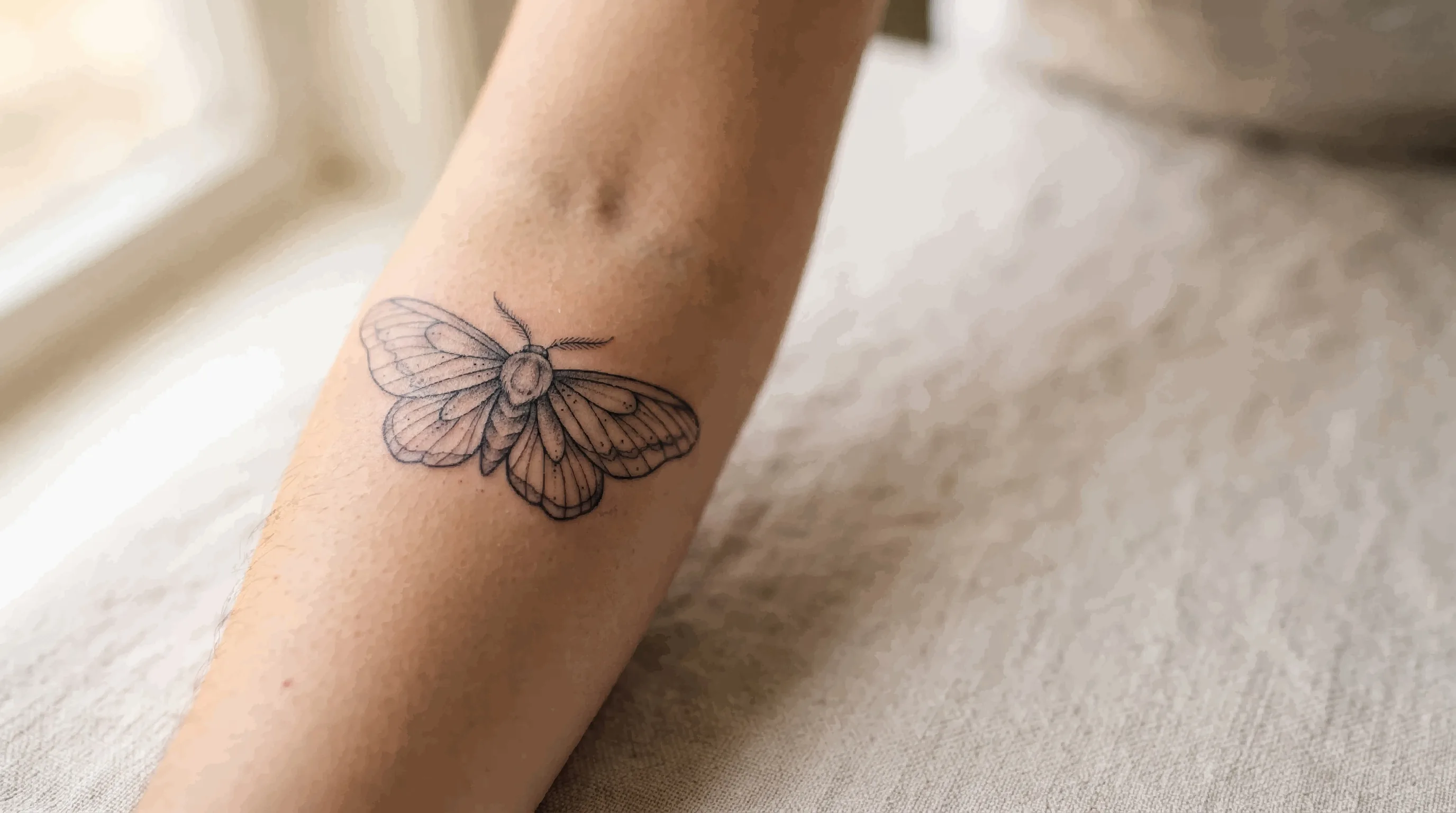
Fine line tattooing — thin, precise lines with minimal fill — is one of the most popular styles for small work, and for good reason. It suits the scale. Clean, deliberate linework at a small size reads clearly, ages gracefully when done well, and works across nearly any subject matter: botanicals, animals, architecture, abstract shapes, celestial imagery.
The key to fine line work holding up over time is working with an artist who understands the limits of the style at small scale. Lines that are too thin or spaced too closely together will fade and blur into each other as the skin ages. A good fine line artist knows how to design for longevity — not just how it looks fresh.
Small Botanical and Floral Designs
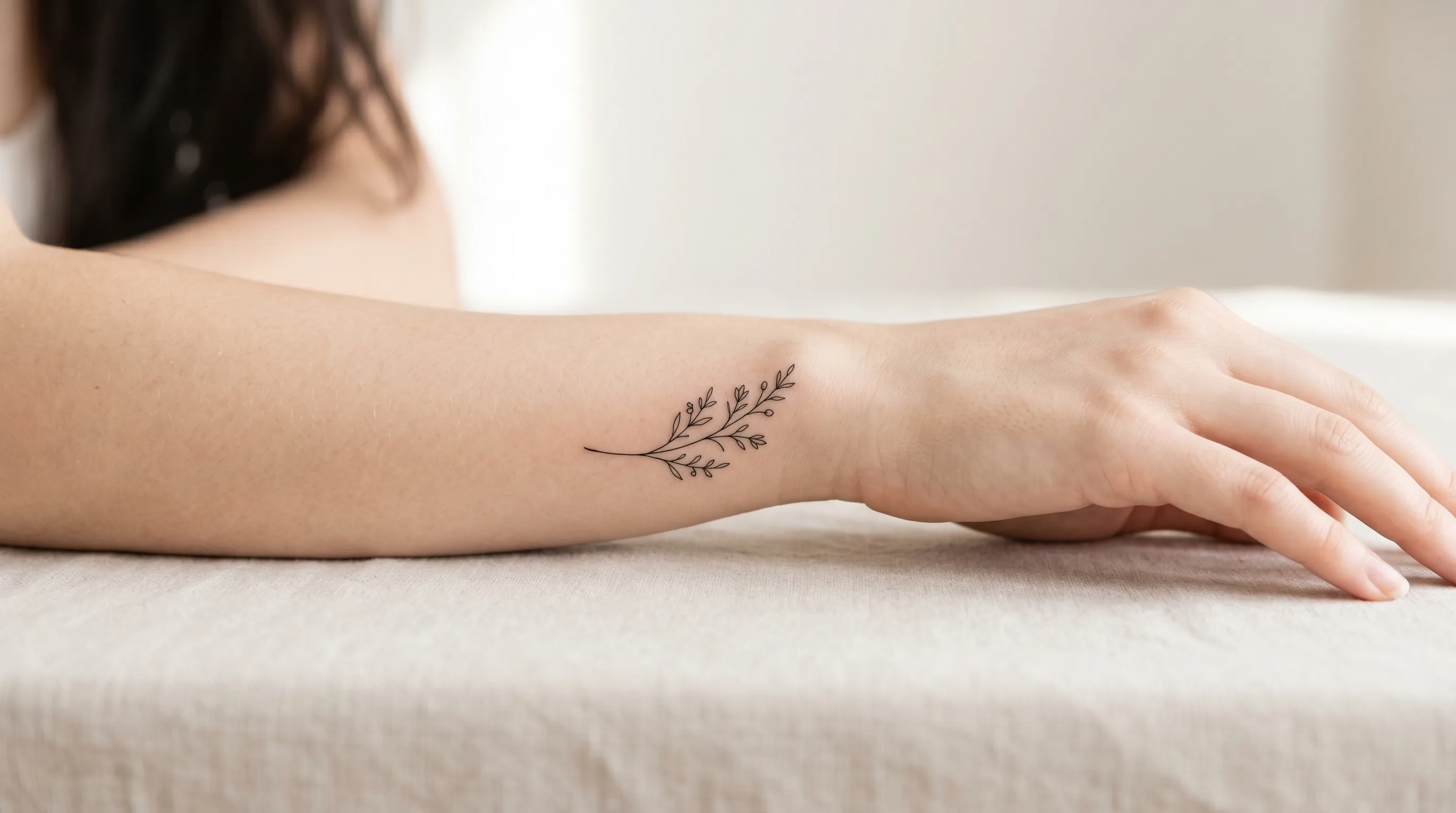
Botanical designs — single stems, sprigs of herbs, simple flowers, leaves — translate exceptionally well to small scale. Their natural asymmetry means they do not need to be perfectly symmetrical to read correctly, and their subject matter allows for both delicate fine line interpretations and bolder illustrative treatments.
Popular choices include: single rose stems, lavender sprigs, olive branches, small ferns, eucalyptus, wildflowers, and abstract botanical shapes. These work as standalone pieces or as building blocks for a collected look developed over time.
Micro Realism
Micro realism is exactly what it sounds like: realistic rendering at a very small scale. A portrait the size of a coin. A perfectly rendered animal face inside a few square centimeters. A small still life with genuine depth and shadow.
This is one of the most technically demanding styles in tattooing at any scale, and at micro scale the margin for error essentially disappears. Finding an artist whose portfolio contains multiple examples of healed micro realism work — not just fresh photos — is non-negotiable before booking. Micro realism that is not done by someone who truly specializes in it tends to deteriorate quickly.
Fine Line Script and Lettering
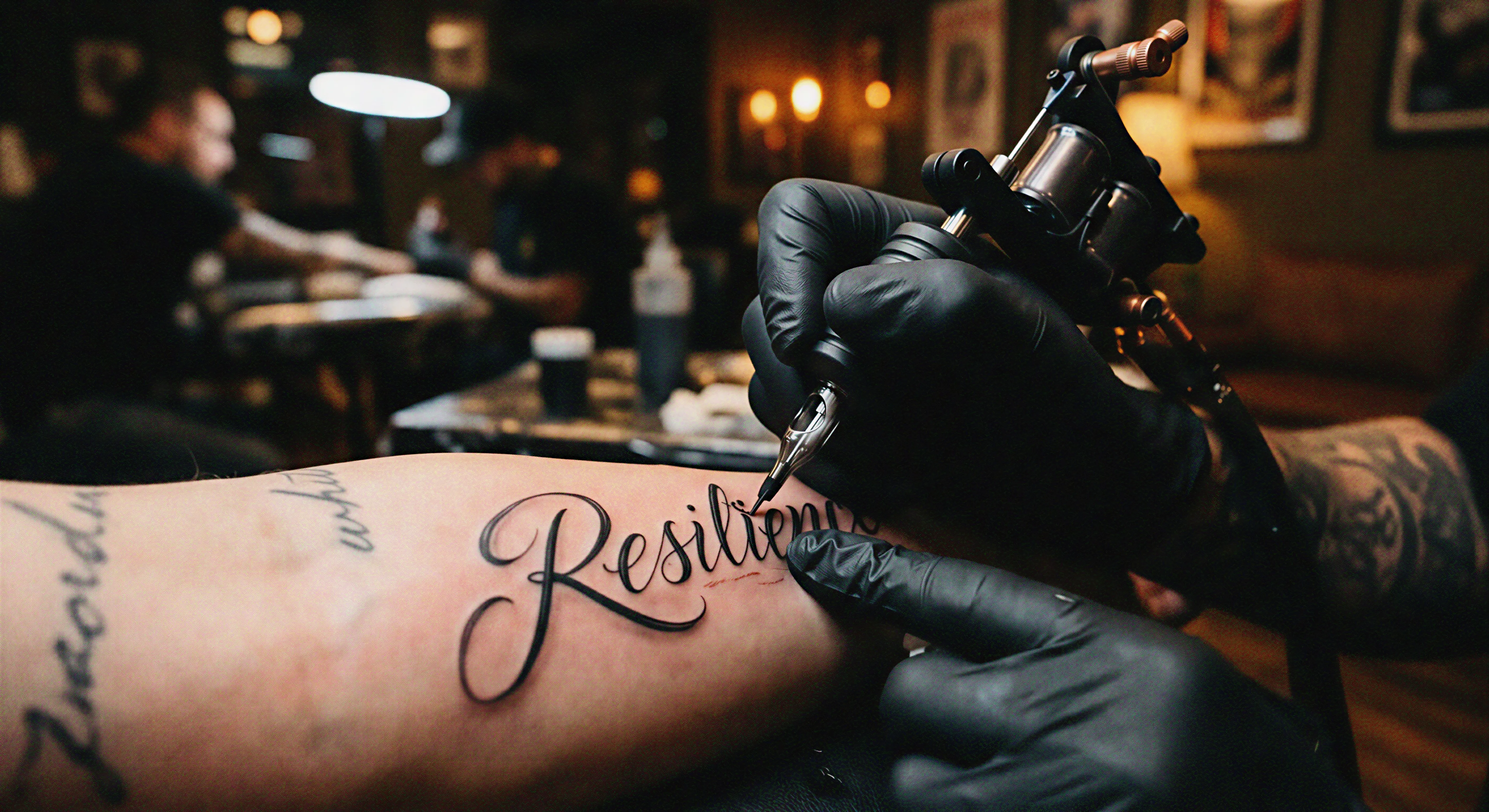
A word, a date, a short phrase rendered in fine script: lettering at small scale is one of the most requested tattoo formats and one of the most unforgiving. Letters that are too small, too thin, or too closely spaced will bleed together over time as the ink spreads slightly in the skin — a completely natural process that turns precise lettering into an illegible blur.
The best small script tattoos use letterforms with enough space between them, sized appropriately for the placement, and executed cleanly. A good lettering artist will push back if you ask for something too small to hold its form — that pushback is a good sign, not a problem.
Geometric and Abstract Small Pieces
Clean geometric work — precise lines, simple shapes, minimal forms — suits small scale naturally. A thin circle, a small triangle, a constellation of dots, a minimal mandala fragment: geometric pieces are among the most versatile small tattoo choices because they are style-neutral and placement-flexible. They sit well almost anywhere and do not require a narrative.
Abstract small pieces — forms that suggest rather than depict — work similarly. A minimal abstract mark, a loose gestural shape, an ambiguous symbol: these leave room for personal meaning without spelling it out literally.
Symbols and Icons
A single symbol, rendered cleanly at small scale, is one of the oldest and most enduring forms of tattooing. Whether it carries a specific cultural or personal meaning or simply appeals to you visually, a well-executed icon — an arrow, a small moon, a simple eye, a sun, a compass point — is timeless.
The key, as with all small work, is simplicity. The more a symbol is reduced to its essential form — the fewer extra lines, shadows, and details — the better it will hold up over time.
Placement Ideas for Small Tattoos
Small tattoos open up placement options that larger pieces cannot occupy. Some of the most effective locations:
- Inner wrist: Intimate and personal. Visible when you want it to be. Works well for minimal symbols, small script, or single-element designs.
- Behind the ear: Discreet, easy to conceal, and uniquely positioned for small designs that play with the natural curve of the space.
- Collarbone: Elegant placement for single words, small botanicals, or minimal shapes. The horizontal line of the collarbone makes a natural anchor for designs that follow the bone.
- Inner forearm: Versatile and visible. Small pieces here are easy to see and easy to show. Works well for both personal and visual designs.
- Ankle: A natural canvas for small pieces — especially botanicals, minimal symbols, or delicate fine line work. Worth noting that ankles are on the more painful end of the spectrum.
- Finger: Statement placement, but one of the most challenging for longevity. Finger tattoos fade and blur faster than almost any other placement due to constant skin movement, friction, and sun exposure. Go in with realistic expectations.
- Between the shoulder blades: A well-padded, low-pain placement that shows beautifully when you want it to and disappears easily when you do not.
- Sternum / chest center: Dramatic placement for a small piece, especially for designs that play with the body's natural symmetry. More painful than average.
- Ribcage side: Personal, intimate placement. One of the more painful locations but effective for smaller pieces that benefit from being close to the body.
What to Know Before You Book
A few things worth understanding before your appointment:
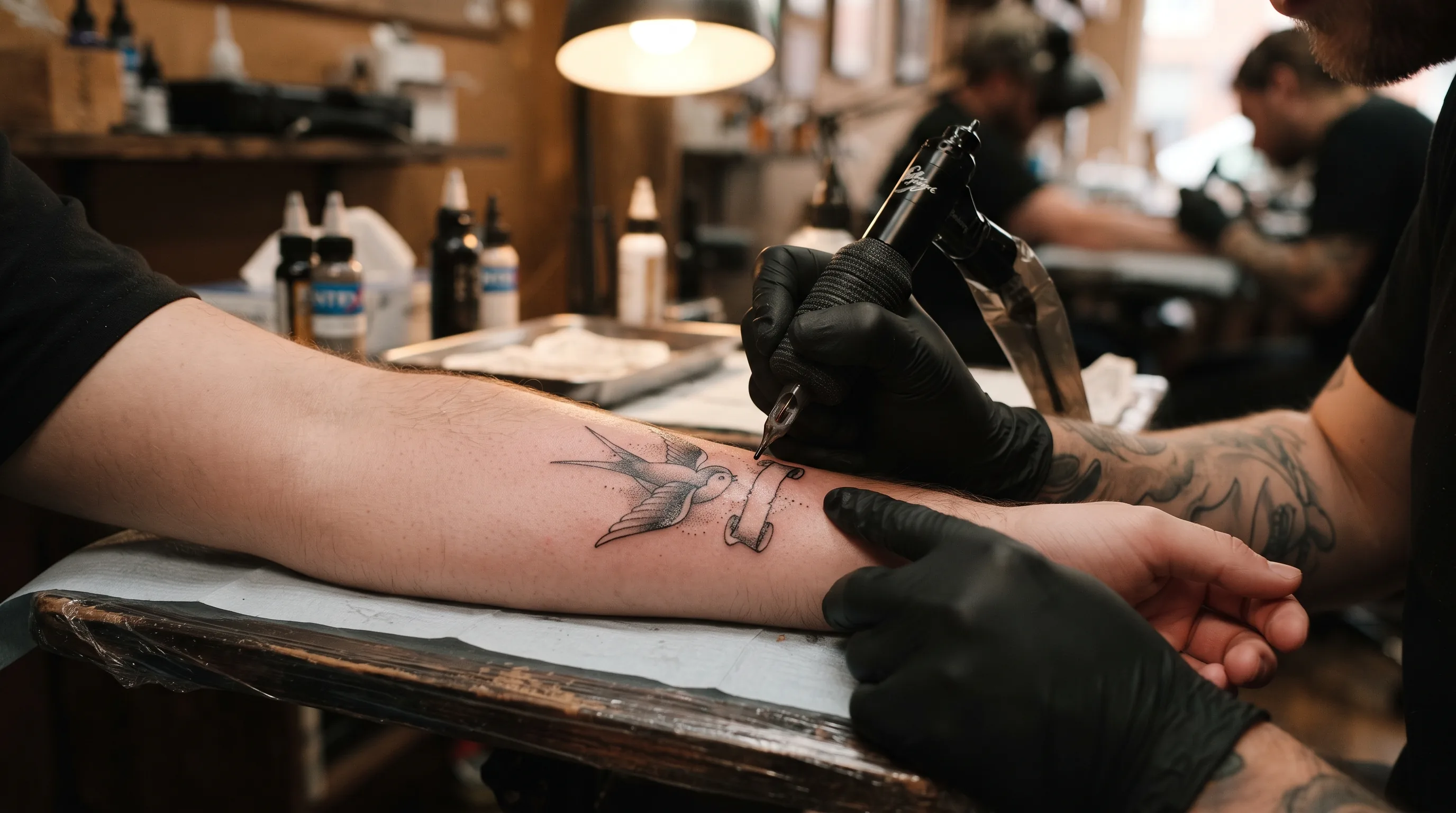
- Small does not mean fast or cheap. A very small piece with intricate fine line detail can take as long as — and cost as much as — a larger, simpler piece. Precision work at small scale is not easier because it is small.
- Minimum shop rates apply. Most studios have a minimum charge regardless of the size of the piece. A tiny symbol takes the same setup, sterilization, and time as a more substantial piece up to a point.
- Some designs do not scale down well. If an artist tells you your design is too detailed to work at the size you want, take that seriously. Forcing complex detail into too small a space guarantees it will not age well. The right response is to simplify the design or increase the size slightly.
- Healed photos matter. Fine line and micro work look dramatically different fresh versus healed. When reviewing an artist's portfolio for small work, prioritize healed photos. Fresh tattoos always look sharper than they will look long-term.
Finding the Right Artist for Small Work
Not every tattooist who does great large-scale work does great small-scale work — and vice versa. Small, precise, minimalist work is a genuine specialty. Look for artists whose portfolio is specifically built around fine line, micro, or minimalist styles. Multiple examples in that style, including healed work, is what you want to see before booking.
The cleaner and more precise the lines in an artist's portfolio, the better the small work will hold up. Jagged, inconsistent, or heavy-handed lines at full size will be worse at small scale. Crisp, controlled, even linework is what you are looking for.