Laser tattoo removal has become significantly more effective over the last decade. What once took thirty or more sessions to produce limited fading can now be achieved in ten to fifteen with modern technology. But the process still requires realistic expectations, patience, and a clear understanding of how it actually works. Here is a complete guide to everything that matters before you start.
How Laser Tattoo Removal Works
Tattoo ink sits in the dermis — the second, deeper layer of skin beneath the epidermis. Your immune system cannot clear it on its own because the ink particles are too large for white blood cells to remove. That is what makes tattoos permanent.
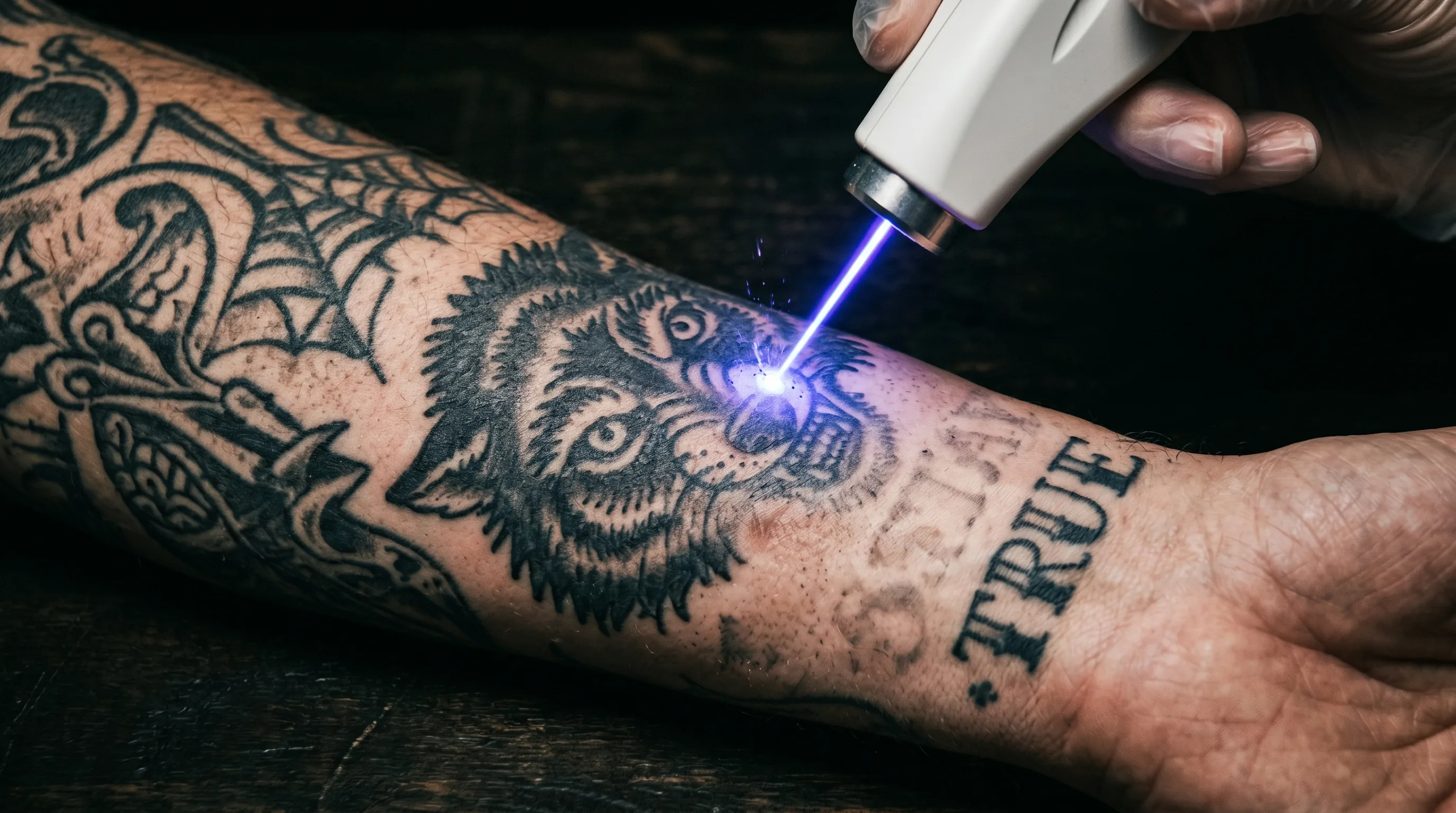
Laser removal works by delivering pulses of concentrated light energy at specific wavelengths that match the absorption spectrum of the ink pigments. When ink absorbs the laser energy, it heats up almost instantaneously and shatters into microscopic fragments. Those fragments are small enough for your lymphatic system to gradually flush out of the skin over the weeks following each session.
This is why results are not instant. The laser does not remove the ink — it breaks it down. Your immune system does the actual clearing, and that takes weeks per session. The more sessions you have, the less ink remains for your body to process.
Types of Lasers Used
Not all laser removal equipment is equal, and the technology used affects both the number of sessions required and the results achievable on difficult ink colors.
Q-Switched Lasers
The standard in laser removal for many years. Q-switched lasers fire nanosecond pulses of energy that effectively shatter ink particles. They work well on black ink and dark colors. The Nd:YAG and Alexandrite variants address different parts of the color spectrum and are often used in combination.
PicoSure and Picosecond Lasers
Newer technology that fires pulses in picoseconds — one trillionth of a second, roughly a hundred times faster than Q-switched lasers. The faster pulse generates a photomechanical shockwave rather than just thermal energy, shattering ink into even smaller particles that the body can clear more efficiently. Picosecond lasers generally require fewer sessions for comparable results and handle stubborn colors and previously treated tattoos better than older technology. They are more expensive per session but can reduce the total number of sessions needed.
What Affects the Number of Sessions You Need
There is no single answer to how many sessions a tattoo requires. Several factors combine to determine your individual timeline.
Ink Colors
Black ink absorbs the full spectrum of laser light and is the easiest to remove. Dark blues and dark greens respond well. Reds, oranges, and warm tones respond moderately but may require more sessions. Yellow, white, teal, and light blue are the most resistant — they reflect rather than absorb most laser wavelengths, and complete removal of these colors is sometimes not achievable with a single laser type.
A multicolor tattoo may require multiple different laser wavelengths to address all the pigments present. Ask your removal clinic whether their equipment can treat every color in your specific tattoo.
Tattoo Age
Older tattoos generally respond faster than fresh ones. As a tattoo ages, the ink particles naturally begin to break down and your immune system gradually reduces the total volume of ink present. A tattoo that has been on your body for fifteen years will often respond in fewer sessions than an identical tattoo done six months ago.
Ink Density
A heavily saturated tattoo — solid black fills, dense color packing — has far more ink to clear than a light fine line design. Heavily inked pieces will require more sessions. Some tattoo styles that are very bold and densely applied, like American traditional with thick black outlines, take longer to clear than minimalist linework of the same size.
Placement and Circulation
Tattoos closer to the heart on areas with strong blood circulation respond faster. The chest, upper arm, and back clear more efficiently than the extremities. Hands, feet, and ankles — which have lower circulation — clear more slowly. This is worth knowing if you are removing a finger tattoo: it will likely take more sessions than a same-sized tattoo on your forearm.
Skin Tone
Laser removal works by targeting the contrast between ink color and the surrounding skin. On lighter skin tones, this contrast is high and the laser can deliver energy aggressively without risking damage to the surrounding tissue. On darker skin tones, the risk of hypopigmentation — temporary or permanent lightening of the skin — is higher because the laser may also target the skin's melanin. Experienced clinicians adjust settings accordingly, and modern lasers have improved considerably on this front, but treatment on deeper skin tones requires more caution and may take longer.
Your Immune System
The actual work of clearing ink between sessions is done by your immune system. People with stronger immune function, good circulation, and healthy lifestyle habits — including not smoking — clear ink faster than those whose lymphatic systems are less efficient. This is why smoking is consistently associated with slower removal outcomes: it impairs circulation and immune response.
How Many Sessions Will It Take?
A simple black tattoo on light skin with thin linework might be significantly faded in four to six sessions. A dense, multicolor piece with layered ink on deeper skin might take fifteen or more. Most people with an average tattoo on average skin are looking at eight to twelve sessions for substantial fading and ten to fifteen for complete or near-complete removal.
Be cautious about clinics that quote very low session counts upfront. A practitioner who tells you that your dense sleeve can be cleared in five sessions is likely underselling the process. Ask instead for an honest range based on your specific tattoo, and choose a clinic whose assessment seems grounded rather than designed to close a sale.
What Laser Removal Actually Feels Like
The most common description is a rubber band snapping against the skin, repeatedly and rapidly. Others describe it as small splashes of hot bacon grease or the feeling of a scalpel scraping the surface. None of those sound pleasant — and they are not — but the sessions are usually short. A small tattoo can be treated in two to three minutes. A larger tattoo might take fifteen to twenty minutes.
Most clinics offer topical numbing cream, typically applied thirty to sixty minutes before the session. It significantly reduces but does not eliminate discomfort. Some clinics also use a cold air device aimed at the treatment area during the session, which helps manage the heat sensation. For very large or sensitive placements, some practitioners offer injected local anaesthetic.
After the session, the treated area will be red, swollen, and may feel like a sunburn for a few days. Small blisters are common and normal — they are a sign that the laser effectively targeted the ink and should not be popped. The area will heal over one to two weeks between sessions.
How Much Does Laser Tattoo Removal Cost?
Pricing varies significantly based on tattoo size, clinic, location, and the technology used. As a general guide:
- Small tattoos (business-card size or smaller): $100–$250 per session
- Medium tattoos (hand-sized): $200–$400 per session
- Large tattoos (forearm, half-sleeve): $350–$600+ per session
- Very large pieces (full sleeve, back): $600–$1,000+ per session
Clinics using newer picosecond technology often charge more per session than Q-switched laser clinics. However, because picosecond treatment can produce better results in fewer sessions, the total cost over the course of full removal may be comparable or even lower.
Most clinics offer package deals for prepaying multiple sessions, which can reduce the per-session cost by 20 to 30 percent. If you are committed to full removal and confident in the clinic, a package is usually the better value — just make sure the refund or transfer policy is clear if something changes.
Spacing Between Sessions
Sessions are typically spaced six to eight weeks apart. This is not an arbitrary recommendation — it reflects how long the skin and immune system need to recover and clear the fragmented ink from the previous session. Rushing sessions does not speed up overall results and increases the risk of skin damage.
Some protocols now use longer intervals of eight to twelve weeks, particularly for the later sessions when the remaining ink is deeper and harder for the body to clear. The clearing happens between sessions, not during them, so patience in spacing produces better outcomes.
What Results Are Realistic?
Complete, invisible removal is possible for many tattoos — particularly black ink on lighter skin tones. But it is not guaranteed for everyone, and some tattoos leave behind a ghost or shadow even after extensive treatment.
Factors that make complete removal harder:
- Resistant ink colors (yellow, white, teal, light blue)
- Very dense or deeply applied ink
- Tattoos over scar tissue
- Deeper skin tones where aggressive settings carry higher risk
- Older or lower-quality lasers used in treatment
For many people, the goal is not full erasure but enough fading to allow a cover-up tattoo. Laser fading before a cover-up is very effective — even three to five sessions of partial fading can dramatically expand what is possible in a cover-up design by reducing the density and darkness of the original ink.
Choosing a Removal Clinic
Laser tattoo removal is a medical procedure, and the credentials and experience of the person operating the laser matter significantly. Look for clinics run by or supervised by licensed medical professionals — dermatologists, plastic surgeons, or registered nurses in a clinical setting.
Ask what specific laser technology they use and whether it can address every color in your tattoo. Ask to see before and after photos from their clinic, not stock images. Ask about their protocol for treating your skin tone specifically. A consultation should involve a thorough assessment of your tattoo before any pricing or session count is committed to.
Be wary of non-medical aesthetics chains that offer laser removal as a side service alongside waxing or facials. The equipment and clinical oversight are often not the same standard as a dedicated removal clinic.
Laser Tattoo Removal FAQ
How many laser sessions does it take to remove a tattoo?
Most tattoos require between six and twelve sessions for significant fading, and ten to fifteen or more for full removal. The number depends on the ink colors, ink density, tattoo age, skin tone, placement, and the technology used. Black ink responds fastest. Light colors like yellow, teal, and light blue are the hardest to remove and often require the most sessions.
Does laser tattoo removal hurt?
Yes. The sensation is commonly described as a rubber band snapping against the skin repeatedly, or the heat of bacon grease spatter. Most clinics offer topical numbing cream applied before the session, which reduces but does not eliminate discomfort. Sessions are short — often just a few minutes per small tattoo — which makes the pain manageable for most people.
How much does laser tattoo removal cost?
A single session typically costs between $100 and $500 depending on the tattoo size, clinic, and geographic market. Larger or more complex tattoos cost more per session. Full removal of a medium-sized tattoo spanning eight to twelve sessions can run $1,000 to $4,000 or more total. Many clinics offer package pricing for multiple sessions, which reduces the per-session cost.
Can laser remove all tattoo ink colors?
Not equally. Black ink absorbs the full spectrum of laser light and responds best. Dark blues and dark greens also respond well. Reds, oranges, and warm tones respond moderately. Yellow, white, teal, and light blue are the most resistant to standard laser wavelengths and may never fully clear. PicoSure and multi-wavelength lasers have improved results on difficult colors but complete removal of certain pigments is not always possible.
How long do I have to wait between laser removal sessions?
Most clinics recommend six to eight weeks between sessions. This allows the immune system time to clear the shattered ink particles from the skin, and gives the skin time to heal. Rushing sessions does not speed up overall results — the ink clearance happens between appointments, not during them. Spacing sessions properly produces better outcomes with less risk of scarring.