Most people put all their energy into choosing the design and the artist, then walk into their appointment having done nothing to prepare their body for it. That is a mistake. How well you prepare in the days before your session has a real effect on how the tattoo feels going in, how cleanly your artist can work, and how well the piece heals afterward. None of it is complicated — it is mostly about showing up rested, fed, sober, and in good condition. Here is exactly what to do, from the week before right up to the moment you sit down in the chair.
The Week Before
Good preparation starts well before the day of your appointment. The condition of your skin and your overall health in the days leading up to the session matter more than anything you do that morning.
The single most important thing in this window is to protect the area being tattooed from the sun. An artist cannot work over sunburned, peeling, or damaged skin — if you turn up with a fresh burn on the spot, you will be rescheduled, full stop. If you are getting tattooed somewhere that sees sun, keep it covered or protected in the weeks beforehand.
It also helps to keep the skin in good shape generally:
- Moisturize the area daily. Supple, well-hydrated skin takes ink more readily than dry, flaky skin.
- Stay hydrated. Drinking enough water in the days before is more effective than trying to "catch up" the morning of.
- Avoid new skin treatments. Skip harsh exfoliants, chemical peels, or anything that might leave the area irritated or sensitive.
- Don't tan. Tanning beds and self-tanner both interfere with the work — self-tanner can also throw off the artist's read on your actual skin tone.
If you take blood-thinning medication or regularly use painkillers like aspirin or ibuprofen, mention it to your artist ahead of time. They can advise what is safe to pause and what is not — never stop prescribed medication without checking with your doctor first.
The Night Before
The night before your appointment is about setting yourself up to arrive rested and steady. Tattoos are a physical experience, and your body handles them far better when it is not already depleted.
- Get a full night's sleep. Being well-rested raises your pain tolerance and helps you sit still and calm for longer. Showing up exhausted makes everything harder.
- Do not drink alcohol. Avoid alcohol for at least 24 hours beforehand. It thins your blood, increases bleeding, dilutes the ink, and makes the work harder for your artist — and many will turn you away if you have clearly been drinking.
- Eat well and hydrate. A good dinner and plenty of water the night before leave you in a stronger position the next day.
- Lay out what you'll wear. Decide on loose, comfortable clothing that gives easy access to the area and that you don't mind getting ink on.
What to Eat Before Your Appointment
Never get tattooed on an empty stomach. Low blood sugar is one of the most common reasons people feel lightheaded, nauseous, or faint in the chair — and the longer the session, the more it matters.
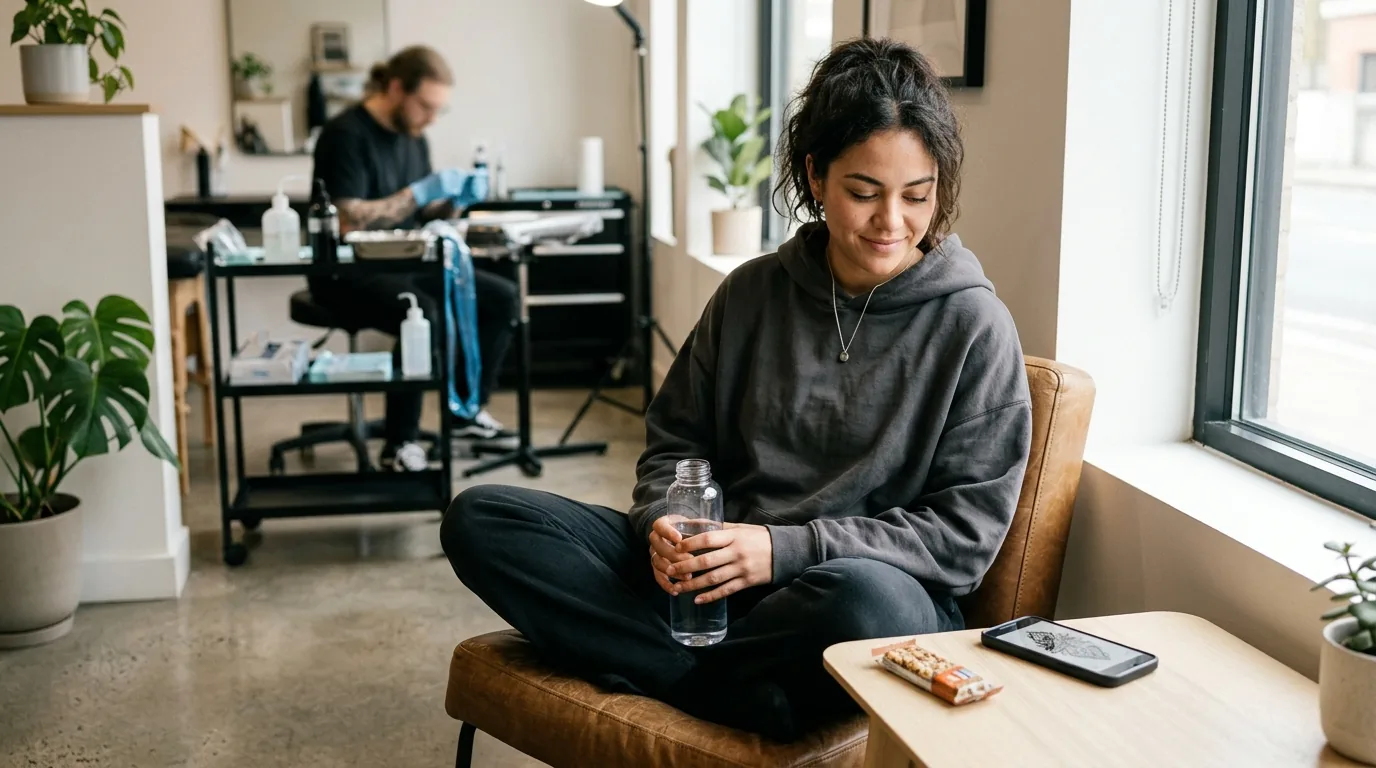
Eat a solid, balanced meal within a couple of hours of your appointment. Aim for something with protein and complex carbohydrates that will keep your blood sugar stable, rather than a sugar rush that spikes and crashes. If your session is going to run several hours, bring a snack and a sugary drink — juice, soda, or candy — to top up your energy during breaks. Many artists are completely fine with you eating during a long sitting; just ask.
What to Wear
The right clothing makes the session easier for both of you and saves your favorite outfit from getting ruined.
- Give the artist access. Choose clothing that exposes the area being tattooed without you having to undress awkwardly. Shorts for a thigh or calf, a loose tank for a shoulder or upper back, and so on.
- Wear dark colors. Stray ink, ointment, and a little blood are part of the process. Dark fabric hides it far better than light.
- Go loose, not tight. After the session, tight clothing rubbing directly on a fresh tattoo is uncomfortable and bad for healing. Loose fabric over the area is much better.
- Dress in layers. Shops are often kept cool for hygiene, and you may be sitting still for a long time. A layer you can add or remove keeps you comfortable.
What to Bring
A little packing goes a long way, especially for longer sessions. Consider bringing:
- Your ID. Shops are legally required to verify you are of age, every time, even if they know you.
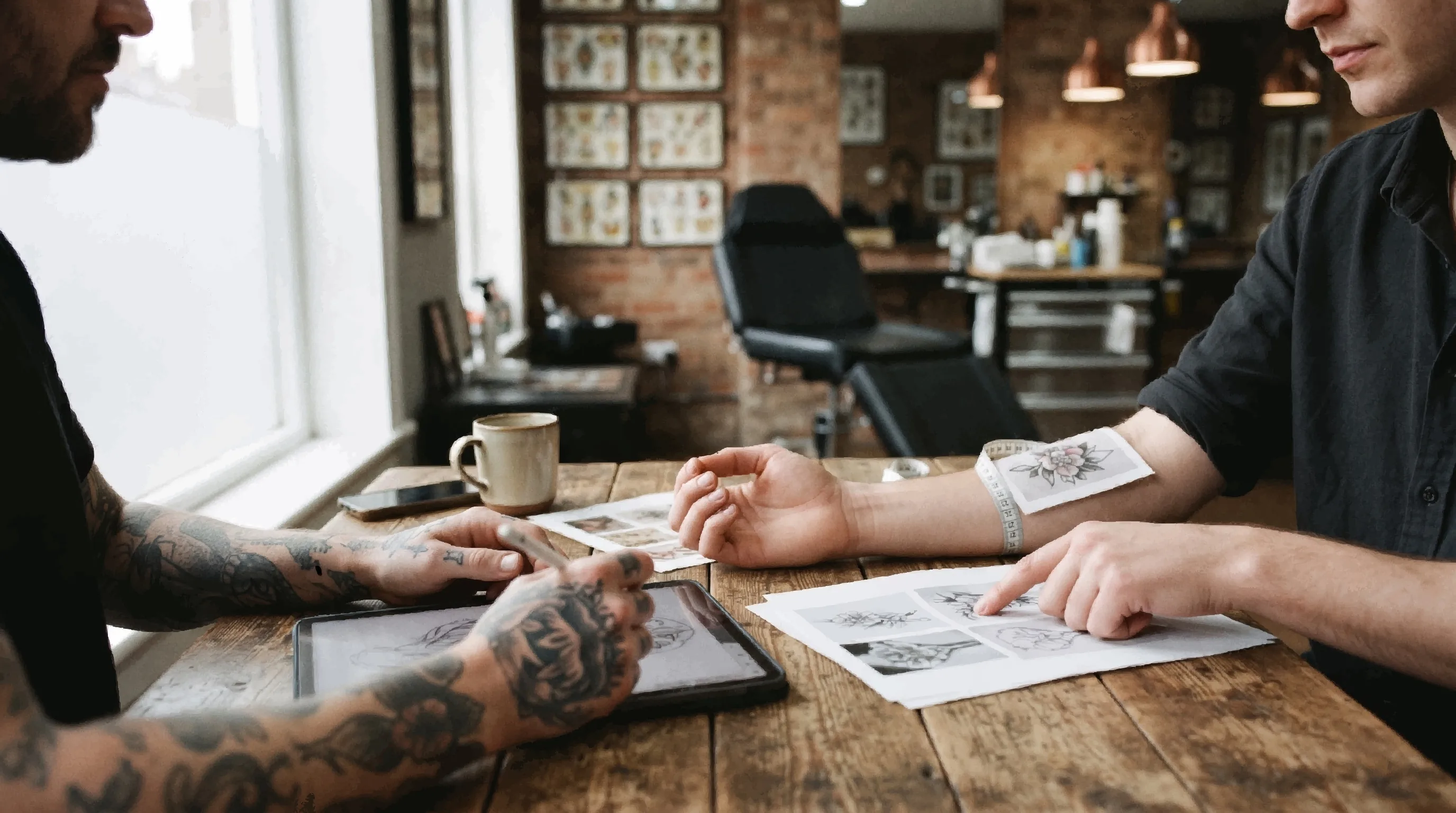
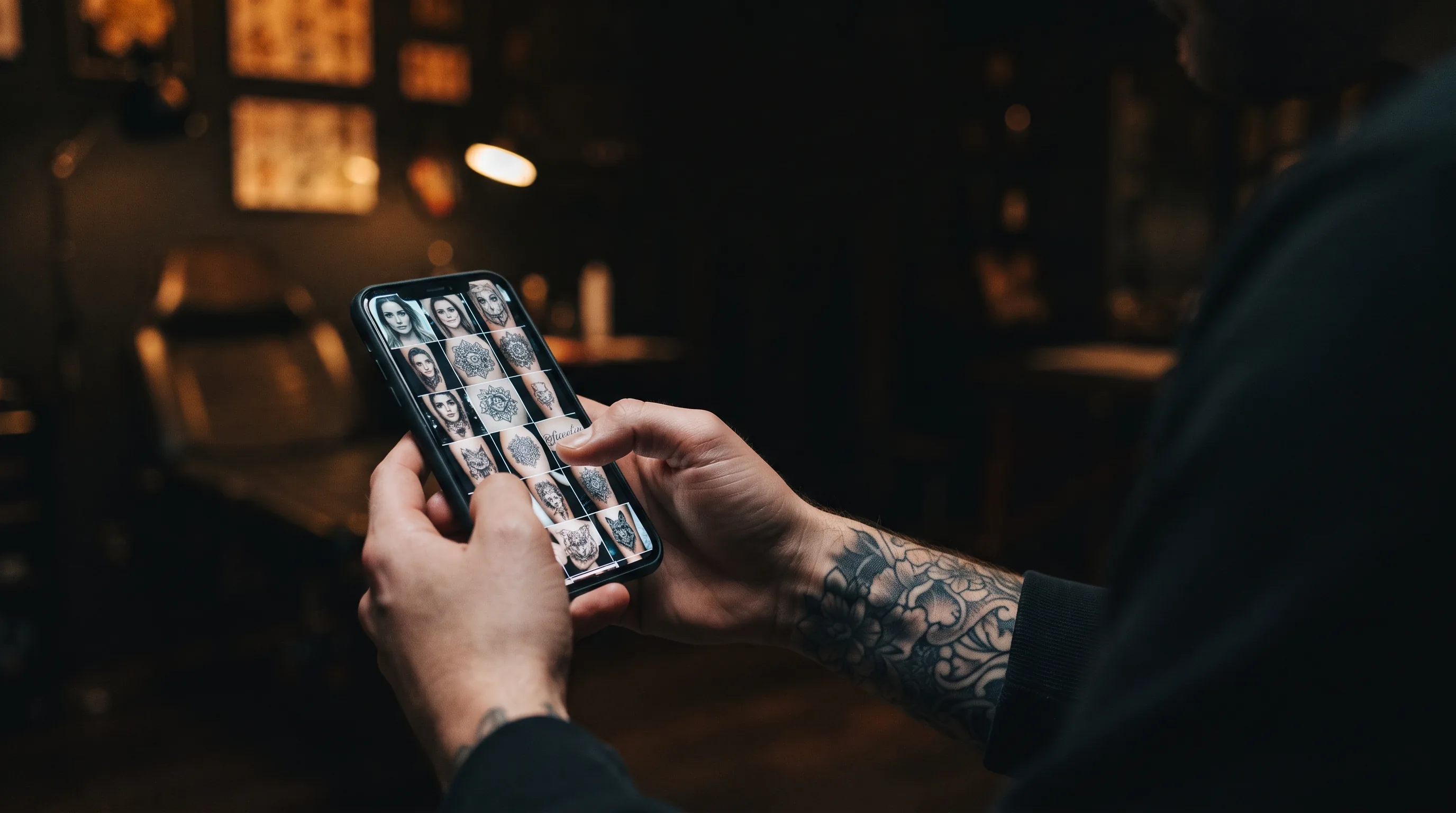
- Your reference images. Bring any photos, sketches, or notes about the design so you and the artist are working from the same vision.
- Payment, including a tip. Confirm in advance whether your artist takes card or cash only, and plan to tip for good work.
- Snacks and a drink. Especially for anything over a couple of hours.
- A distraction. Headphones, a charged phone, or a download to watch all help the time pass on longer pieces.
- A friend, if the shop allows it. Check first — many shops limit guests for space and hygiene reasons.
The Morning Of
On the day itself, the goal is to arrive clean, fed, calm, and on time.
- Shower and arrive clean. Come with the area washed and free of lotion, makeup, perfume, or self-tanner so the artist can prep a clean surface.
- Eat a real meal. Do not skip it because you're nervous — this is exactly when stable blood sugar matters most.
- Skip the lotion on the area. A clean, dry, product-free surface is what your artist needs to stencil and work on.
- Leave the alcohol alone. No "calming" drink to take the edge off — it works against you on every front.
- Give yourself time. Arriving a few minutes early, unhurried and relaxed, beats sprinting in stressed and out of breath.
Do You Need to Shave the Area?
You don't have to. Your artist will shave and prep the area themselves with a fresh, single-use razor right before they begin — it is part of their standard setup, and they would rather do it than deal with razor burn or small nicks from a rushed shave at home.
If you would prefer to do it yourself, shave gently a day or two ahead, never the same morning, and stop immediately if the skin gets irritated. Razor burn on the day of can be enough to delay the work. When in doubt, leave it to your artist — it is genuinely easier for everyone.
A Note on Numbing Cream
It is tempting to reach for a numbing cream to take the edge off, but do not apply anything without clearing it with your artist first. Some numbing products change the texture or moisture of the skin in ways that make it harder to tattoo cleanly, and an artist who is not expecting it may have to work around the effect. If you are genuinely worried about pain, raise it with your artist ahead of time — they deal with this every day and can tell you what, if anything, works for the kind of piece you are getting.
Manage Your Nerves
Some nervousness before a tattoo is completely normal, even for people who already have plenty of ink. The best things you can do are the same ones that prepare your body: sleep, food, water, and skipping the alcohol all steady your nerves as much as your blood sugar.
Beyond that, trust the process. You chose your artist for a reason — let them lead. Breathe deliberately through the harder moments, especially the first few minutes as you adjust to the sensation. It is completely acceptable to ask for a short break if you need one. A good artist wants you relaxed, because a calm, still client is easier to work on and ends up with a better tattoo.
How to Prepare for Your Tattoo Appointment FAQ
What should I eat before a tattoo appointment?
Eat a solid, balanced meal within a couple of hours of your appointment — something with protein and complex carbohydrates that will keep your blood sugar stable through the session. Low blood sugar is one of the most common reasons people feel faint or nauseous in the chair. For longer sessions, bring a snack and a sugary drink to keep your energy up during breaks.
Should I drink alcohol before getting a tattoo?
No. Avoid alcohol for at least 24 hours before your appointment. Alcohol thins your blood, which increases bleeding during the tattoo, dilutes the ink, makes the work harder for your artist, and can affect how well the tattoo heals. Many artists will refuse to tattoo someone who appears intoxicated. The same caution applies to blood-thinning painkillers like aspirin and ibuprofen — ask your artist what they recommend.
What should I wear to a tattoo appointment?
Wear loose, comfortable clothing that gives the artist easy access to the area being tattooed and that you do not mind getting ink or ointment on. If you are getting a thigh or hip piece, bring or wear shorts; for a back or shoulder, a loose tank top or a top you can adjust easily. Dark colors hide stray ink better than light ones. Dress in layers, since shops are often kept cool.
Should I shave before my tattoo appointment?
You do not have to — your artist will shave and prep the area themselves with a fresh, sterile razor before they begin, and they would rather do it than risk razor burn or nicks from a rushed shave at home. If you do choose to shave, do it gently a day or two ahead, never the same morning, and skip it entirely if the skin is irritated. When in doubt, leave it to your artist.
How should I prepare my skin before a tattoo?
In the days leading up to your appointment, keep the area well moisturized and avoid sunburn at all costs — an artist cannot tattoo over sunburned, peeling, or broken skin and will have to reschedule you. Stay hydrated in the days before, since well-hydrated skin takes ink better. On the day of, arrive with the area clean and free of lotion, makeup, or self-tanner.