Hand and finger tattoos look incredible in photos. They are also among the most demanding placements in tattooing — harder to heal, faster to fade, and more likely to need touch-ups than almost anything else on your body. Before you book, here is what actually happens to ink on hands and fingers, and what that means for your decision.
Why Hands and Fingers Are Different
Most areas of the body that get tattooed are relatively stable. The upper arm, back, or thigh sit under clothing, stay mostly protected from the sun, and do not bend dramatically hundreds of times per day. Hands are the opposite.
Your hands are washed multiple times daily, exposed to sun constantly, flexed and stretched with every movement, and in contact with friction from tools, fabric, and surfaces all day long. The skin on your palms and fingers is also structurally different — it lacks hair follicles, sits over very little fat and muscle, and is directly connected to bone. That combination makes tattooing hands and fingers a genuinely different technical challenge compared to most placements.
None of this means you should not get one. It means you should understand what you are committing to before you sit down.
Healing: Why It Is Harder Than Other Placements
Hand and finger tattoos heal poorly compared to most placements — and that is not a reflection of your aftercare. It is the nature of the skin.
The epidermis on the palms and fingers is significantly thicker than elsewhere on the body. Ink has a harder time settling at a stable depth. The constant movement and stretching of the skin during healing pulls at fresh work in ways that tattooed skin on your torso or arm simply does not experience. Many people find that patches of ink lift or fall out during the peeling phase, leaving uneven spots even with perfect aftercare.
This is so common that many experienced artists include a free touch-up in their pricing for hand and finger work — because they fully expect the first pass to not settle cleanly. If an artist quotes you a hand tattoo without mentioning the healing reality, that is worth asking about directly.
During healing, keep the tattoo as dry as possible, avoid submerging in water, and apply a thin layer of unscented moisturizer when the skin feels tight. You will go through a heavier and more prolonged peeling phase than a tattoo elsewhere. Let it peel naturally — never pick or force it, as this is where uneven settling happens.
Fading: The Unavoidable Reality
Hand and finger tattoos fade faster than tattoos almost anywhere else on the body. This is not a defect in the work — it is physics.
Sun exposure is relentless on hands. UV radiation breaks down ink pigment over time, and because most people do not apply SPF to their hands the way they do their face, the fading compounds quickly. Friction from daily life — gripping, typing, using tools, wearing gloves — physically wears down the superficial layers of skin where ink lives. Repeated washing and the use of soaps and sanitizers accelerates this further.
A well-executed hand tattoo on someone who takes care of it can look sharp for two to three years. After that, most people notice softening of lines, reduced contrast, and in some cases significant blurring. Fingers specifically tend to blur — the ink migrates through the thin skin over time, and what was once a crisp line becomes diffuse.
Touch-ups are part of owning a hand or finger tattoo. Budget for them going in, not as a surprise after the fact.
Blowouts: A Specific Risk on Fingers
A tattoo blowout happens when ink is deposited too deep in the skin, causing it to spread beyond the intended outline and create a blurred or blown-out appearance. Blowouts are a risk on any tattoo, but fingers are particularly vulnerable.
The skin on the fingers is extremely thin and sits directly over bone and tendon. Needle depth that would be perfectly calibrated on a thick-skinned area like the outer thigh can go too deep on a finger. The knuckles are especially prone to this — the skin compresses against the bone during tattooing, which changes how deep the needle actually penetrates.
An experienced artist who regularly tattoos hands and fingers knows how to adjust their technique for this. This is not the placement to experiment with an artist you are unsure about.
Pain: Among the Highest on the Body
Hands and fingers rank at the top of almost every pain scale for tattooing, and for good reason. The skin is thin, the nerve density is extremely high — your fingertips are among the most sensitive parts of your entire body — and the needle works very close to bone.
The knuckles are particularly intense. The skin there is thin and compresses against bone with every pass of the needle. The webbing between fingers is also extremely sensitive. The tops of the hands are more tolerable but still harder than a fleshy, well-padded placement.
Sessions are usually short as a result. A full set of knuckle tattoos might take under an hour. This is not because the designs are simple — it is because the area cannot tolerate extended work the way a back or thigh can. Short, focused sessions are the right approach here.
Styles That Hold Up on Hands and Fingers
Not every tattoo style is appropriate for hands and fingers, and choosing the wrong one is a common mistake. The instinct is to bring in a fine line or detailed piece — something that looks beautiful in references on social media. The problem is that delicate work does not survive on this placement.
Styles That Work
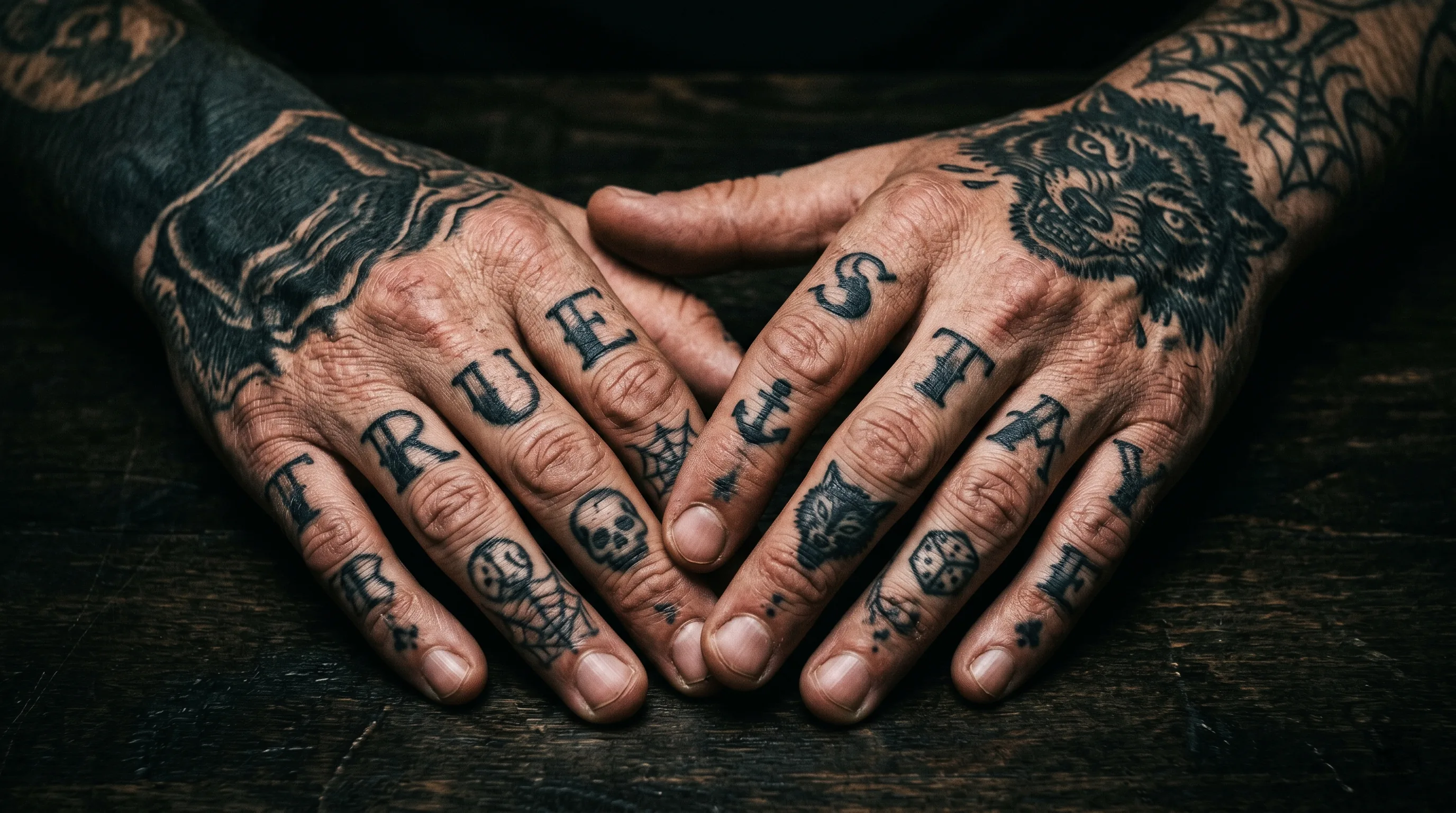
- Traditional flash: Bold outlines and flat solid fills hold up better than almost anything else. The thick lines that define traditional tattooing resist blurring far longer than hairline strokes.
- Blackwork and geometric: Strong, simple shapes with heavy black fill age well. The boldness of the design compensates for the natural softening that will happen over time.
- Single bold letterforms: One letter per finger, thick and simple, is a classic that works. Thin script across a finger is another story.
- Simple symbols and shapes: A clean circle, a minimal eye, a single bold animal silhouette — these translate well to the limited canvas of a finger.
Styles to Avoid
- Fine line and single needle: Hairline strokes on fingers blur within a year or two. What looks delicate and precise when fresh often becomes a grey smudge as the ink migrates.
- Detailed realism: The resolution required for realism cannot be maintained on a finger at this scale. Realistic portraits, animals, or objects will lose their definition quickly.
- Intricate script: Long phrases in thin lettering on fingers almost always blur into illegibility. Short, bold words or initials fare much better.
- Colour-heavy designs: Colour ink fades significantly faster than black on hands due to UV exposure. If you do want colour, keep it to solid, saturated fills within strong black outlines.
Professional and Social Considerations
Hand tattoos are visible in almost every professional situation — job interviews, client meetings, family gatherings, medical appointments. How much this matters depends entirely on your field and your personal circumstances.
Tattooing has become far more widely accepted across industries in the last decade. Plenty of professionals in creative fields, trades, healthcare, and even business have visible hand tattoos without professional consequence. But some industries, roles, and workplaces still carry expectations that visible hand tattoos do not fit — and it is worth being honest with yourself about your specific situation before making a permanent and highly visible choice.
This is not a reason not to get one. It is simply a factor that a face or neck tattoo also carries, and that a tattoo on your ribs does not. Consider it clearly and decide with full information.
Finding the Right Artist
Not all tattoo artists are equally comfortable with hands and fingers, and some experienced artists decline the placement entirely. This is not a red flag — it often reflects an honest assessment of how difficult these tattoos are to execute and maintain.
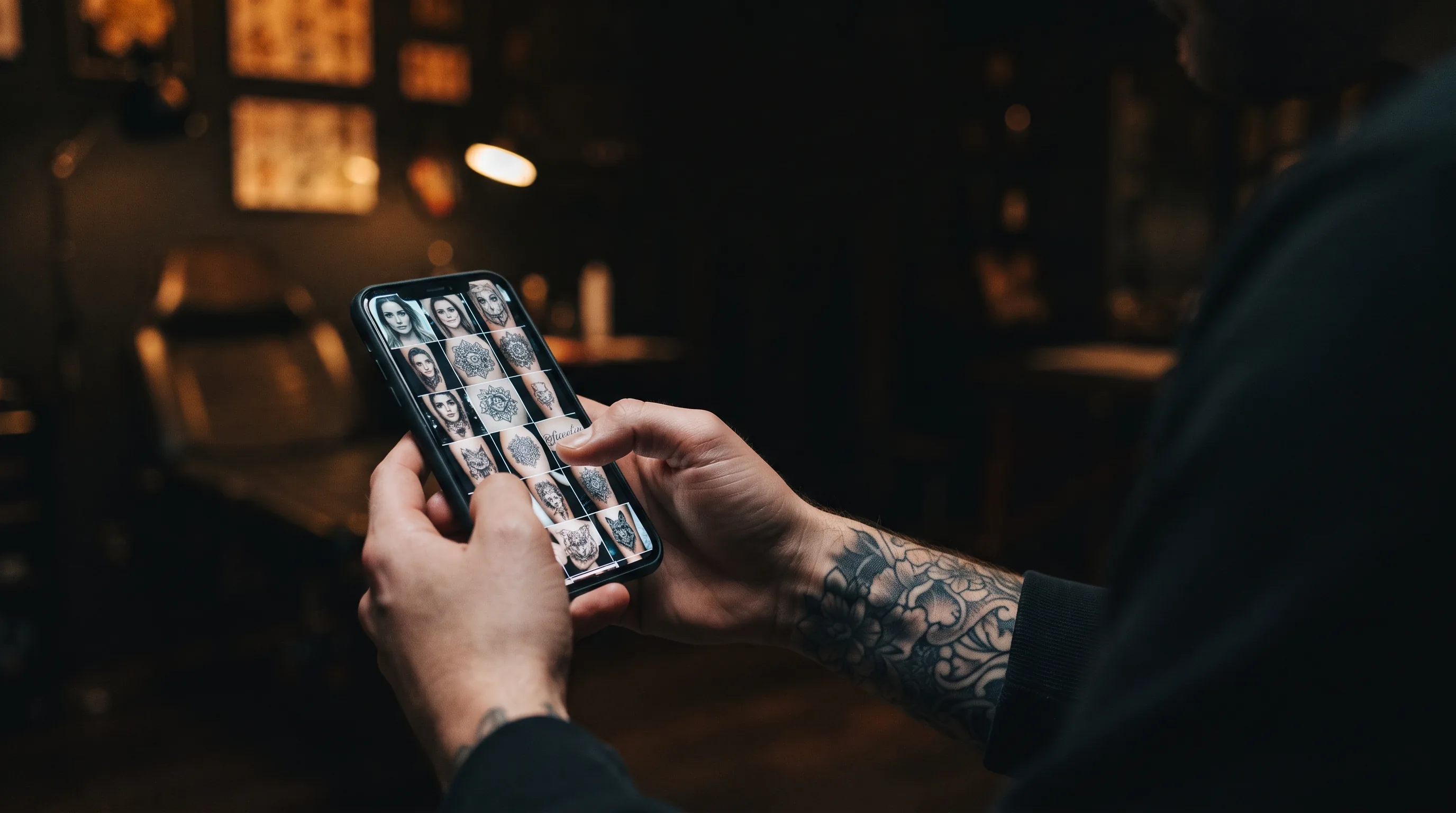
When looking for an artist, specifically ask to see their portfolio of hand and finger work. Look for healed examples, not just fresh photos — healed results are the real test of how the work settles. Ask about their healing experience with the placement: do they offer touch-ups? What do they recommend in terms of style and scale?
An artist who talks through the challenges, recommends a simpler design than what you originally came in with, and discusses the reality of maintenance is a good sign. An artist who simply agrees to whatever you bring in without any of that conversation is not necessarily the right choice for a placement this demanding.
Touch-Ups: Plan for Them
Unlike a tattoo on your back or thigh where a single session may look great for ten years or more with minimal maintenance, hand and finger tattoos require ongoing care. Plan for a touch-up every one to two years depending on your lifestyle, sun exposure, and how aggressively the placement fades.
Some artists offer the first touch-up included in the original price, knowing the placement heals imperfectly. Others charge standard rates for subsequent sessions. Either way, build the cost of periodic touch-ups into your long-term thinking about this tattoo — not as a failure of the original work, but as a normal part of the commitment.
Daily sunscreen on the tattooed area — not just on beach days, but as a consistent habit — is the single most effective thing you can do to slow fading between touch-ups.
Hand & Finger Tattoo FAQ
Do hand and finger tattoos fade faster than other tattoos?
Yes — significantly faster. The skin on the hands and fingers undergoes constant friction, flexing, washing, and sun exposure. These factors break down ink faster than almost any other placement. Expect a hand or finger tattoo to lose sharpness within one to three years and require touch-ups to maintain its original appearance.
How painful are hand and finger tattoos?
Very painful. Hands and fingers rank among the highest on the tattoo pain scale. The skin is thin, the bone is close to the surface, and the area is dense with nerve endings. The knuckles and the webbing between fingers are particularly intense. Sessions are usually short because the area cannot tolerate extended work the way a thigh or back can.
What tattoo styles work best on hands and fingers?
Bold, simple designs with strong black linework hold up best. Traditional flash, geometric shapes, and thick blackwork survive the movement and friction far better than delicate fine line or detailed realism. Thin lines on fingers often blur into each other over time as the ink migrates through the skin. Keep it simple and bold.
How often do hand tattoos need touch-ups?
More frequently than almost any other placement. Many artists recommend budgeting for a touch-up every one to two years for hand and finger tattoos, depending on lifestyle and sun exposure. Some artists include a free touch-up with the original booking because they expect the healing to be imperfect.
Will I have trouble getting a hand tattoo booked?
Some artists refuse to tattoo hands and fingers, especially on clients who do not already have significant tattoo coverage. This is not an arbitrary rule — it reflects the reality that hands and fingers heal poorly, require frequent touch-ups, and are highly visible in professional settings. If an experienced artist declines, it is worth understanding why before seeking out someone who will say yes without asking questions.