There is a persistent piece of bad advice floating around tattoo culture: that dark skin is "harder" to tattoo, that color won't show, that you should stick to black and stay small. Almost none of that holds up. Ink goes into the same layer of skin on everyone, and some of the oldest continuous tattoo traditions on earth developed entirely on deep skin tones. What genuinely changes is how a design reads once it heals — and how much your artist has actually practiced reading it.
Where the Ink Actually Sits
Melanin — the pigment that determines skin tone — lives in the epidermis, the outermost layer of skin. Tattoo ink is deposited below that, in the dermis. That relationship doesn't change from one person to the next: a tattoo on deep skin is placed at the same depth, with the same machine, using the same pigments as a tattoo on pale skin.
What differs is what sits on top. The epidermis acts as a thin, semi-translucent layer over the ink underneath, and the more melanin it contains, the more it filters what you see. The tattoo is not weaker or shallower. You're simply looking at it through a slightly different window, and that window softens low-contrast pigments far more than it softens bold ones.
Contrast Is the Real Variable
Every tattoo is readable because of the difference between the ink and the skin around it. That is true on every skin tone — it's just that on pale skin almost any pigment clears the bar easily, so people rarely have to think about it. On deeper skin, contrast becomes the design constraint you actually plan around.
This reframes the whole question. It isn't "can I get color?" It's "does this specific palette separate from my specific skin tone, and will it still separate in five years?" A saturated crimson on rich brown skin has enormous contrast. A pale mint green does not. Neither outcome has anything to do with your skin being difficult — it's the same reasoning an artist uses when they tell anyone that a washed-out grey design will disappear over time.
What Consistently Works Well
- Bold blackwork and heavy black shading. The single highest-contrast option available, and it ages exceptionally well. Blackout work, ornamental blackwork, and solid black fills all read cleanly on deep skin.
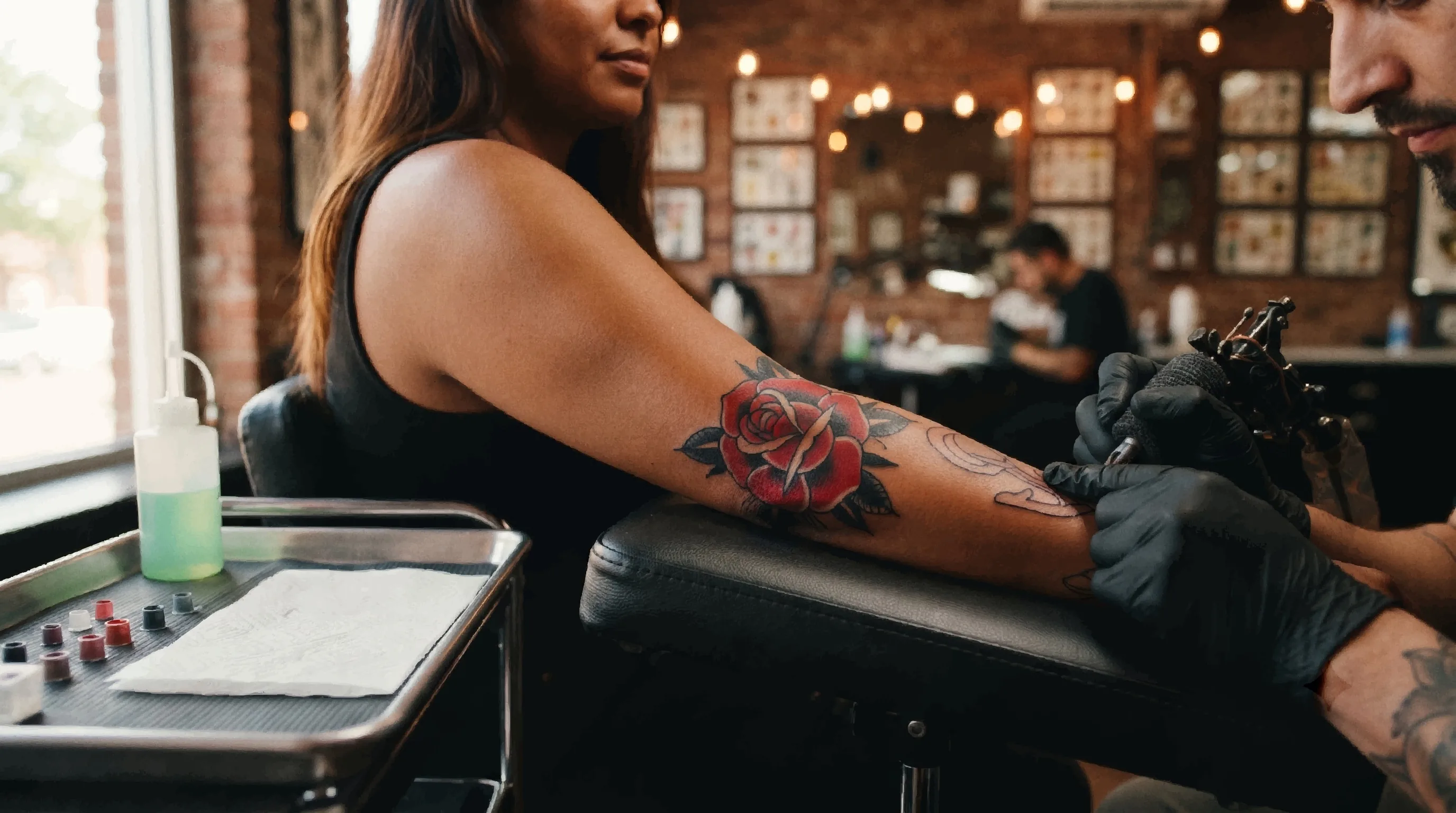
- American Traditional and Neo-Traditional. Both styles are built on thick black outlines with saturated color inside them. That outline does the heavy lifting for readability, which is exactly why these styles hold up on every skin tone — the same qualities that make them age well make them work here.
- Polynesian, Samoan, and other Indigenous traditions. These styles were developed over centuries specifically on deep skin. They are not a compromise or a fallback — they're the proof of concept.
- Dotwork and stippling with real density. Works beautifully as long as the dots are packed tightly enough to build a readable value, rather than scattered so lightly they blend into the skin.
- Saturated, deep color. Rich reds, warm oranges, deep blues, forest greens, and strong purples all carry well when they're packed solidly. Color absolutely works — the requirement is saturation, not avoidance.
Where People Actually Run Into Trouble
There are real limitations. They're narrower and more specific than the folklore suggests, and naming them precisely is more useful than a blanket warning.
- White ink. White is unreliable on every skin tone — it fades, yellows, and often heals nearly invisible regardless of who it's on. On deep skin it typically heals faint or slightly ashy rather than bright. Treat white as an accent an experienced artist places deliberately, not as a highlight you can count on.
- Pastels and light washes. Baby blue, blush pink, pale lavender, and soft yellow are low-contrast pigments by nature. They tend to sink into the surrounding tone and keep sinking as the tattoo ages.
- Very fine single-needle work. It can be done well, but fine line deposits the least pigment of any style, so it has the least margin for error anywhere it's applied. On deep skin that reduced margin is simply more visible sooner. If you want fine line, go slightly heavier on line weight than the reference photo you're bringing in.
- Light grey wash with no black anchor. Soft, low-value grey shading needs somewhere to sit against. Without solid blacks or clean linework holding the piece together, it reads as a smudge rather than a form. This is a common failure point in black and grey work generally, and it shows up faster here.
Healing, Keloids, and Hyperpigmentation
A few things are worth knowing honestly before you book, none of which are reasons not to get tattooed.
- Keloid scarring is more common on deeper skin. Keloids are raised scars that grow beyond the boundary of the original wound, and they occur more frequently in people with more melanin. If you or close family members have formed keloids before — from piercings, surgery, acne, or an old cut — say so at your consultation and consider talking to a dermatologist first. A small test piece in a low-risk spot is a reasonable way to find out how your skin responds before committing to something large.
- Post-inflammatory hyperpigmentation is a real healing quirk. Deeper skin is more prone to darkening in response to irritation. Picking at scabs, letting a fresh tattoo burn in the sun, or an aggressive reaction to a product can leave a darkened halo or patchy area around the piece that takes weeks or months to even out. Gentle healing isn't just good practice here — it directly affects the final look.
- The ashy phase is normal. During the flaking stage, most tattoos look dull, grey, and cloudy, and on deep skin that dry-skin cast can be more pronounced and more alarming. It settles. Knowing what each week of healing should look like saves a lot of unnecessary panic — and makes it much easier to spot the difference between normal healing and an actual infection, since redness reads differently on deeper skin and warmth, swelling, and pain are more reliable signals than color alone.
None of this is medical advice. If you have a keloid history, an active skin condition, or you're unsure how your skin scars, a dermatologist is the right person to ask before you book.
Vetting an Artist Is the Whole Game
This is the part that matters more than style, palette, or placement combined. Most bad outcomes on dark skin are not skin problems — they're experience problems. An artist who has spent years working almost exclusively on pale skin has calibrated their line weight, saturation, and value range for a different canvas, and that calibration doesn't transfer automatically.
- Ask for healed photos, not fresh ones. Fresh work flatters everyone — it's still swollen, still wet, still holding surface ink that will flake away. Healed photos at three months or later are the only honest evidence. This is the single most useful question you can ask any artist, on any skin tone.
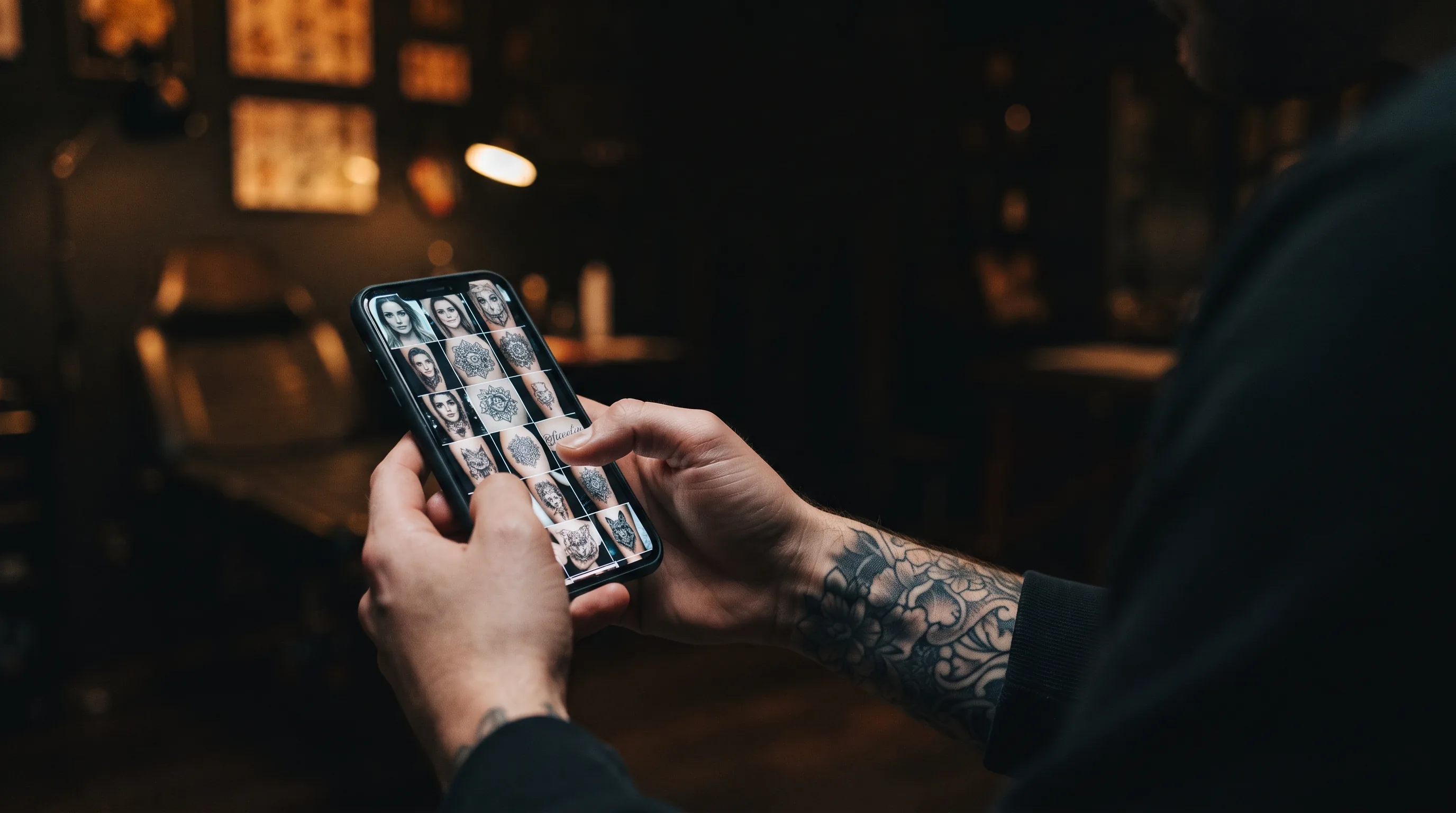
- Look for healed work on skin close to yours. Not one photo. A pattern. If a portfolio has hundreds of pieces and none of them are on deep skin, that tells you what they've practiced.
- Watch how they answer the question. "Here's a healed piece from last spring, and here's how I'd adjust the line weight for you" is the answer you want. "Color doesn't really work on your skin" is not a fact about your skin — it's an artist telling you what they haven't learned to do.
- Stencil handling is a quiet tell. Standard violet stencils can be hard to see on deeper tones. Artists who work on dark skin regularly have already solved this — different stencil products, brighter transfer paper, better lighting. An artist who's visibly figuring it out on you in the moment probably hasn't done it much.
Our guide to finding and choosing a tattoo artist covers the general vetting process; treat healed work on skin like yours as one more non-negotiable item on that checklist.
What to Bring Up at the Consultation
A good consultation on this topic is short and straightforward. You're not asking for a favor — you're giving your artist the information they need to design something that works.
- Ask them to design for your skin tone rather than adapting a reference photo taken on someone else's.
- Ask directly which colors from your idea they'd push more saturated, and which they'd swap out.
- Ask whether they'd increase line weight relative to the reference — and by how much.
- Mention any keloid or scarring history, plus any skin conditions in the area.
- Ask to see the stencil in good light before they start, and speak up if you can't read it clearly.
- Talk about size honestly. Designs that rely on tiny internal detail lose that detail first; going a size up is often the difference between a piece that stays readable and one that needs touch-ups far sooner than it should.
Long-Term Care That Matters More Here
Once healed, the maintenance rules are the same as any tattoo — they just carry a bit more weight when contrast is the thing keeping your design readable.
- Sunscreen is not optional. Melanin provides meaningful natural protection, but it does not stop UV from breaking down tattoo pigment. Sun exposure is still the number one cause of a faded tattoo, and protecting it properly preserves the contrast the whole design depends on.
- Keep the skin moisturized long after it's healed. Dry, ashy skin scatters light across the surface and mutes what's underneath. Well-hydrated skin genuinely makes an older tattoo look sharper.
- Don't panic-judge a piece at week three. Contrast settles as the epidermis fully regenerates. Give it a solid month before deciding anything needs a touch-up.
Tattoos on Dark Skin FAQ
Can you get color tattoos on dark skin?
Yes. Saturated, deep colors — rich reds, oranges, blues, greens, and purples — read clearly on deep skin when they're packed solidly by an artist who knows how to build that saturation. Pastels, very light washes, and white are the pigments that struggle, because they don't create enough contrast against the surrounding tone. Any artist who tells you color simply doesn't work on dark skin is describing their own portfolio, not a rule.
Do tattoos hurt more or heal differently on dark skin?
Pain has nothing to do with skin tone — it's driven by placement, session length, and your own pain tolerance. Healing follows the same stages as well, with two differences worth knowing: deeper skin is more prone to post-inflammatory hyperpigmentation if it's irritated, and it's also more prone to keloid scarring in people who have that history. Gentle aftercare and no picking matter more as a result.
Does white ink show up on dark skin?
Not reliably, and honestly not on any skin tone. White ink fades, yellows over time, and often heals nearly invisible. On deep skin it usually heals faint or slightly ashy rather than bright white. Use it as a small deliberate accent placed by an experienced artist, never as a design element you're counting on to carry the piece.
How do I find a tattoo artist experienced with dark skin?
Look through portfolios specifically for healed photos — at least three months out — on skin tones close to yours, and look for a consistent pattern rather than one example. Ask the artist directly how they'd adjust line weight and color choices for your skin. An artist with real experience will answer with specifics; one without it will usually deflect or tell you to stick to black.
Should I avoid fine line tattoos if I have dark skin?
You don't have to avoid them, but go in with realistic expectations. Fine line work deposits the least pigment of any style, so it has the smallest margin for error on every skin tone and blurs or softens sooner. Asking your artist for slightly heavier line weight than the reference image gives the design far more staying power without changing its character.