All tattoos fade eventually — but there is an enormous difference between a tattoo that still looks sharp twenty years later and one that has gone soft and muddy in five. The gap usually comes down to a handful of very controllable factors: sun exposure, skin hydration, placement, and a few habits people never think about until it is too late. Here is exactly what causes tattoos to fade and what you can do about it, starting today.
The Main Causes of Tattoo Fading
Before you can prevent fading, it helps to understand what actually causes it. Tattoo ink sits in the dermis — the second layer of skin — where it is constantly in contact with your immune system, the sun, and the mechanical stress of everyday life. Four factors do the most damage:
- UV exposure: Ultraviolet light breaks down pigment molecules directly. It is the single biggest cause of fading, and it works on both healed and fresh tattoos.
- Dry skin: Dehydrated skin loses elasticity and clarity. Ink that sits in poorly moisturized skin looks dull and blown-out faster than ink in healthy, supple skin.
- Friction: Areas that experience constant rubbing — waistbands, bra straps, shoe lines, inner arms — fade faster because the skin in those areas turns over more quickly.
- Ink color and style: Some pigments are chemically less stable than others. Light colors, yellows, and pinks fade fastest. Bold black linework holds the longest.
Sunscreen Is Non-Negotiable
If you do only one thing to protect your tattoos, make it sunscreen. UV radiation is the fastest and most consistent fader of tattoo ink, and it does not take a beach day to cause damage — daily incidental exposure on your commute, through a car window, or during a walk adds up over months and years.
Apply SPF 30 or higher (SPF 50 is better) to any tattooed skin that will be exposed to sunlight. Mineral sunscreens with zinc oxide or titanium dioxide are the most stable option. Apply generously and reapply every two hours if you are spending extended time outdoors. When coverage is possible — long sleeves, UV-blocking clothing — that is even more effective than sunscreen alone.
One important note: do not apply sunscreen to a tattoo that is still healing. Wait until the skin is fully closed and no longer peeling before introducing sunscreen. During the healing window, keep the tattoo covered and out of the sun entirely.
Moisturize Consistently
Dry, flaky skin scatters light instead of reflecting it evenly — which is exactly why an under-moisturized tattoo looks faded even when the ink itself has not moved much. Regular moisturizing keeps the skin supple, which makes the tattoo read more clearly and slows the appearance of fading.
Use a fragrance-free, dye-free lotion or cream daily. Apply it when your skin is slightly damp after a shower to lock in moisture more effectively. Avoid anything with alcohol high on the ingredient list, as alcohol dries the skin over time. Lotions with ingredients like shea butter, ceramides, or hyaluronic acid are solid long-term choices for tattooed skin.
Watch Where Your Tattoo Lives
Placement plays a larger role in longevity than most people realize, and it is the one factor you cannot change after the fact. Certain body areas simply age better than others:
- High-friction zones fade fast: Fingers, hands, inner wrists, feet, and areas under bra straps or waistbands experience constant mechanical wear. Ink in these areas migrates and softens more quickly, and touch-ups are almost expected.
- Joints and flex points: The inner elbow, behind the knee, and the ankle crease flex thousands of times a day. Skin in these areas regenerates rapidly, which means ink cycles out faster.
- Flat, well-padded areas hold best: The outer upper arm, thigh, back, and shoulder blade give ink the most stable environment. These placements age the most predictably.
If you are considering a placement known for fading, go in with realistic expectations — and budget for touch-ups.
Avoid Prolonged Sun and Water Exposure
While short daily exposure is manageable with sunscreen, extended time in direct sunlight — beach days, outdoor events, summer afternoons in a pool — is where real damage accumulates. UV exposure in water is especially intense because the surface reflects additional radiation from below.
Chlorinated water is a secondary concern. Prolonged soaking in pools does not fade healed tattoos dramatically in a single session, but repeated, extended exposure can gradually dull the skin and reduce the clarity of fine detail over time. The more significant risk is during the healing period, when soaking in any water can damage the ink before it has fully set.
Color Ink Needs Extra Attention
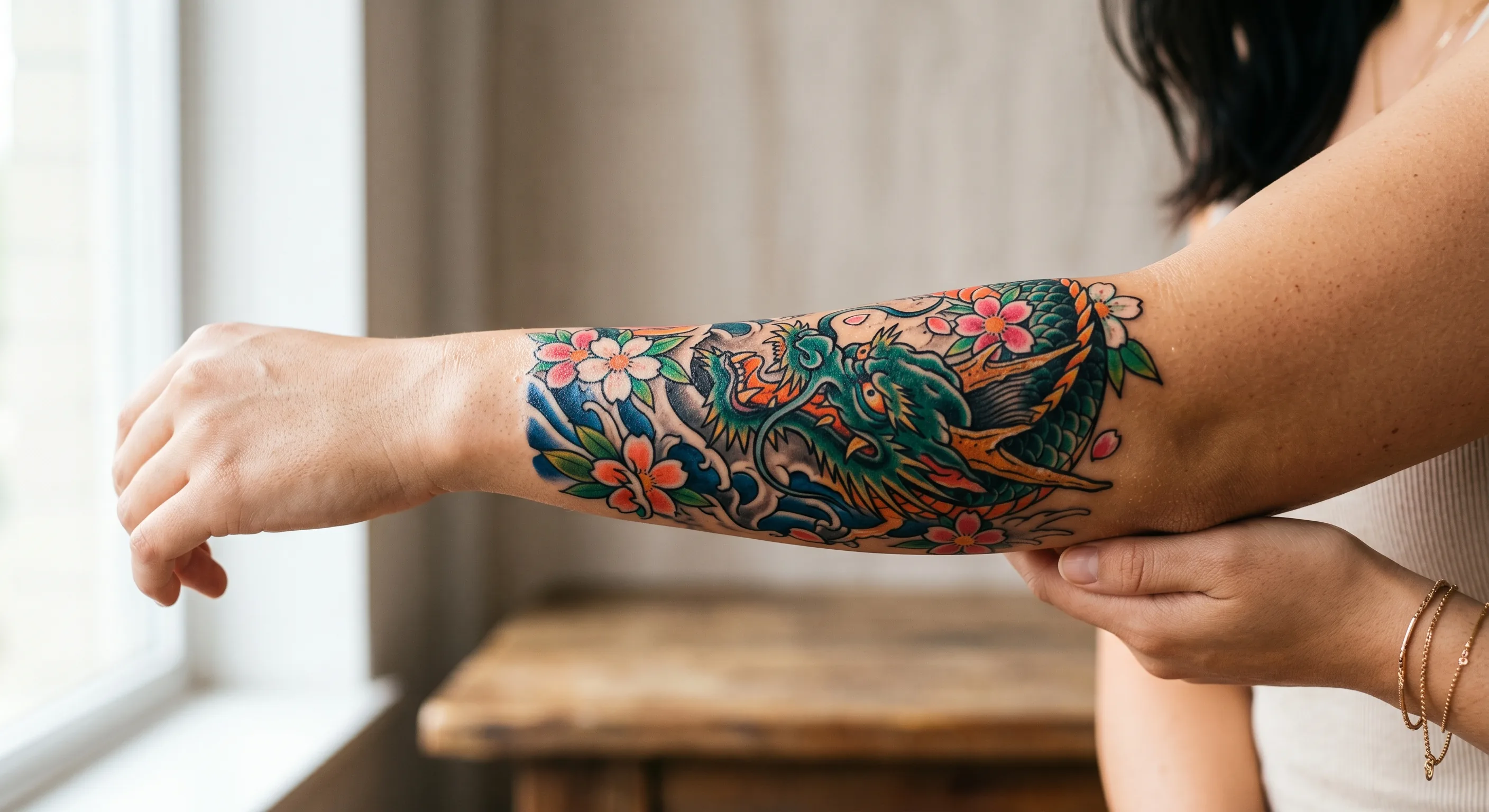
Not all pigments are created equal. Lighter colors — yellow, white, light pink, and pastel shades — contain less stable pigment and fade measurably faster than dark colors. Black and dark blue hold the longest because the pigment density is higher and the molecules are more UV-resistant.
If you have a color tattoo, sunscreen and consistent moisturizing matter even more than they do for black and grey work. Color pieces also benefit from periodic touch-ups to refresh areas where pigment has softened — particularly reds, yellows, and any light gradient work.
Overall Skin Health Matters More Than Most People Think
Your skin is the medium your tattoo lives in. Its overall health directly affects how ink looks over the long term. A few factors that most people overlook:
- Hydration: Well-hydrated skin from the inside out looks healthier and holds ink more clearly. Drink enough water daily — it affects skin elasticity in ways no moisturizer fully replaces.
- Smoking: Smoking accelerates skin aging and reduces collagen production. Studies consistently show faster skin degradation in smokers, which includes reduced tattoo clarity over time.
- Rapid weight changes: Significant weight gain or loss stretches or compresses the skin, which can distort and soften tattoo detail — particularly in larger pieces over the abdomen, chest, and thighs.
- Harsh soaps and exfoliants: Aggressive exfoliation, abrasive scrubs, and chemical peels applied directly over a tattoo accelerate surface skin turnover, which can dull the appearance of ink. Keep these products away from your tattooed skin.
Know When to Get a Touch-Up
No matter how well you care for a tattoo, some softening over time is inevitable — particularly in high-friction areas or pieces with very fine detail. Touch-ups are a normal part of owning a tattoo, not a sign that something went wrong.
Most tattoos do not need a touch-up for several years with good care. When you do notice lines softening or color losing its saturation, a single session with your original artist — or a specialist — can restore a significant amount of the original sharpness. Going back sooner rather than later is usually easier and cheaper than waiting until the piece has faded heavily.
The Short Version
Wear sunscreen on exposed tattoos every day. Moisturize consistently. Keep tattooed skin out of prolonged sun and water exposure. Choose placement with longevity in mind. And treat your skin well overall — it is the foundation everything else sits on. None of this is complicated, but doing it consistently is the difference between a tattoo that looks great for decades and one that starts fading in a few years.