A memorial tattoo carries more weight than almost any other kind of ink. It is not chosen for how it looks in five years so much as for what it means the day you get it — and every day after. That makes it one of the most personal, and most permanent, decisions you can make on your skin. This guide covers the most common ways people memorialize a person or a loss, how to think through symbolism and style, what is actually involved in incorporating ashes, and how to choose an artist you can trust with something this important.
Why Memorial Tattoos Matter So Much
Grief does not have a fixed shape, and neither does the way people choose to carry it. For many, a memorial tattoo is a way of keeping someone physically close — a permanent, visible reminder that does not fade the way memory sometimes does. It can mark a parent, a child, a partner, a friend, a pet, or a version of yourself you have moved past.
Unlike most tattoo decisions, a memorial piece is rarely about trends or what looks good on Instagram. It is about accuracy, meaning, and getting the details right — a birthdate, a signature, a specific shade of a flower someone loved. That shifts the priorities: precision and emotional resonance usually matter more than novelty.
Popular Memorial Tattoo Ideas
There is no single "right" way to memorialize someone. Most memorial tattoos fall into a handful of categories, often combined together into one cohesive piece.
- Portraits. A realistic rendering of the person's face is the most direct form of memorial tattoo, and also the most technically demanding. A portrait that is even slightly off in proportion or likeness can be painful to look at rather than comforting — this is one category where artist selection matters more than almost any other decision you'll make.
- Names, dates, and Roman numerals. A first name, a birth and death date, or a date rendered in Roman numerals are simple, timeless, and hold up well over decades when sized and spaced properly.
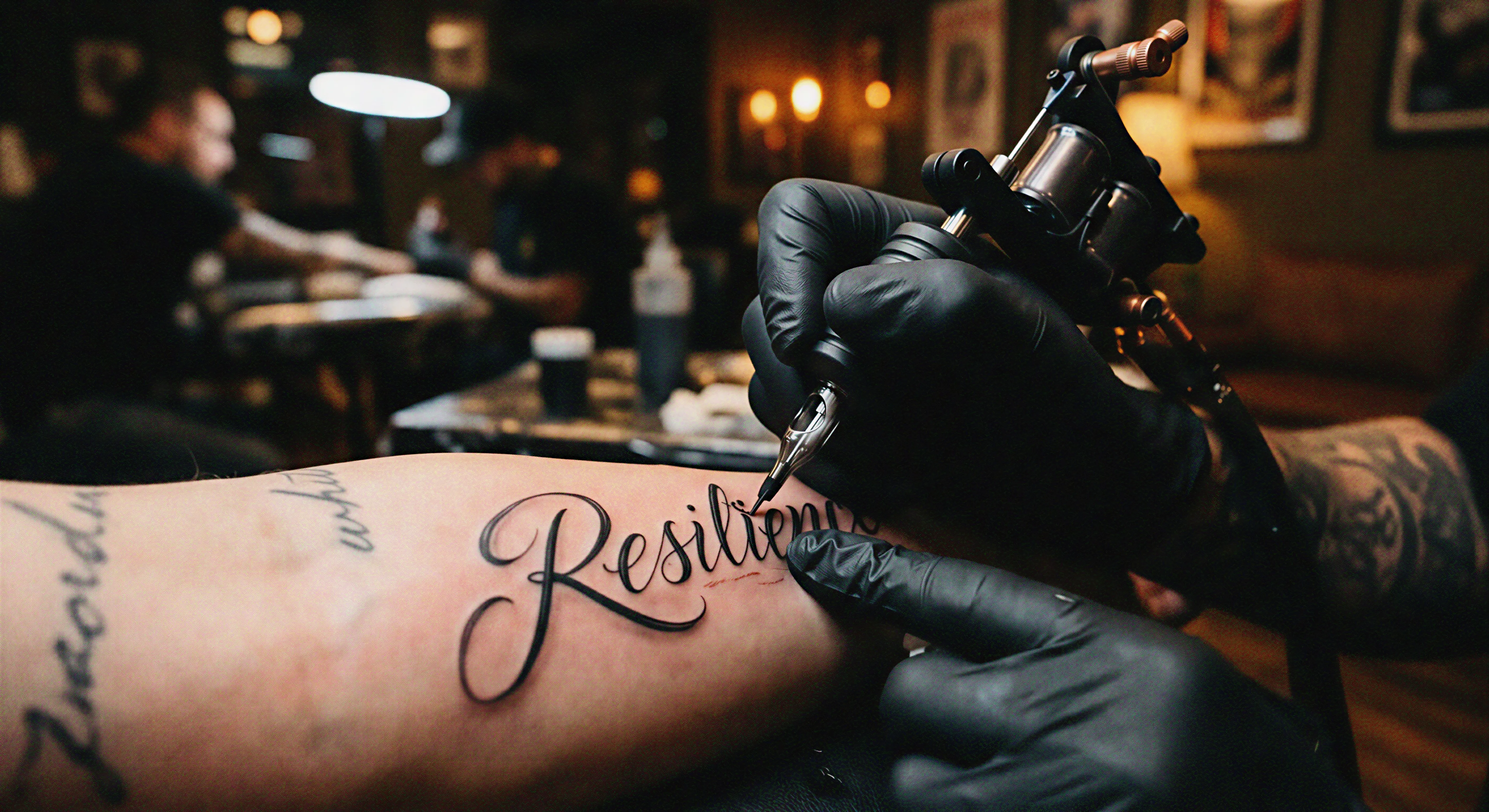
- Handwriting and signatures. Tattooing an actual scan of someone's handwriting — a signature, a note, "I love you" in their own hand — turns a physical trace of the person into something permanent. This has become one of the most requested memorial formats precisely because it is unmistakably theirs.
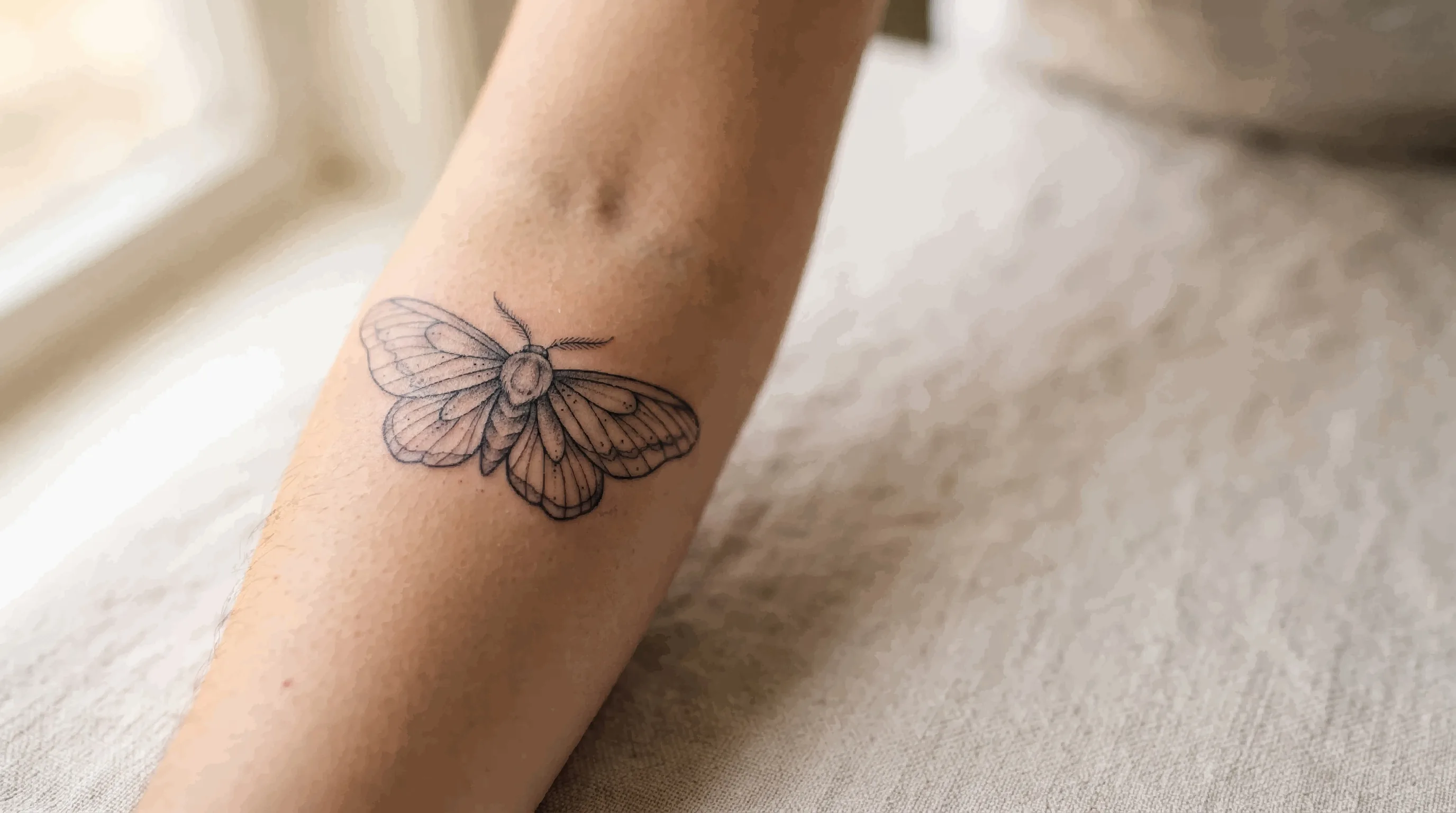
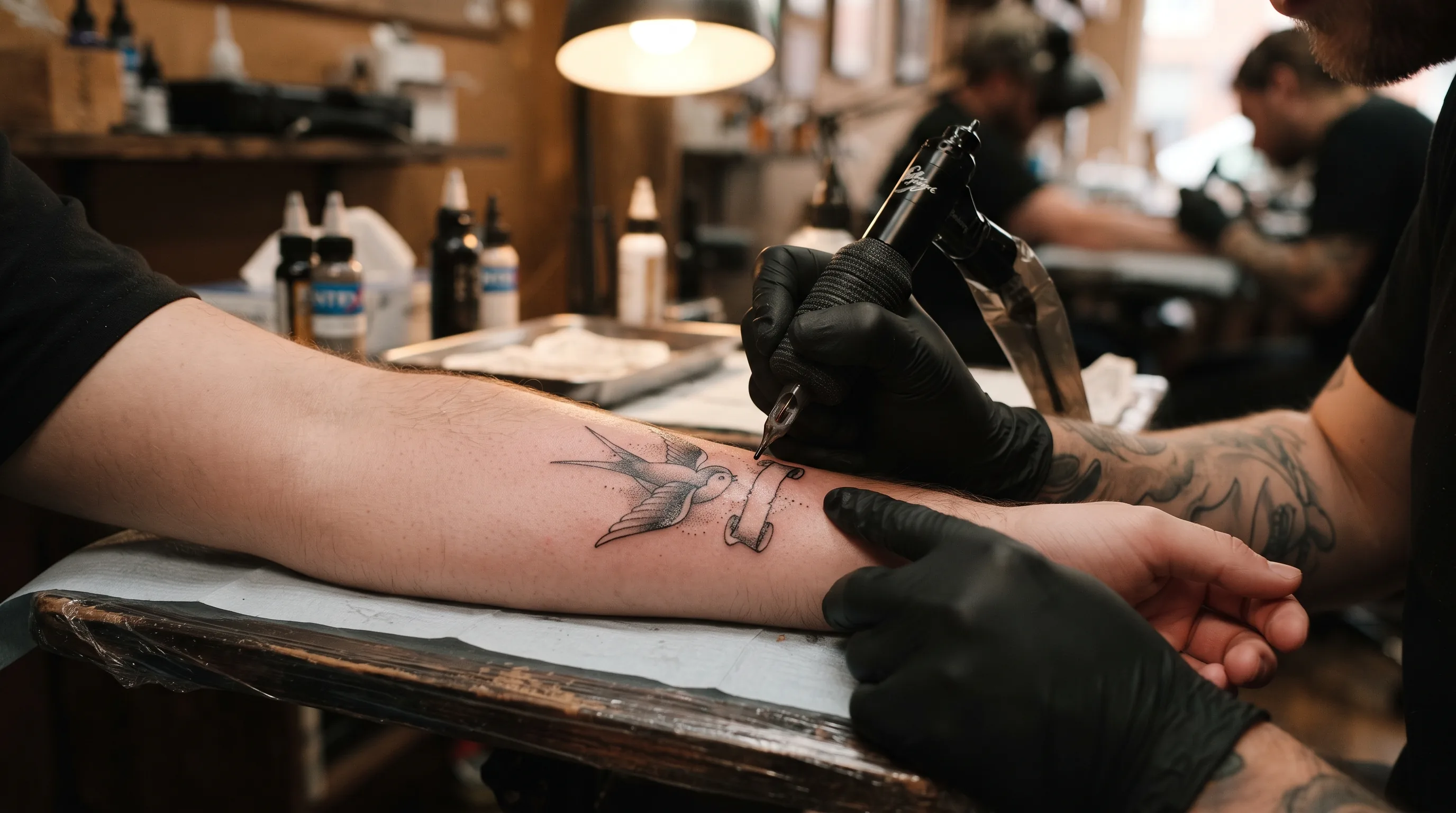
- Symbolic imagery. Birds (often sparrows or doves) in flight, butterflies, anchors, compasses, candles, hourglasses, and specific flowers all carry long-standing associations with loss, remembrance, and the passage of time. A flower can also be chosen for a more personal reason — a birth month flower, or simply what the person grew in their garden.
- Fingerprints. A tattooed reproduction of an actual fingerprint, taken from a keepsake, document, or ink impression, is one of the most literal and intimate memorial choices. It requires a clean, high-resolution source print for the artist to work from.
- Religious and spiritual symbols. Crosses, praying hands, rosary beads, angel wings, and other faith-specific imagery remain some of the most common memorial choices, particularly when they reflect the beliefs of the person being honored rather than the wearer alone.
- Objects and mementos. A specific item — a pocket watch that stopped at a meaningful time, a piece of jewelry, a favorite mug, a musical instrument — can be rendered in illustrative or realistic detail as a stand-in for the person's presence.
Incorporating Ashes or Hair Into the Tattoo
Some people choose to have a small amount of cremated ashes, or occasionally a lock of hair, mixed into the tattoo ink itself — sometimes called a "memorial tattoo" in the strictest sense, or an "ash tattoo." This is a real practice, but it is not something every shop or artist offers, and for good reason: it introduces sanitation and technical variables that a standard tattoo does not.
- Not every artist will do it. Mixing foreign material into tattoo ink can affect how the ink flows through the needle and how the skin reacts to it. Many artists decline for safety reasons, and that is a legitimate, professional position — not a lack of compassion.
- Ash must be properly prepared. Cremated remains need to be finely sifted and sterilized before they can be safely mixed with ink. Some studios that offer this service use a specific protocol or work with a small, tested quantity rather than raw ashes straight from an urn.
- It typically costs more. The additional preparation, consultation, and care involved usually comes with a premium over a standard piece of similar size and complexity.
- Ask directly, early. If this is something you want, raise it in your first consultation, not the day of your appointment. It affects which artists and shops are even an option for you, and it is not something to spring on a studio last minute.
Choosing the Right Style
The style of a memorial tattoo should serve the content, not the other way around.
- Realism is the standard choice for portraits and photo-accurate objects. It demands an artist with a proven, healed portfolio specifically in realism — this is not a style to gamble on with someone still building that specialty.
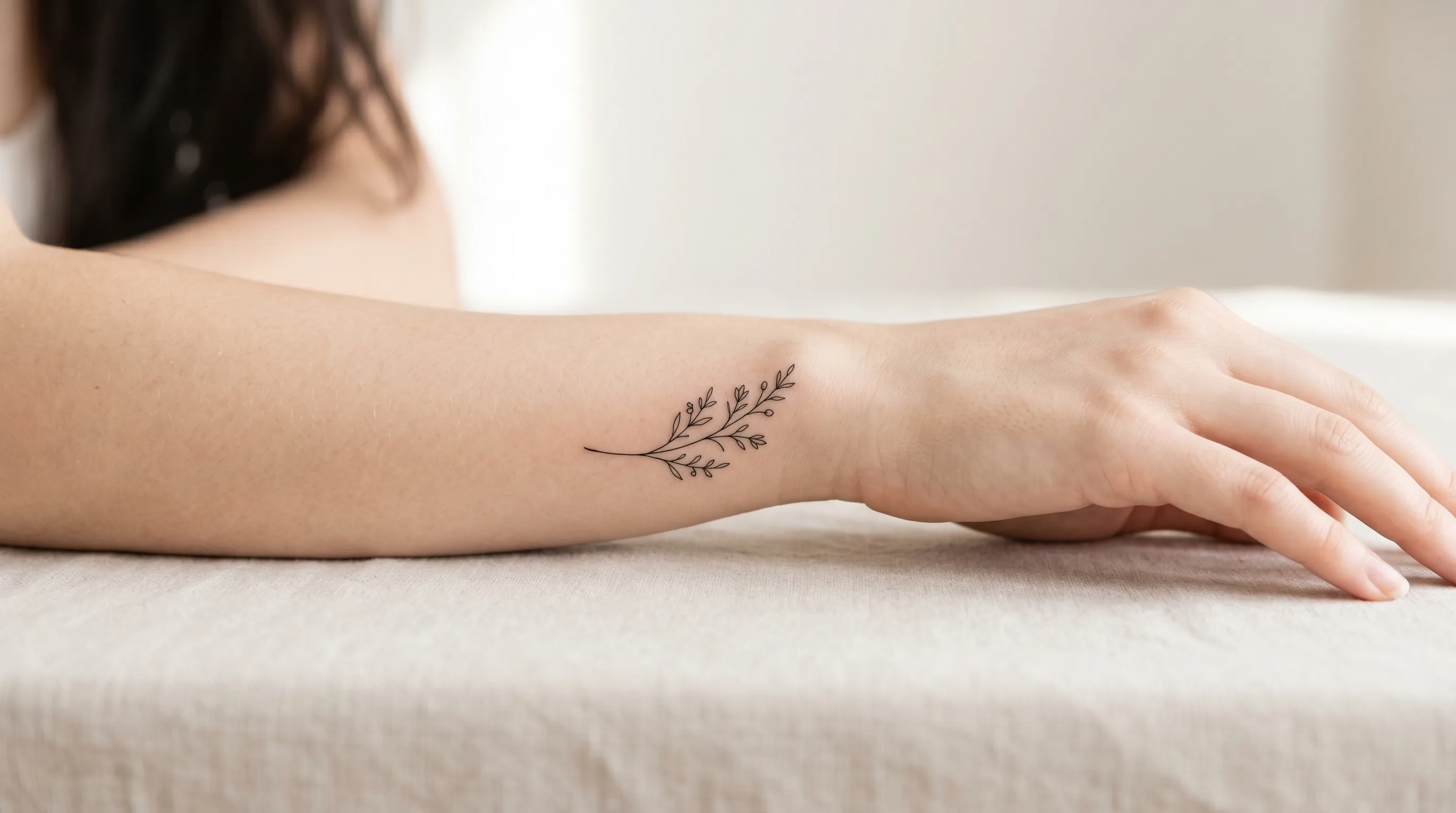
- Fine line suits handwriting, small symbols, and delicate botanical elements. It reads as understated and personal, though fine details need enough size and spacing to age well over the decades a memorial piece is meant to last.
- Traditional and neo-traditional hold up exceptionally well over time thanks to bold linework and solid color, which makes them a practical choice for symbolic imagery like birds, anchors, or flowers that you want to stay crisp for life.
- Blackwork and illustrative styles work well for combining several elements — a portrait alongside a name, or a symbol woven into a larger composition — into one cohesive scene.
Placement Considerations
Placement for a memorial tattoo is often driven by meaning rather than pure aesthetics, but practical factors still matter.
- Over the heart or chest: A common choice for its symbolism, though the chest is a more painful placement and portraits here need real skill to avoid distortion across the curve of the body.
- Forearm: Highly visible and easy to see yourself daily, which many people find comforting. Also one of the more forgiving placements for portrait and lettering work.
- Inner arm or ribs: A more private option for those who want the tattoo to be personal rather than constantly visible to others.
- Wrist: Common for small symbols, initials, or short handwriting — visible enough to see often, discreet enough to cover easily.
- Back or shoulder: Gives an artist more room for a detailed portrait or a larger composition combining multiple elements.
There is no wrong placement for a memorial tattoo. The right question is simply whether you want to see it often, show it to others, or keep it as something quietly yours.
What to Bring to Your Consultation
A memorial tattoo consultation benefits from more preparation than a typical appointment, since the artist is working from your memory and your materials rather than a design they can freely interpret.
- High-resolution photos. For a portrait, bring the clearest, best-lit photo available — ideally more than one angle if you have them. Blurry or low-resolution source photos make it much harder for even a skilled artist to achieve a strong likeness.
- A clean handwriting sample. For signature or handwriting tattoos, a high-contrast scan or photo on plain paper works best. Ink on lined paper or a faded pencil note is harder to trace accurately.
- Reference for fingerprints. A clear ink impression or a high-resolution scan from a document is needed — a blurry photo of a fingerprint generally will not translate well into a tattoo.
- Specific details. Exact dates, correct spelling of names, and any details that matter to you (a specific flower variety, a particular breed marking on a pet) should be confirmed before the appointment, not caught afterward.
Choosing an Artist for a Memorial Piece
Every artist recommendation that applies to tattoos generally applies even more strongly here. Look for multiple examples of the exact style you want — portraits if you want a portrait, fine line lettering if you want script — and prioritize healed photos over fresh ones, since that is what the tattoo will actually look like for the rest of your life.
It is also worth paying attention to how an artist communicates during the consultation. A good artist working on a memorial piece will ask thoughtful questions about the person, take time to get details right, and be honest if something you are asking for — an overly small portrait, for example — will not age well. That honesty is a sign of someone who takes the piece as seriously as you do.
Timing: When Is the Right Time?
There is no universal rule for how soon after a loss to get a memorial tattoo, and you do not need to justify your timeline to anyone. Some people find getting the tattoo soon after a loss genuinely helpful; others wait months or years until they feel ready to make a permanent decision while grieving. Both are completely normal.
The one practical consideration: if you are making a significant decision — a large portrait, a complex composition — while still in the rawest stage of grief, it can help to sit with the design for at least a few weeks before booking. This is not about the loss being less valid too soon; it is simply good practice for any large, permanent tattoo, memorial or otherwise.
Group and Family Memorial Tattoos
It is common for siblings, close friends, or an entire family to get matching or coordinated memorial tattoos honoring the same person — the same small symbol, the same handwriting, or variations of one design personalized slightly for each person. This can be a meaningful way to share the experience, though it is worth deciding together in advance on the core design so everyone getting it feels equally represented in it.
What to Avoid
- Rushing artist selection. This is one of the last places to book with whoever has the earliest opening. Wait for the right artist, even if it means waiting longer.
- Making a portrait too small. A face needs enough space to render accurately. Shrinking a portrait to fit a placement it was not designed for is one of the most common reasons memorial portraits end up disappointing.
- Skipping proofreading. Names and dates get tattooed incorrectly more often than you would expect. Double- and triple-check every date and spelling before the needle starts.
- Assuming every shop offers ash incorporation. Confirm this specifically and early if it matters to you, rather than assuming it is standard practice.
Final Thought
A memorial tattoo is one of the few pieces of body art where getting it "right" matters more than getting it fast, trendy, or cheap. Give yourself time to choose the right artist, gather the right reference material, and settle on a design that will still feel true to the memory years from now. Done well, it becomes exactly what it is meant to be — not a reminder of loss, but a permanent way of keeping someone with you.