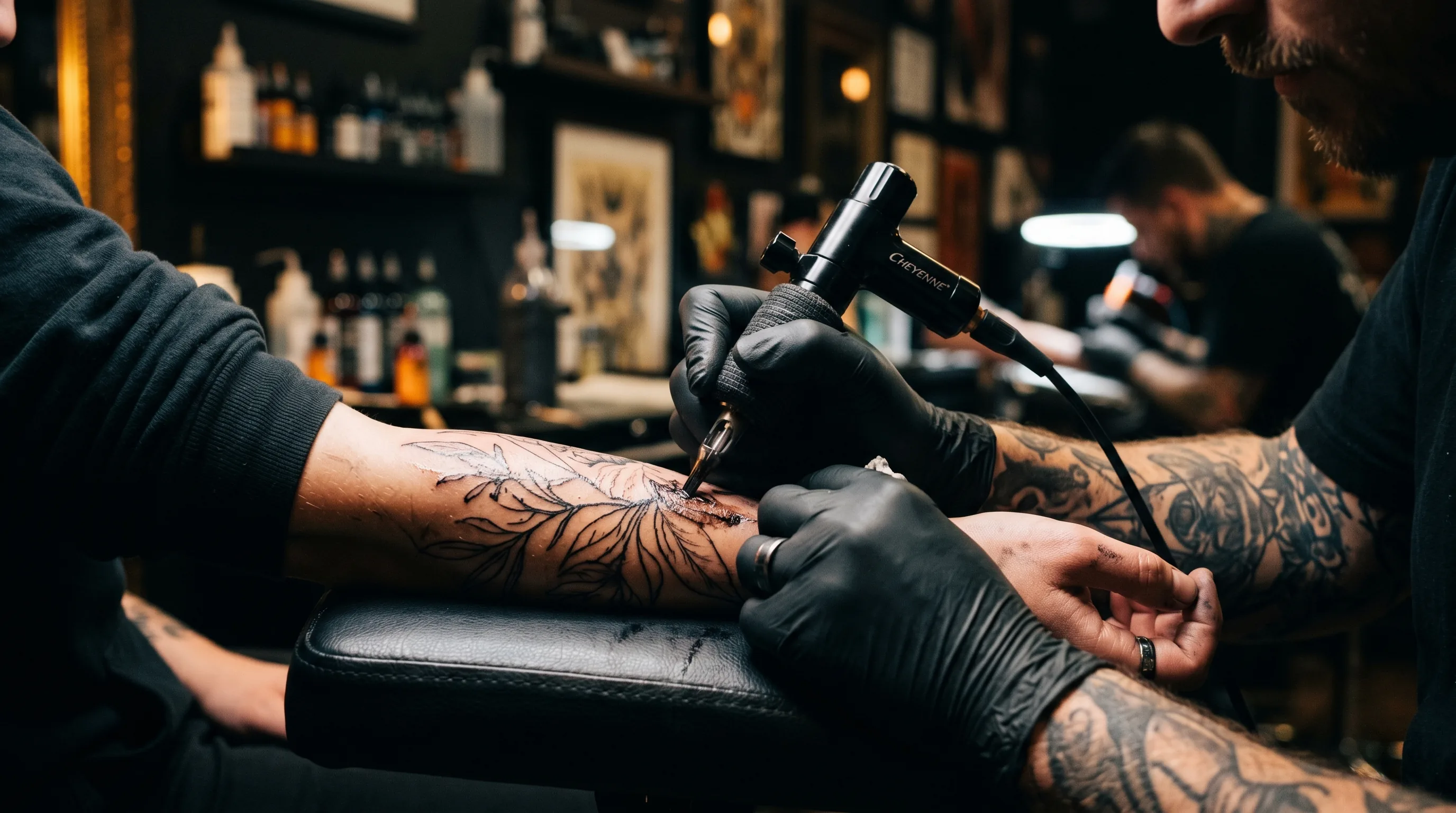
It is one of the first questions people ask when they start thinking seriously about getting a tattoo: how much is this going to cost? The honest answer is that tattooing does not have a universal price list, and it never will. What a tattoo costs depends on a combination of factors that are specific to your design, your chosen artist, and where you're getting it done. Understanding those factors is far more useful than any ballpark figure — because it tells you what you're actually paying for and helps you make decisions that hold up long after the appointment.
Size
Size is the most direct driver of cost for a simple reason: larger tattoos take more time to complete. A small, simple piece can be done in a single short session. A large, detailed back piece might require multiple full-day sittings spread across months or even years.
The relationship between size and time is not perfectly linear — a very detailed small piece can take longer than a large, simple one — but as a general rule, more surface area means more hours, and more hours means a higher investment.
Complexity
Two tattoos the same size can be vastly different in the time and skill they require. A simple outline takes far less time than a piece with heavy shading, fine detail, or dense packing. Factors that add complexity include:
- Linework density: Intricate line patterns, geometric precision work, and detailed illustrative designs require more careful, slow execution than open or bold designs.
- Shading and texture: Building realistic shadows, smooth gradients, or textured surfaces takes significant additional time compared to flat or simple fill work.
- Color work: Layering and saturating color — especially soft washes, gradients, or photorealistic color — requires multiple passes over the same area.
- Custom design: Original work designed specifically for you represents additional creative labor before the needle even touches skin.
Style
Different tattoo styles require different techniques, tools, and time investment. Traditional and neo-traditional work — bold lines, solid fills — tends to be more efficient to execute. Realism, fine line, watercolor, and intricate geometric styles are generally more time-intensive, require higher technical precision, and often command higher rates even at the same size.
The style you choose should match what you actually want long-term, not what seems fastest or cheapest. Certain styles also require an artist who genuinely specializes in them — and that specialization is part of what you're paying for.
Placement
Where a tattoo goes on the body can affect how long it takes and how the work is priced. Certain placements are technically more challenging than others — curved surfaces, areas with lots of movement, spots that are harder for the artist to access comfortably, or skin that behaves differently under the needle.
Placement also affects longevity. Areas that experience frequent friction, sun exposure, or skin movement tend to fade faster. A good artist will factor placement into their recommendation for your design — and sometimes that conversation changes the scope of the piece itself.
Artist Experience and Career Stage
This is where most of the variation in tattoo pricing comes from — and it's worth understanding clearly rather than assuming more expensive always means better.
An artist's rate reflects their demand, their level of specialization, and where they are in their career. An artist who has been tattooing for many years and has a long waitlist charges accordingly. An artist earlier in their career — building their portfolio, developing their style, taking on more clients — is typically more accessible. The question is whether their current skill level matches what your piece actually needs.
A straightforward, well-defined design in a style an artist is actively developing is a legitimate match. A technically demanding, complex piece benefits from an artist who has done that specific type of work many times. Reading portfolios honestly — not just finding the most impressive one you've seen — is how you make that call well.
Shop Location and Overhead
Where a shop is located directly affects what it costs to operate, and those costs are reflected in pricing. A studio in a major metropolitan area — high rent, high cost of living — has higher overhead than a studio in a smaller market. This does not mean city artists are better or that small-market artists are a bargain to exploit. It means that geography is one input among several.
The quality of the studio environment itself also matters: proper sterilization equipment, high-grade ink and supplies, a clean and professional setup. These are overhead costs that responsible shops do not cut corners on, and they are part of what makes a shop worth going to.
Session Structure: Hourly, Flat Rate, Half Day, Full Day
Tattoo artists and shops structure their pricing in different ways, and it's worth understanding what you're looking at when you book.
- Hourly rate: The artist charges per hour of work. This is common for large or complex pieces where the total time is hard to predict upfront. Sessions are booked by the hour and the final cost depends on how long the work actually takes.
- Flat rate: A fixed price agreed upon for the piece in advance. More common for smaller, well-defined designs or flash work where the scope is clear from the start.
- Half-day session: A block of several hours, typically three to five, booked as a unit. Common for medium-to-large pieces that need dedicated time but do not require a full day. It gives the artist a focused working window and lets the client plan around it.
- Full-day session: The longest format, typically six to eight working hours with breaks. Used for sleeves, large back pieces, and ambitious multi-element work. Full-day sessions are usually the most efficient way to complete large projects — the artist gets into a rhythm, and less time is spent on setup and prep across multiple shorter appointments.
If you are planning something large, asking an artist about session structure upfront helps you understand the total commitment — both in time and investment — before you book.
The Right Way to Think About Cost
Tattoos are permanent. The investment you make is not just for the session — it is for every year you carry that piece afterward. An artist whose work genuinely fits what you are trying to achieve, at a rate you can actually commit to without resentment, is the right artist for you right now. Stretching beyond your means for a name or settling for something mismatched to save money both tend to produce outcomes people regret.
The most useful question is not how much a tattoo costs in general — it is what this specific tattoo, done well, by the right person, is worth to you. When you frame it that way, the cost conversation becomes much clearer.
Frequently Asked Questions
Why do tattoo prices vary so much between artists?
Tattoo pricing reflects a combination of factors unique to each artist: their level of demand, the complexity of their specialty, their career stage, the overhead of their shop, and their geographic market. Two artists doing visually similar work can price it very differently for completely legitimate reasons. The variation is not arbitrary — it reflects the real inputs that go into each artist's work and business.
What makes one tattoo more expensive than another?
The main drivers are size, complexity, style, and placement. A large piece with intricate shading and fine detail in a technically demanding style will take significantly longer to complete than a small, bold, simple design — even if both are done by the same artist. More time and more technical demand translate directly to higher cost.
What is a half-day or full-day tattoo session?
A half-day session is typically a block of three to five hours of dedicated working time. A full day is usually six to eight hours, including short breaks. These formats are used for larger pieces where booking individual hourly slots would be inefficient. They give the artist continuous working time to get into a rhythm and make real progress on ambitious work. If you are planning a sleeve or large back piece, full-day sessions are often the most effective way to complete the project.
Should I choose a tattoo artist based on price?
Price should not be your primary filter. The right question is whether the artist's current portfolio — specifically work in the style you want — matches the quality your piece needs. An artist earlier in their career at a more accessible rate can be the right choice for the right design. An artist with a long waitlist and higher rates may be right for a more complex, ambitious piece. Match the artist to the work, not the other way around.
Why do some artists charge more than others?
Higher rates generally reflect higher demand, deeper specialization, or both. An artist with a long waitlist is signaling that more people want their work than they have time to complete — and pricing is one way to manage that demand. Specialization in technically demanding styles — realism, fine line, complex color — also commands higher rates because those skills take years to develop and are harder to find. Higher price does not automatically mean the best choice for every piece; it means higher demand and often higher technical specificity.