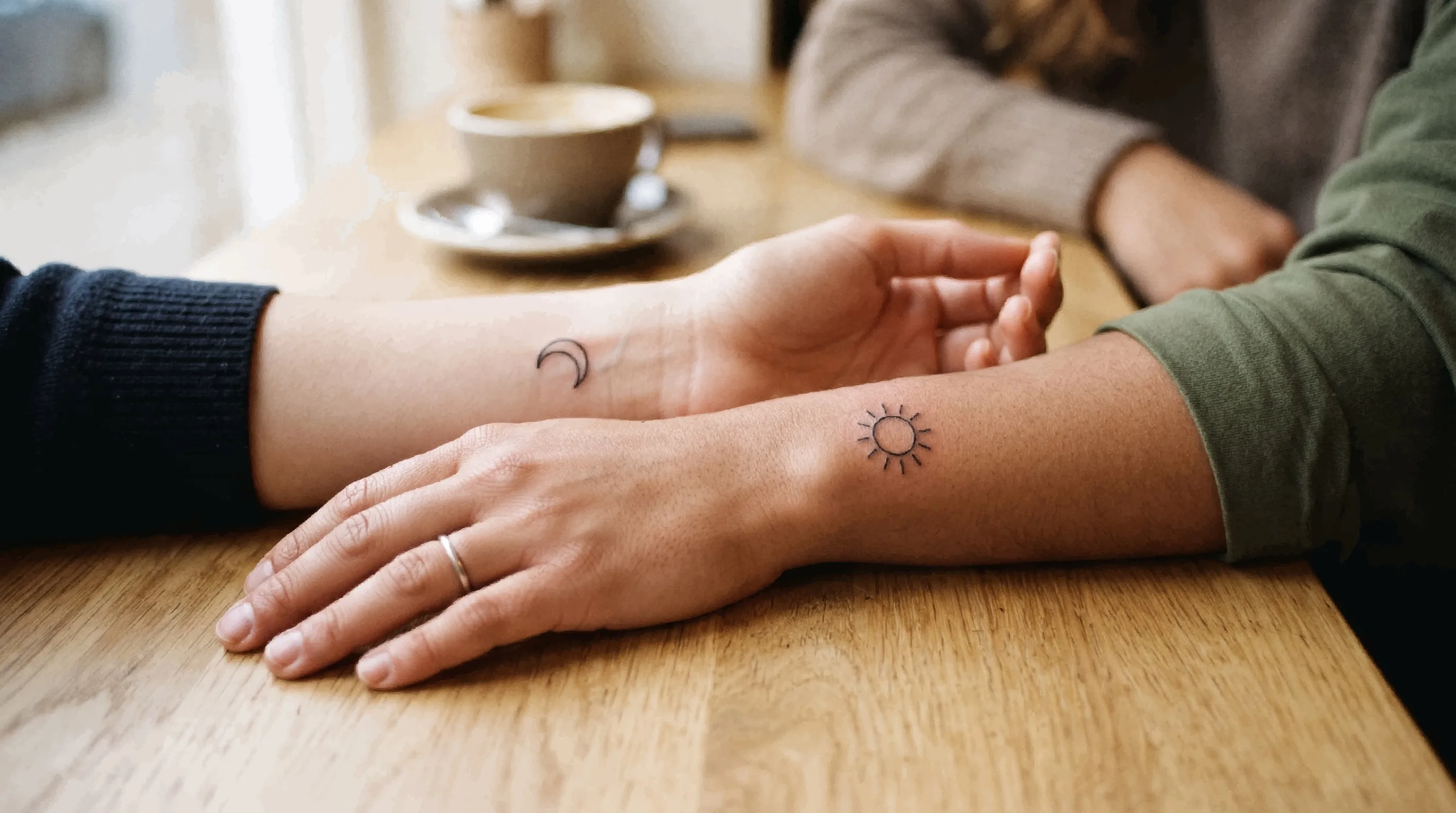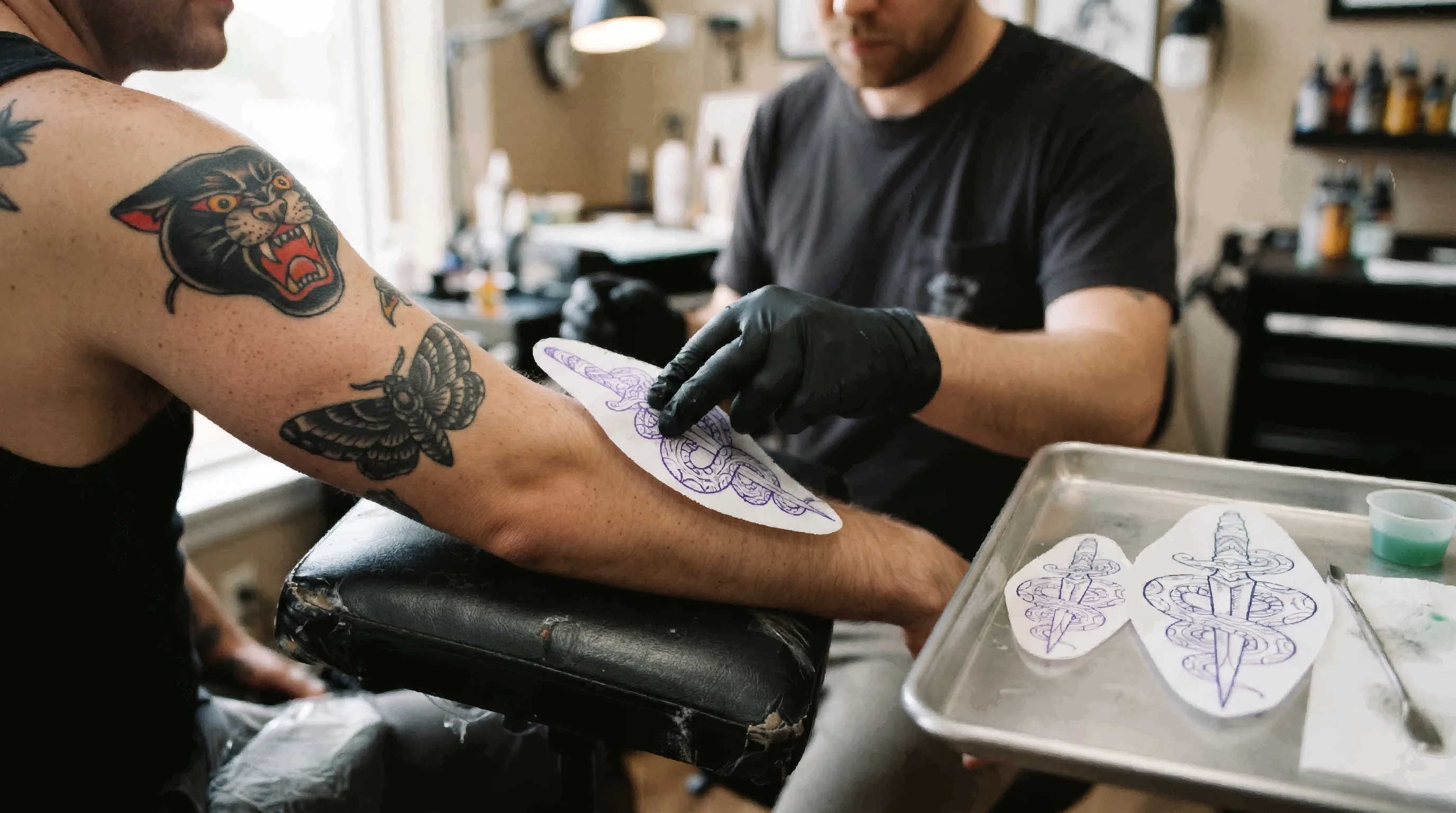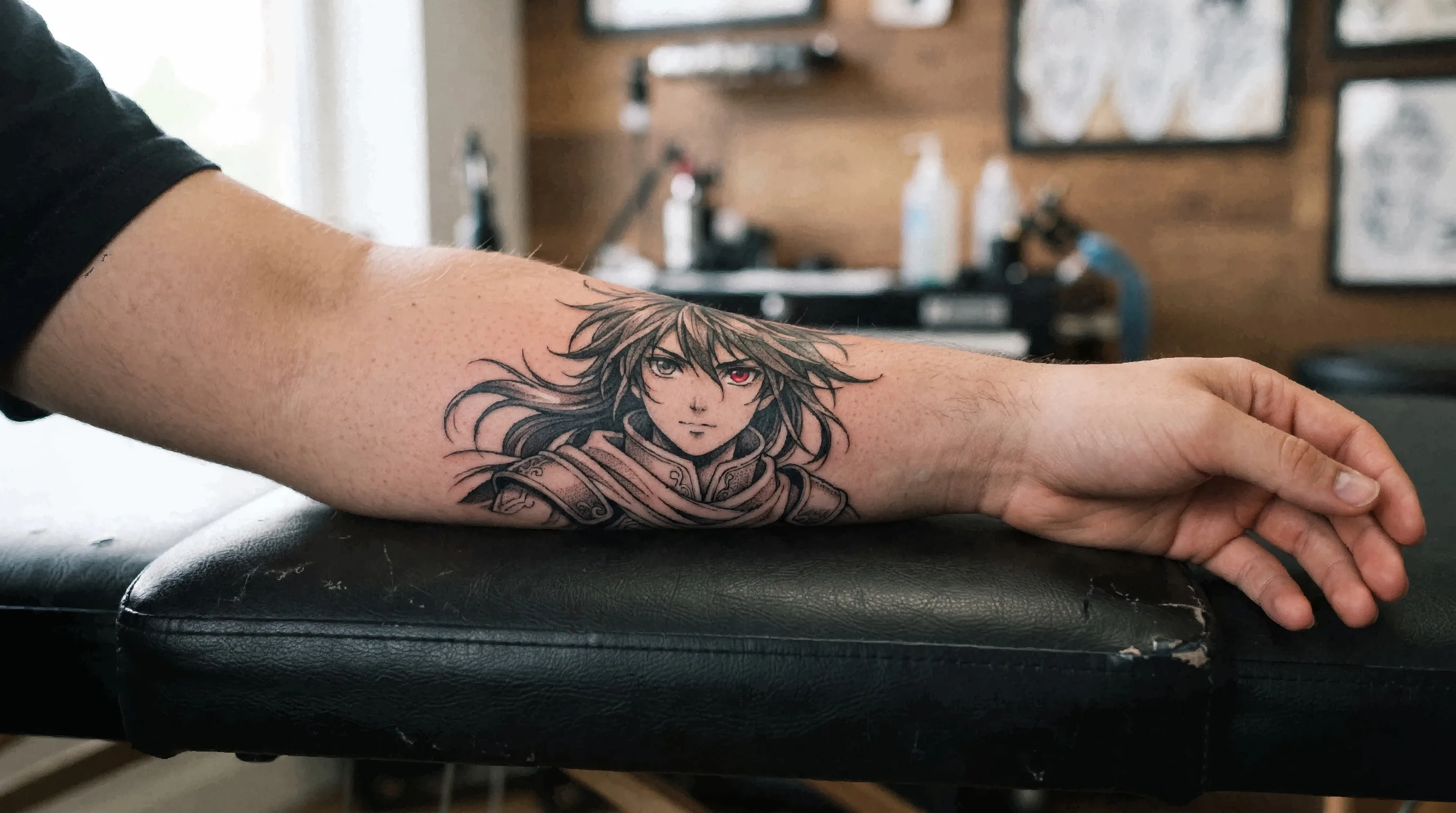
A flash tattoo is a design the artist has already drawn, ready to tattoo as it is. A custom tattoo is drawn for you, from your idea, to fit your body. Neither one is the "better" tattoo. Flash is usually quicker to book, often priced up front and sometimes available the same day as a walk-in. Custom takes longer and normally needs a consultation and a deposit, but it is the only way to get something nobody else has. Which one suits you depends on how specific your idea is, how soon you want it and how much of the design you want to shape yourself.
The Short Answer
- Choose flash if you like a design you have seen on an artist's sheet or page, want a tattoo soon, or want a clear price before you sit down.
- Choose custom if your idea is personal and specific, needs to fit a particular body part or existing tattoos, or is large enough to need planning.
- Walk-ins are mostly for flash and small pieces. Larger or custom work is booked ahead.
- Flash is not "lesser" work. Good flash is drawn by the artist, in their best style, and many artists love tattooing it.
- Prices vary by city and artist for both. Flash is not always cheaper, but its price is usually easier to know in advance.
What Flash Actually Is
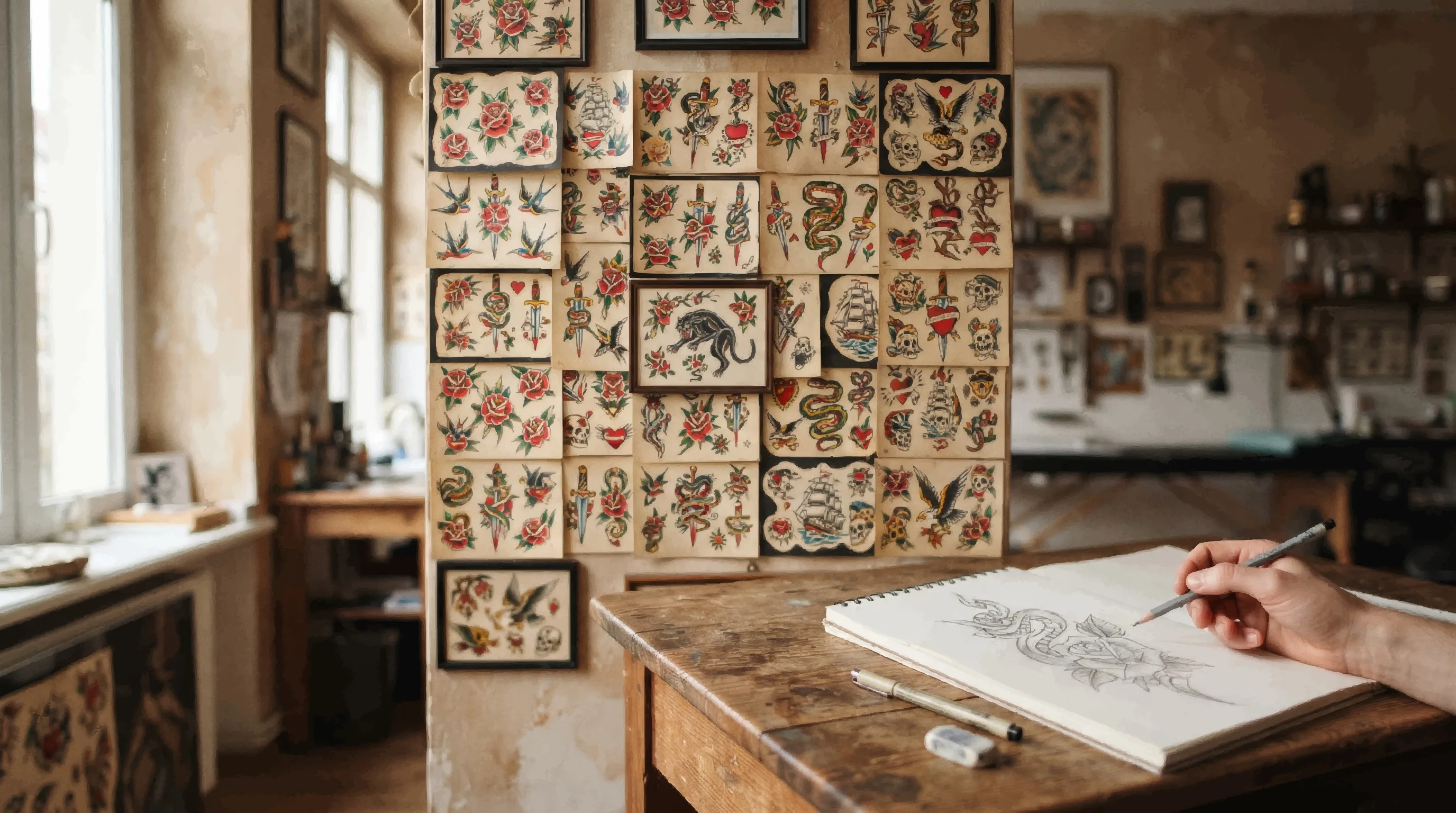
Flash goes back to the early days of street shops, when walls were covered in sheets of painted designs (swallows, roses, daggers, panthers, ships) and customers picked one off the wall. That tradition is still alive. Today flash might be a printed sheet on the shop wall, a binder at the front desk, or a post on the artist's Instagram with a few designs marked available.
There are a few kinds worth knowing about:
- Repeatable flash. Designs the artist is happy to tattoo again and again. Classic traditional flash usually falls in this group.
- One-off flash. Many artists now draw designs they will tattoo only once, so whoever claims it owns the only copy. Some call these "wannadoos", short for "designs I want to do".
- Shop flash. Designs any artist in the shop can tattoo, common in busy walk-in shops.
- Pre-drawn designs from elsewhere. Sheets bought from other artists or found online. Artists vary a lot in whether they will tattoo these, so always ask first.
Flash usually leans towards styles that suit pre-drawn, self-contained designs: traditional, neo-traditional, blackwork, fine line and simple ornamental pieces. If you are unsure what those styles look like, our guide to tattoo styles walks through each one.
What a Custom Tattoo Involves
A custom tattoo starts with your idea rather than the artist's drawing. The usual path looks like this:
- An enquiry. You send the artist your idea, the placement, a rough size and some reference images.
- A consultation. In person, by video or by message. The artist asks questions, suggests changes and tells you whether the idea will work at the size you want.
- A deposit. Most artists take one to hold the appointment and cover drawing time. It usually comes off the final price.
- The drawing. Many artists show the design on the day, some send it a few days before. Small changes are normal; a full redesign may cost extra.
- The session. The stencil goes on, you check the placement in the mirror, and the tattooing starts.
Our guide to the tattoo consultation covers what to bring and what to ask, and the article on deposits and cancellations explains what is normal and when a deposit is lost.
The wait is the part that surprises people. In-demand artists can be booked weeks or months ahead, and some open their books only a few times a year. If you have your heart set on one artist for a custom piece, follow them and watch for when they open bookings.
How Walk-Ins Work
A walk-in is a tattoo done the same day, without an appointment booked in advance. Not every shop takes them. Busy custom studios often book everything ahead, while street shops and shops in tourist areas are more likely to keep an artist free for walk-ins. A shop's website or social media usually says whether it accepts them, and a quick call before you go saves a wasted trip.
What to expect when you walk in:
- Small and simple goes first. Walk-in work is usually flash or small pieces that can be done in one short sitting.
- You may have to wait. Arrive early in the day if you can. Walk-in slots fill up, and the artist may finish one client before starting you.
- Bring ID. Shops are required to check your age, and most will not tattoo you without valid photo ID. Our guide to tattoo age laws in the US explains the rules by state.
- Expect a minimum. Most shops have a minimum charge to cover setup and sterile supplies, so even a very small tattoo costs at least that much.
- Come ready. Eat, drink water, wear clothes that give easy access to the spot, and do not drink alcohol beforehand. Our appointment prep checklist applies to walk-ins too.
Opening hours vary a lot. Some shops open late, on weekends or on Sundays, and others work by appointment only on certain days. Check the shop's hours before heading over, especially on a weekend or a holiday.
Flash Days and Flash Events
A flash day is an event where a shop or artist releases a set of designs to tattoo on one day, usually first come, first served. Friday the 13th flash is the best-known version, a long-running tradition where many shops put out small designs on that date. Shops also run flash days for holidays, shop anniversaries, charity fundraisers and guest artist visits.
If you want to go to one, a few things help:
- Follow the shop's social media. The designs and rules are usually posted a few days ahead.
- Arrive early. Popular flash days can have queues before the doors open, and popular designs go fast.
- Read the rules. Many flash day designs come at a set size and a set placement, with no changes, so the artists can get through as many people as possible.
- Bring cash and patience. Some shops take card, some do not, and the day can mean a long wait.
Tattoo conventions are another place full of flash. Many travelling artists bring sheets of designs they will tattoo on the spot. Our guide to tattoo conventions explains how they work and how to book a spot with a visiting artist.
Flash vs Custom: How the Price Differs
Flash is often priced per design. The artist knows exactly how long it takes, so they can put a fixed price on it, sometimes written right on the sheet. That makes it easy to budget, and you know the total before you sit down.
Custom work is usually priced by the hour or by the session, and the estimate depends on size, detail, placement and how long the drawing takes. Some artists build drawing time into their hourly rate, and others charge for it separately or take it out of the deposit. A complex custom piece costs more than a simple flash design of the same size because more time goes into both the drawing and the tattooing.
Flash is not automatically cheaper, though. A large, detailed flash design from a sought-after artist can cost more than a small custom piece from someone newer. Prices vary by city and by artist for both. Our articles on how much a tattoo costs and what you are really paying for explain what goes into the number, and the guide to tipping your tattoo artist covers what to add on top.
Can You Change a Flash Design?
Usually, yes, within limits. Most artists are happy to make small changes to their own flash:
- resizing it to suit the placement;
- swapping the colours, or doing it in black and grey;
- adding or removing a small element, such as a banner or a few leaves;
- flipping it to face the other way.
Bigger changes start turning the flash into a custom piece, and the price and booking will usually change to match. One-off flash and flash day designs are often sold as they are, with no changes, so check before you get attached to an idea.
Size is the change worth thinking about most. A design drawn to be 10 centimetres wide may lose detail if it is shrunk to fit a wrist. Our guide on how big your tattoo should be explains why, and what to ask your artist.
Flash Etiquette Worth Knowing
A few unwritten rules come up again and again around flash, and knowing them makes you a client artists are happy to see:
- Don't ask an artist to copy someone else's flash. Flash is an artist's own work. Taking one artist's design to a different artist to copy is widely seen as poor form, and many artists will refuse. If you love a design, book with the artist who drew it.
- Respect "one-off" means one-off. If a design was sold as a single tattoo, don't ask the artist to repeat it for you later.
- Claim it properly. If an artist posts flash online, follow their instructions to claim a design, usually a booking form or a message, and expect to pay a deposit to hold it.
- Use other work as reference, not as a template. For a custom piece, bring pictures to show the feel you want, and let your artist draw something of their own.
Our guide to tattoo etiquette covers the rest of what makes a good client.
Which One Is Right for You?
If you are still undecided, these questions usually settle it:
| If this sounds like you | Flash | Custom |
|---|---|---|
| You want a tattoo this week | Good fit | Usually a longer wait |
| You want a clear price up front | Good fit | An estimate, not a fixed price |
| Your idea is personal and specific | Rarely fits as is | Good fit |
| It has to fit around other tattoos | Sometimes | Good fit |
| It is your first, small tattoo | Good fit | Also fine |
| It is a large piece or a sleeve | Can be one part of it | Good fit |
| You want nobody else to have it | Only one-off flash | Good fit |
Flash makes a great first tattoo. The design is already finished, you can see exactly what you will get and the session is usually short. Our guide for first-timers has more on what that first visit is like, and our small tattoo ideas are a good place to start looking.
Custom earns its wait when the tattoo means something particular to you, when it needs to flow with your body or with other tattoos, or when it is big. Sleeves and back pieces are almost always custom, though some people build a "patchwork" sleeve from many flash pieces over time. Our guide to planning a tattoo sleeve compares both approaches.
How to Find Flash You Love
The best flash comes from artists whose style you already like, so start with the artist, not the design. Look at their healed work as well as their fresh photos, and check that they are good at the style the flash is drawn in. Our guide on how to read a tattoo portfolio explains what to look for.
A few places to look:
- Artists' own pages. Many artists post available flash and say how to claim it. You can discover and contact tattoo artists on Tattooed.co and see their work before you get in touch.
- The shop wall. Walk-in shops often keep flash on the walls or in a book at the counter. Ask to look through it.
- Ready-made designs to show your artist. Browsing tattoo flash designs by style is a quick way to work out what you like. Take any design you love to your artist as a starting point, and let them make it their own.
- Sketching your own idea. If nothing pre-drawn fits, an AI tattoo designer can help you put a rough idea into pictures before a custom consultation. Our guide to using AI to design a tattoo explains how to bring that to an artist.
Flash vs Custom Tattoo FAQ
What is flash in tattooing?
Flash is a tattoo design the artist has already drawn and is ready to tattoo, often shown on sheets on the shop wall, in a book at the counter or on the artist's social media. You pick a design and the artist tattoos it, usually as drawn or with small changes.
Are flash tattoos cheaper than custom tattoos?
Often, but not always. Flash is usually priced per design and needs no extra drawing time, so the price is easier to know in advance. A large or detailed flash piece from an in-demand artist can still cost more than a small custom tattoo. Prices vary by city and artist.
Can I get a tattoo as a walk-in?
Many shops take walk-ins, mostly for flash and small, simple designs. Check the shop's website or call ahead, arrive early, and bring valid photo ID. Large or custom pieces are almost always booked in advance.
Can I ask an artist to change a flash design?
Usually, yes. Most artists will resize their own flash, change the colours or make small tweaks. Bigger changes turn it into a custom piece, which may change the price. One-off flash and flash day designs are often sold with no changes, so ask first.
Is it rude to ask an artist to tattoo another artist's flash?
It is widely seen as poor form, and many artists will say no. Flash is the original work of the artist who drew it. If you love a design, book with that artist, or ask a different artist to draw something original in a similar spirit.
Do I need a deposit for a flash tattoo?
For a walk-in, usually not. For flash you claim in advance, such as a design posted online or a booked flash appointment, most artists take a deposit to hold the design and the time. It normally comes off the final price.