9 ready-made designs
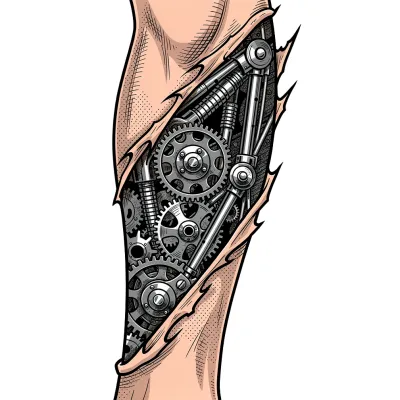
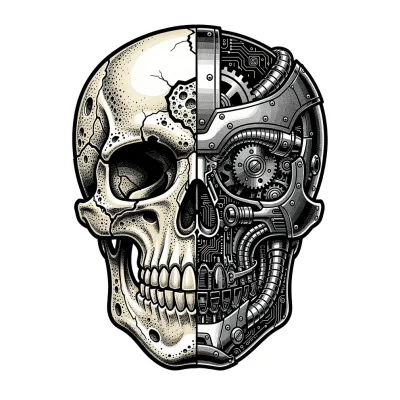
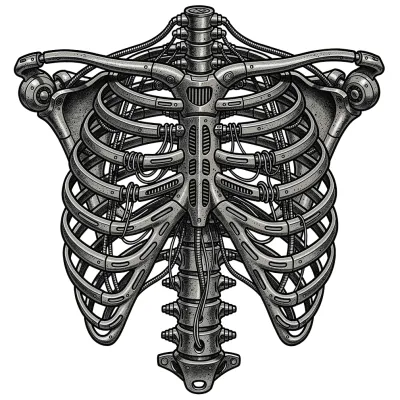
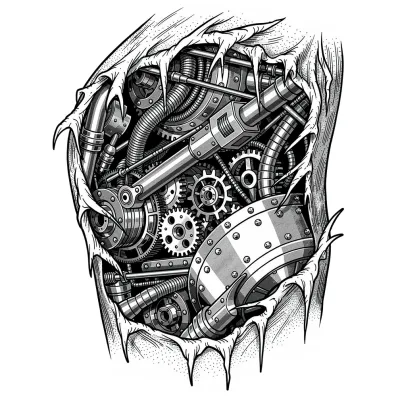
Biomechanical tattoo flash
Biomechanical tattooing pretends the skin has been opened to show machinery underneath — pistons, cabling and armour plate growing out of muscle and bone. Swiss artist H. R. Giger coined the term for his own work and set the visual language through Alien in 1979: greasy visceral forms fused with hard metal structure, almost entirely without colour. Guy Aitchison turned it into a tattoo discipline from 1988 onward and pushed it somewhere more organic and luminous, so the style now runs from Giger-faithful black and grey to full-colour Organica.
What to know about biomechanical work
- The illusion depends on your body, not the drawing. Good biomech is designed around the muscles it sits on, so expect any flash design to be redrawn to your own arm or leg rather than applied flat.
- It lives or dies on contrast. The sense of depth comes from very dark shadow against bright highlight, and a piece tattooed too evenly flattens into grey noise within a few years.
- It wants a large area. Half a mechanism is just an abstract shape — this style needs enough room to establish what is supposedly underneath.
Where it sits best
Upper arms, shoulders, calves and forearms — placements with visible muscle shape for the machinery to appear to be built into. Flat areas undercut the whole effect.