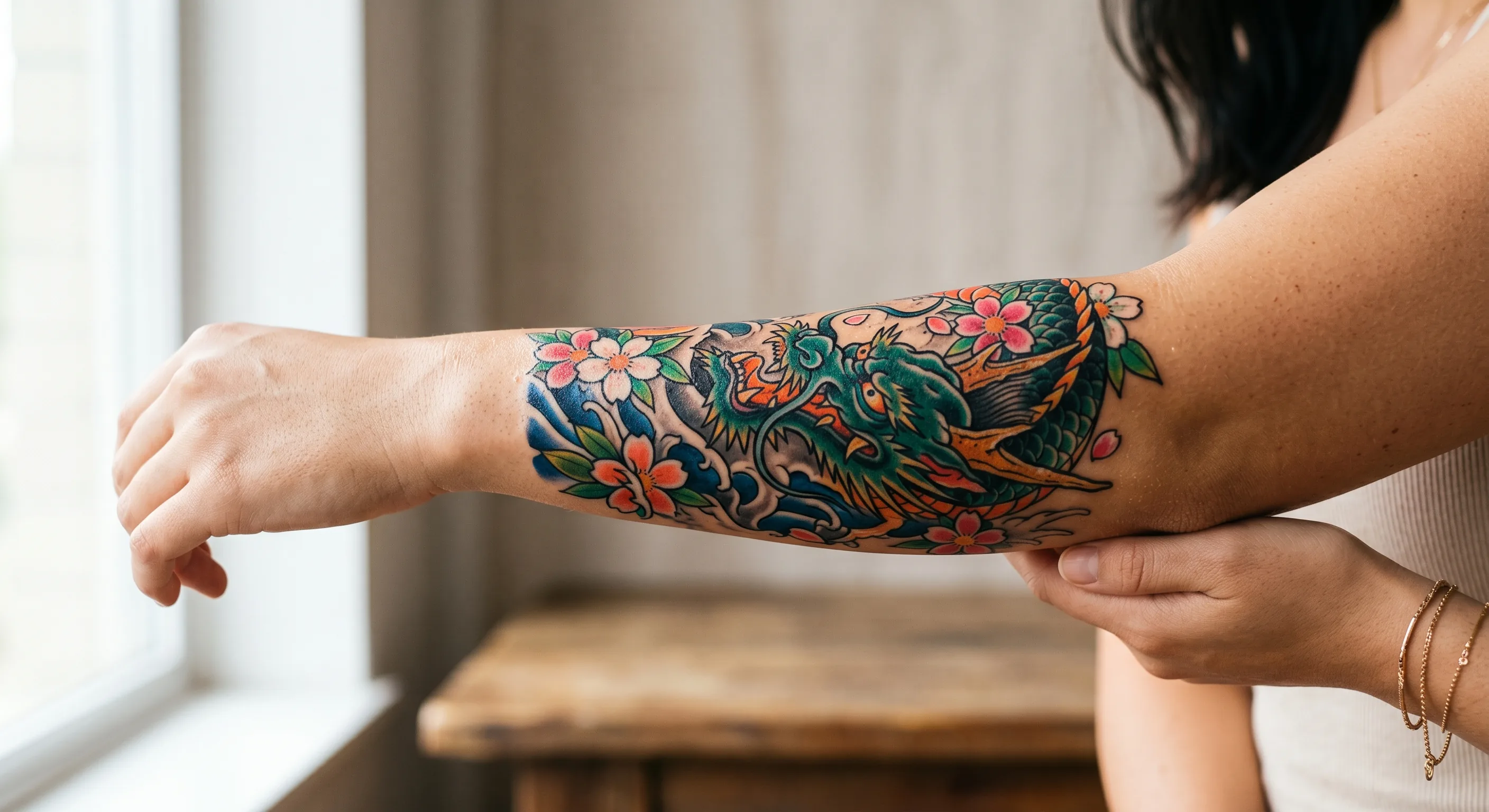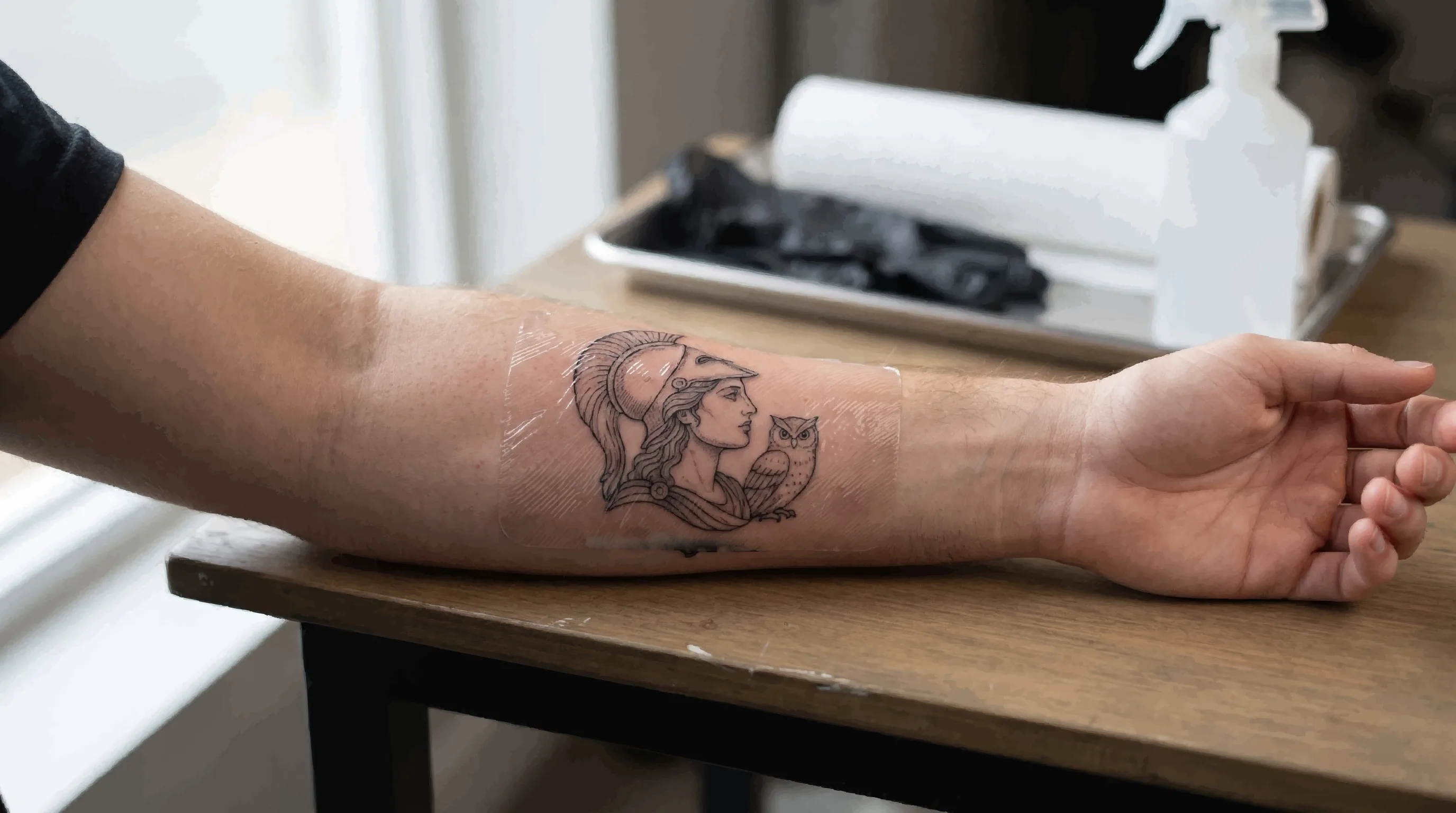
You left the studio with a clear, sticky film over your new tattoo, and by evening there is a pocket of dark liquid underneath it. That is almost always normal. A second skin bandage is designed to sit on a fresh tattoo for a few days while it seals itself, and the fluid you can see is the tattoo doing exactly what it should. What matters is knowing how long to leave it, the few signs that mean it should come off early, and how to peel it away without pulling at healing skin.
The Short Answer
Most artists ask you to leave the first piece of second skin on for roughly 24 hours, then remove it, wash the tattoo gently and, if they gave you a second piece, put that on for another three to five days. Some artists use a single piece and ask you to leave it on for several days from the start. Either way, the total is usually somewhere under a week.
Your artist's instructions come first. They chose the product, they know how much your skin bled during the session, and they have seen how their own work heals under it. If what they told you differs from this guide, follow them.
Take it off early if it leaks, peels away at the edges, lets fluid escape, or if the skin under or around it gets increasingly red, hot, swollen or itchy with a rash. A bandage that is no longer sealed is no longer protecting anything.
What Second Skin Is (and the Names You'll Hear)
"Second skin" is the general name for a thin, clear, breathable adhesive film made from medical grade polyurethane. The same kind of dressing has been used on wounds and IV sites in hospitals for years, and tattoo artists adopted it because it suits a fresh tattoo well.
You will hear several brand names for broadly the same thing:
- Saniderm, which is made and marketed specifically for tattoos.
- Tegaderm, a long-standing medical dressing that many studios use.
- Dermalize and a range of studio or supplier brands that work the same way.
The film lets air and water vapour pass through, but keeps water, dirt, bacteria and clothing off the tattoo. That combination matters. A fresh tattoo is an open wound, and the film keeps it clean while the plasma it naturally produces stays in contact with the skin, which helps it close without forming the thick, cracking scabs you get when a tattoo dries out too early.
It is different from the plastic kitchen wrap some studios still use for the first few hours. Cling wrap does not breathe and is meant to come off the same day. Second skin is designed to stay on for days.
How Long to Leave It On: The Usual Timeline
Every studio has its own method, but most follow a version of this:
Day 1: the first piece
The artist cleans the tattoo and applies the film straight away. Over the next few hours, plasma, a little blood and some excess ink collect underneath. This first piece fills up the most, which is why many artists want it changed after about a day.
Around 24 hours: the change
You remove the first piece (see the removal steps below), wash the tattoo with lukewarm water and a mild, fragrance-free soap, and pat it dry with a clean paper towel. Let it air dry for a little while. If your artist gave you a second piece, apply it to clean, completely dry skin, smoothing it from the centre outwards so no air or creases are trapped.
Days 2 to 5 or so: the second piece
The second piece usually stays much clearer, because the tattoo has largely stopped weeping. Most artists suggest leaving it on for three to five days. Some say up to a week in total. During this stage the tattoo is quietly forming its first protective layer under the film.
After the film: normal aftercare
Once the last piece comes off, you carry on with ordinary aftercare: gentle washing and a thin layer of unscented moisturiser. The tattoo will usually flake and itch over the next week or two, as described in our week-by-week healing guide.
Leaving the film on much longer than your artist suggested does not speed anything up. Adhesive on the same skin for too long raises the chance of irritation, and once the tattoo is sealed it no longer needs that level of protection.
What's Normal Under the Film
The first time you see it, the pocket under the film can look alarming. Most of it is completely expected.
- Dark, inky fluid. Plasma mixed with excess ink, often the colour of the tattoo itself. It can look like the tattoo is leaking out. It is not; the ink that stays is already below the surface.
- Cloudy, milky or yellowish film. Plasma drying against the bandage gives it a hazy look, especially on the first piece.
- A bubble or pocket of liquid. Common on the first day, particularly on large or heavily shaded tattoos.
- Mild redness at the edges and the tattoo feeling warm and tender for the first day or two, much like a graze.
- A faint itch. Healing skin itches. Resist scratching through the film.
A large tattoo, a long session, or work with a lot of solid black or colour packing will produce more fluid. That is a reflection of the work, not a sign that something went wrong.
When to Take It Off Early
Second skin only helps while it is sealed. Remove it, wash the tattoo and switch to normal aftercare (or call your artist for advice) if any of these happen:
- It leaks. Fluid escaping from the edge means the seal has broken, and the gap is now a path for bacteria in as well as fluid out.
- The edges lift enough that water gets in when you shower, or the film has wrinkled into channels across the tattoo.
- The pocket of fluid is so large that the film is ballooning or close to bursting.
- An itchy rash or small bumps appear where the adhesive touches your skin. Some people react to the glue. It usually settles once the film is off, but it is a sign that this product is not for you.
- Redness, heat or swelling is getting worse after the first day or two, rather than better.
If you see spreading redness, increasing pain, pus, an unpleasant smell, or you feel feverish or unwell, do not wait. Remove the film and contact a doctor. Our guide to tattoo infection signs explains how to tell normal healing from something that needs treatment. Infections are uncommon, but they are much easier to deal with early.
If you have a skin condition, a known adhesive allergy, or a health issue that affects healing, say so to your artist before the session. Our article on tattoos and health conditions covers why that conversation matters.
How to Remove It Without Hurting Your Tattoo
Most of the discomfort people report with second skin happens at removal, and almost all of it comes from pulling it off too fast or in the wrong direction. Done properly, it should feel like taking off a large plaster slowly.
- Wash your hands with soap first. You are about to touch a healing wound.
- Do it in a warm shower, or after letting warm water run over the film for a few minutes. Warmth and moisture loosen the adhesive.
- Find a corner and lift it gently. If the tattoo is on a limb, start at the edge that lets you peel along the length of the limb rather than across it.
- Pull low and slow. Keep the film close to the skin and pull it back over itself, parallel to the skin, rather than lifting it straight up. Stretching the film sideways also helps release the glue.
- Hold the skin near where you are peeling with your other hand so it does not stretch with the film.
- Let the fluid rinse away and wash the tattoo with lukewarm water and a mild, unscented soap, using your fingertips only. No cloths or sponges.
- Pat it dry with a clean paper towel and leave it in the air for a few minutes before applying a thin layer of moisturiser or a second piece of film.
If it is stubborn, stop and let more warm water soak the adhesive. Never rip it off quickly. Pulling sharply can lift healing skin with the film, which can take ink with it and leave patchy spots that need a touch-up later. A little sticky residue left on the skin around the tattoo will wash off over the next day or two; do not scrub it.
Showering, Sleeping, Gym and Swimming With Second Skin
Showering
You can shower normally with a sealed film on. Keep showers short, avoid pointing a strong jet directly at the tattoo, and pat the film dry afterwards. Long soaks and very hot water are best avoided, as they soften the adhesive.
Sleeping
Second skin makes the first few nights much easier, because the tattoo cannot stick to your sheets. Clean bedding and loose clothing over the area still help.
Working out
Heavy sweating and constant movement are the most common reasons the edges lift. If you can, take a few days off training the area. If you do exercise, watch the edges closely and remove the film once sweat gets underneath. Our guide to working out after a tattoo has more on timing.
Swimming and baths
Second skin is water resistant, not a licence to swim. Pools, the sea, lakes, hot tubs and baths are still off the list until the tattoo has fully healed, usually two to four weeks. The film's edges are rarely fully watertight over that long, and standing water carries bacteria that a fresh tattoo should not meet.
Sun
The film is clear and gives no real sun protection. Keep a fresh tattoo covered with clothing or out of direct sun. Sunscreen comes later, once the skin has healed, and is one of the main things that keeps colour sharp, as explained in our guide to preventing tattoo fading.
Aftercare Once the Film Is Off
Second skin covers the first few days. The rest of healing works the same as any other tattoo, and our full aftercare guide covers it in detail. The short version:
- Wash gently once or twice a day with lukewarm water and a mild, unscented soap.
- Apply a thin layer of fragrance-free moisturiser. Too much keeps the skin soggy.
- Expect flaking and itching. Do not pick, peel or scratch.
- Wear loose, clean clothing over the tattoo.
- Keep it out of the sun and out of pools until healed.
Tattoos healed under second skin often skip the heavy scabbing stage and go straight to light flaking. Some people find the tattoo looks shiny or slightly cloudy for a few weeks afterwards. That is the new top layer of skin settling and it clears on its own.
Is Second Skin Better Than Wrap or Dry Healing?
There is no single right method. Artists heal tattoos successfully with second skin, with a few hours of wrap followed by open healing, and with dry healing. Each has trade-offs.
- Second skin keeps the tattoo clean and protected for days, avoids clothes and sheets sticking to it, and usually means less scabbing. The downsides are the fluid pocket, the chance of an adhesive reaction, and that it suits some areas better than others.
- Wrap and open healing is simple and familiar, but the first few days need more attention: frequent washing, careful moisturising, and protecting the tattoo from clothing.
- Dry healing skips moisturiser entirely. Some people do well with it, but it can leave more scabbing and tightness.
Film is harder to keep sealed on joints and places that bend and stretch, such as elbows, knees, fingers and feet. Artists often choose a different method for hand and finger tattoos for exactly that reason.
If you have a preference, or you know you react to plasters, raise it at your consultation or when you prepare for your appointment. Some studios include a second piece in the price, while others sell it separately or expect you to buy your own. It is worth asking which before the day. When you are looking for an artist, you can discover and contact tattoo artists on Tattooed.co and ask how they like their work healed.
Second Skin Tattoo Bandage FAQ
How long should I leave second skin on a new tattoo?
Most artists ask you to leave the first piece on for about 24 hours, then replace it with a second piece for another three to five days. Some use one piece for several days instead. Follow your own artist's instructions, and take it off early if it leaks or the seal breaks.
Is it normal for ink and fluid to build up under second skin?
Yes. Plasma, a little blood and excess ink collect under the film in the first day, and the liquid often looks dark or the same colour as the tattoo. It is not your tattoo washing out. If the fluid starts leaking from the edges, remove the film and wash the tattoo.
Can I shower with second skin on my tattoo?
Yes. A sealed film is water resistant, so short showers are fine. Avoid pointing a strong jet at it, skip baths and long hot soaks, and pat it dry afterwards. Swimming pools, the sea and hot tubs should wait until the tattoo has fully healed.
What happens if I leave second skin on too long?
The tattoo will not heal any faster, and adhesive left on the same skin for too long raises the chance of irritation or a rash. Most artists suggest a total of under a week. If the film has lifted, leaked or started to itch badly, take it off sooner.
Does taking off second skin hurt?
It should not hurt much if you do it slowly. Remove it in a warm shower, start at a corner, and pull the film back low and parallel to the skin while holding the skin still. Ripping it off quickly can lift healing skin and take ink with it.
Can I put a new piece of second skin on myself?
Many artists give you a second piece to apply yourself after the first change. Put it on clean, completely dry skin and smooth it out from the centre with no creases. Do not add moisturiser underneath, and do not keep reapplying new pieces beyond what your artist recommends.