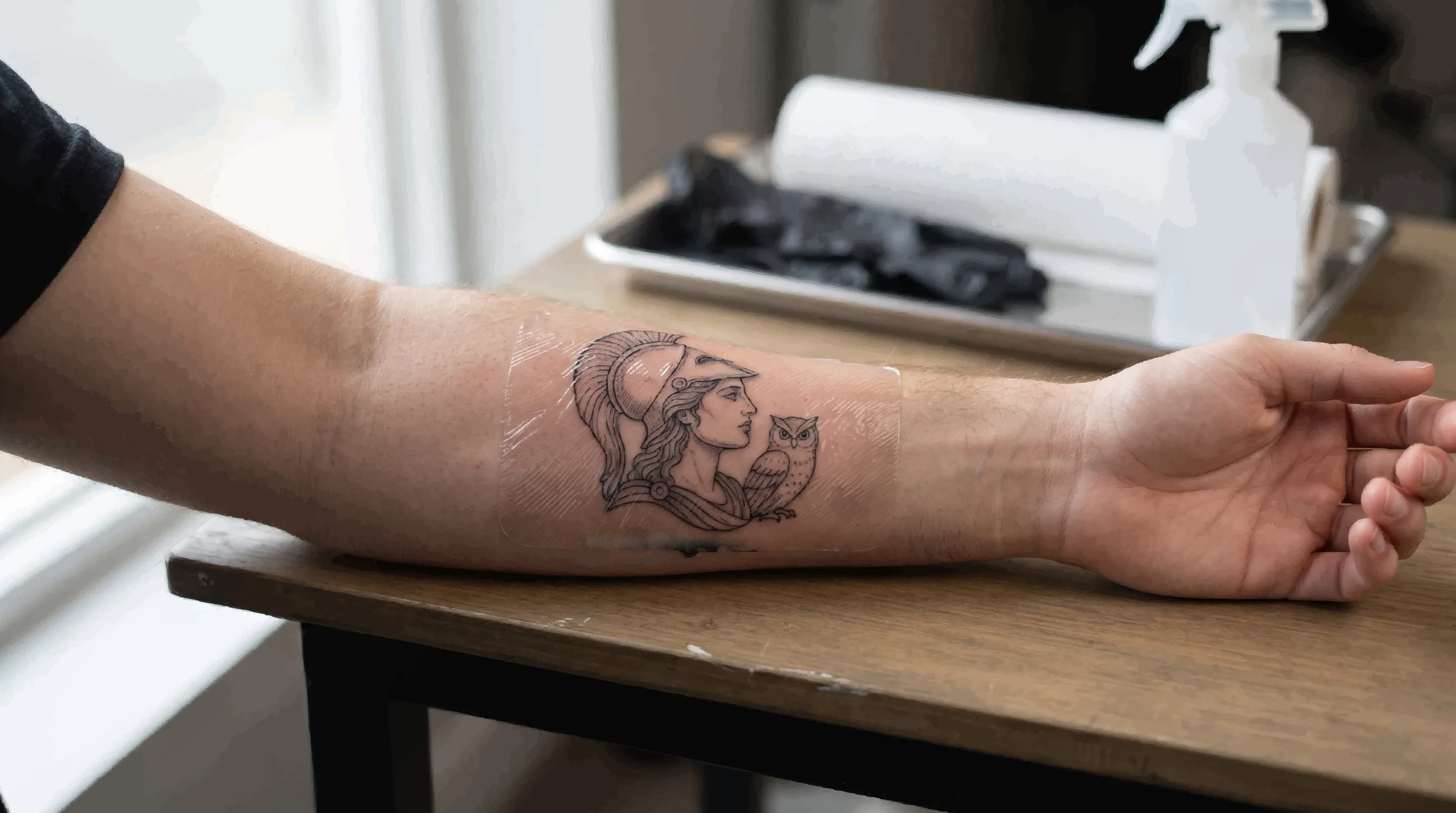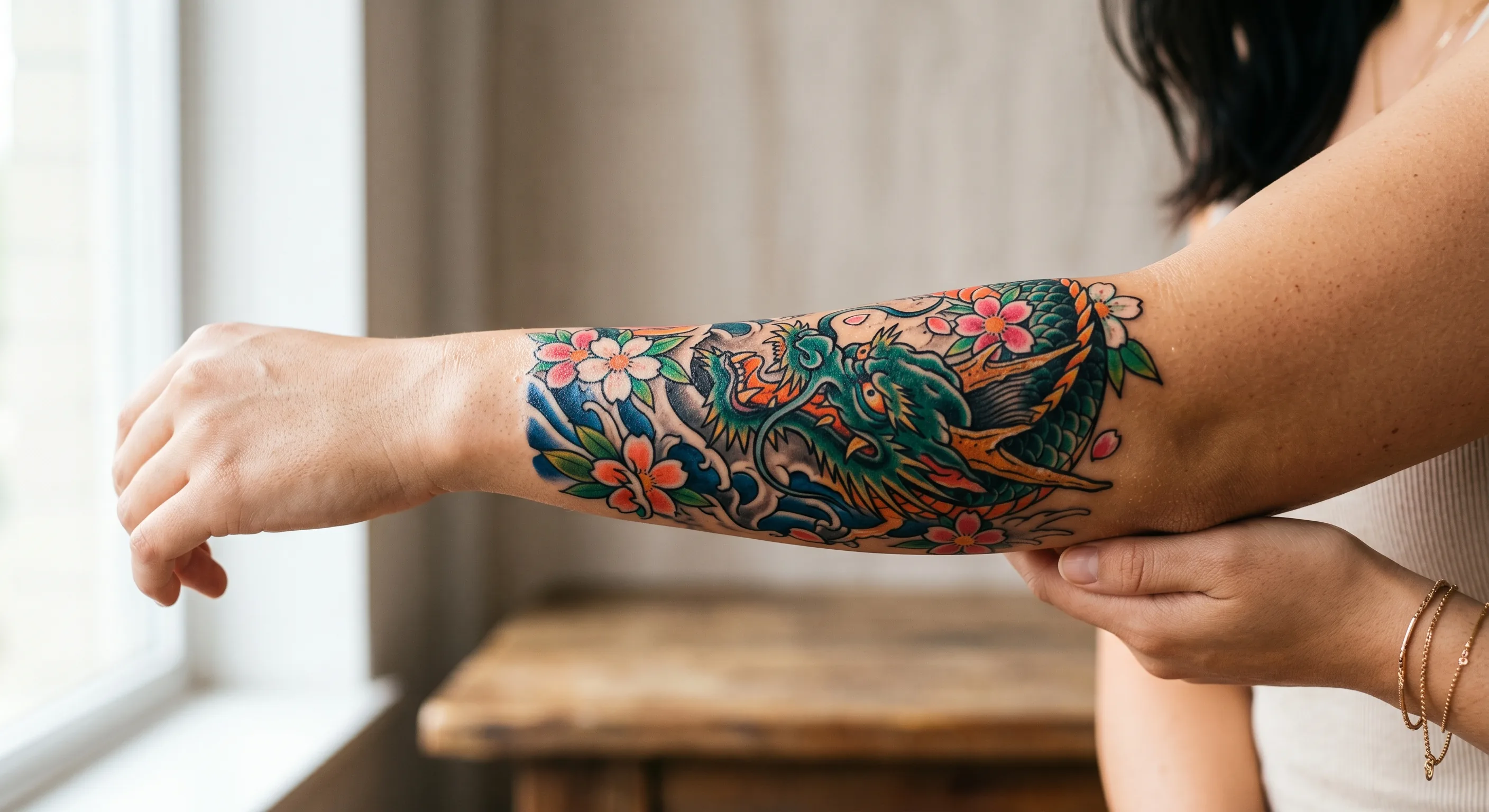
A fresh tattoo is an open wound, and the two things people are most eager to get back to — exercise and swimming — are exactly the two things that put that wound most at risk. Sweat, friction, stretching skin, chlorine, and standing water all interfere with healing in their own way, and rushing back too soon is one of the most common reasons a great tattoo heals patchy, infected, or faded. The good news is the rules are simple once you understand what is actually happening under the bandage. Here is exactly how long to wait, what is safe at each stage, and how to tell if you have pushed it too early.
Why You Have to Wait at All
For the first couple of weeks, your tattoo is not decoration — it is a healing wound. The needle has made thousands of tiny punctures in your skin, and until that surface closes over, anything that irritates it or introduces bacteria can derail the process. Working out and swimming both do exactly that, just in different ways.
- Sweat carries salt and bacteria across the wound, can sting an open tattoo, and keeps the area damp when it needs to stay clean and dry.
- Friction from clothing, equipment, or a repetitive movement rubs against the healing surface and can pull away the scabs and ink your skin is still setting.
- Stretching and flexing the skin over a working muscle reopens fine lines and disturbs the top layer before it has knitted back together.
- Submerging the tattoo in a pool, hot tub, lake, or ocean soaks the scabs loose and exposes the wound to chlorine, bacteria, and other contaminants.
None of this means you have to sit still for a month. It means timing your return to match how far along the healing actually is.
The Quick Timeline
Everyone heals at a slightly different pace, and a small wrist tattoo recovers faster than a full rib panel. Use this as a general guide and always defer to your own artist's aftercare instructions.
- First 48 hours: Rest. No workouts, no swimming, nothing that makes you sweat or strains the area.
- Days 3–7: Light, low-sweat movement is usually fine as long as it does not involve the tattooed area. Still no swimming.
- Week 2: Most normal training can resume as the surface closes, with sensible precautions. Still no submerging the tattoo.
- Weeks 2–4 (until fully healed): Wait until the surface has fully healed — no scabs, no peeling, no open areas — before swimming or soaking. For most people that is around the two-to-four-week mark.
The single most important distinction: the surface of a tattoo usually closes in about two weeks, but the deeper layers keep healing for closer to a month. Light exercise tracks with the surface healing. Swimming tracks with full surface closure — which is why it is always the last thing to come back.
Working Out After a Tattoo
The first 48 hours: rest
Skip the gym entirely for the first two days. This is when the wound is freshest and most prone to bleeding, weeping, and irritation. Raising your heart rate and breaking a sweat this early floods a brand-new tattoo with moisture and bacteria at the exact moment it most needs to stay clean and dry.
Days three to seven: train around it
After the first couple of days, you can usually get back to lighter sessions — provided the movement does not directly involve or stretch the tattooed area. The guiding principle is simple: train the parts of your body the tattoo doesn't move.
- Leg tattoo? Stick to upper-body work that keeps the leg still.
- Arm or shoulder tattoo? Focus on lower-body movements that don't flex or load the area.
- Rib, chest, or back piece? These are the hardest to train around because your core stabilizes nearly everything — keep it very light and short.
Keep the intensity down regardless. The goal in this window is to move without soaking the tattoo in sweat or rubbing it raw.
Week two and beyond: easing back to full training
By the second week, as the surface closes and the peeling finishes, most people can return to their normal routine. Build back up rather than jumping straight to maximum intensity, and keep watching the tattoo for any sign of irritation as the load increases.
Practical rules for training on a healing tattoo
- Wear clean, loose clothing. Fresh gym clothes over the area every session, loose enough that they don't grip and rub the tattoo. Avoid tight compression gear directly over a healing piece.
- Wipe down equipment — and consider avoiding shared gear near the tattoo. Gym benches, mats, and machines are covered in bacteria. Keep the healing area off them where you can.
- Clean the tattoo after every session. Gently wash away sweat with lukewarm water and a fragrance-free soap as soon as you finish, then pat dry and apply your aftercare product.
- Don't let sweat sit on it. Pooled sweat is the real problem, not a little perspiration. If you are dripping, you are doing too much too soon.
- Stop if it stings, weeps, or reopens. Those are signals to dial it back, not push through.
Swimming After a Tattoo
Swimming is the strictest rule in tattoo aftercare, and the one people most often break. Until your tattoo is fully healed on the surface — no scabs, no flaking, no open or raw spots, typically two to four weeks — keep it out of the water entirely. That means no pools, no oceans, no lakes, no hot tubs, and no long baths.
Submerging a healing tattoo does two bad things at once: it softens and lifts the scabs that are holding ink in place, which can pull pigment out and leave the tattoo patchy, and it exposes an open wound to whatever is in the water.
Pools and hot tubs
Chlorine is harsh on broken skin. It irritates the wound, can fade fresh ink, and dries out the surrounding area. Hot tubs are worse still: the warm water is a breeding ground for bacteria, and the heat opens your pores and softens scabs faster than a cool pool. Of all the water you could submerge a fresh tattoo in, a hot tub is the single worst choice.
Oceans, lakes, and rivers
Natural water carries bacteria and microorganisms that a healing wound has no defense against. Saltwater in particular stings an open tattoo sharply, and lakes and rivers can harbor pathogens that lead to serious infection. Treat open water as off-limits until you are fully healed.
Showers are fine — soaking is not
To be clear, you do not need to avoid water altogether. Short showers are not only allowed but part of proper aftercare — quick rinsing keeps the tattoo clean. The danger is submerging and soaking, where the tattoo sits underwater long enough for the scabs to soften and lift. Keep showers brief, avoid blasting the area with a hard stream, and pat it dry afterward rather than rubbing.
What if you can't avoid the water?
Waterproof bandages such as second-skin films are sometimes suggested for unavoidable, brief exposure, but they are not a reliable green light to go swimming on a fresh tattoo — no covering fully seals out water and bacteria for the length of a swim. The safe answer is still to wait. If you have a vacation or event you cannot move, talk to your artist about timing your tattoo so it has weeks to heal beforehand, not days.
How to Tell If You Went Back Too Soon
Pay attention to how the tattoo responds after exercise or any water exposure. Normal healing steadily improves day by day. If you have pushed too hard too soon, you'll usually see the opposite — the area getting worse instead of better. Watch for:
- Increased redness, swelling, or warmth that spreads beyond the tattoo's edges
- Renewed bleeding, weeping, or thick or discolored discharge
- Scabs torn away early, leaving patchy or faded spots in the design
- A rash, prolonged stinging, or itchiness that won't settle
- Fever or a generally unwell feeling
Mild irritation usually settles if you back off and let the tattoo rest. But spreading redness, pus, red streaks, or a fever are signs of a possible infection — see a doctor the same day rather than waiting it out. For the full breakdown, see our guide on the signs and symptoms of a tattoo infection.
The Bottom Line
Give it 48 hours before any exercise, ease back into training around the tattooed area through the first week, and keep the piece out of every pool, hot tub, lake, and ocean until it is fully healed on the surface — usually two to four weeks. A little patience now is the difference between a tattoo that heals crisp and one you end up paying to touch up. When in doubt, follow your artist's aftercare instructions over any general timeline, and if you want to know what healthy healing should look like along the way, read our week-by-week tattoo healing guide.
Working Out and Swimming After a Tattoo FAQ
How long after a tattoo can I work out?
Avoid working out for at least the first 48 hours after getting a tattoo. After that, you can usually return to lighter exercise that does not directly involve or stretch the tattooed area, building back to your full routine around the second week as the surface heals. Keep clothing loose and clean, wash off sweat immediately after every session, and stop if the tattoo stings, weeps, or reopens.
How long should I wait to swim after getting a tattoo?
Wait until your tattoo is fully healed on the surface — no scabs, no peeling, and no open or raw areas — before swimming. For most people that takes two to four weeks. This applies to pools, hot tubs, oceans, lakes, and long baths. Short showers are fine throughout healing; it is submerging and soaking the tattoo that causes problems.
Can I sweat on a new tattoo?
A little perspiration is not a disaster, but pooled sweat sitting on a fresh tattoo is a real problem. Sweat carries salt and bacteria across the open wound, can sting it, and keeps the area damp when it needs to stay clean and dry. If you are sweating heavily, you are exercising too hard too soon. Wash the area gently and pat it dry as soon as you finish moving.
Why can't I go in a pool with a new tattoo?
Submerging a fresh tattoo softens and lifts the scabs that hold the ink in place, which can pull pigment out and leave the design patchy. On top of that, chlorine irritates and dries the broken skin and can fade fresh ink, while the water itself exposes an open wound to bacteria. Hot tubs are the worst of all because the heat and warm, bacteria-friendly water accelerate every one of those problems.
Is it okay to take a shower after getting a tattoo?
Yes. Short showers are part of normal aftercare and help keep the tattoo clean. The thing to avoid is soaking — sitting in a bath, pool, or hot tub long enough for the water to soften the scabs. Keep showers brief, avoid hitting the tattoo with a hard, direct stream, use a fragrance-free cleanser, and gently pat the area dry rather than rubbing it.