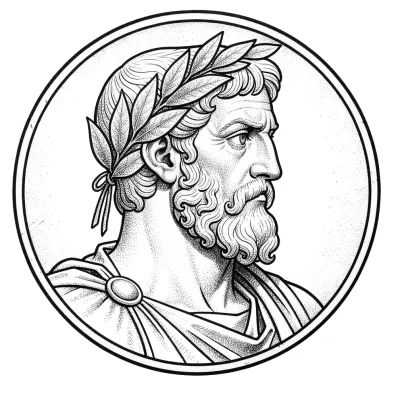
 Stoic Marcus Aurelius Portrait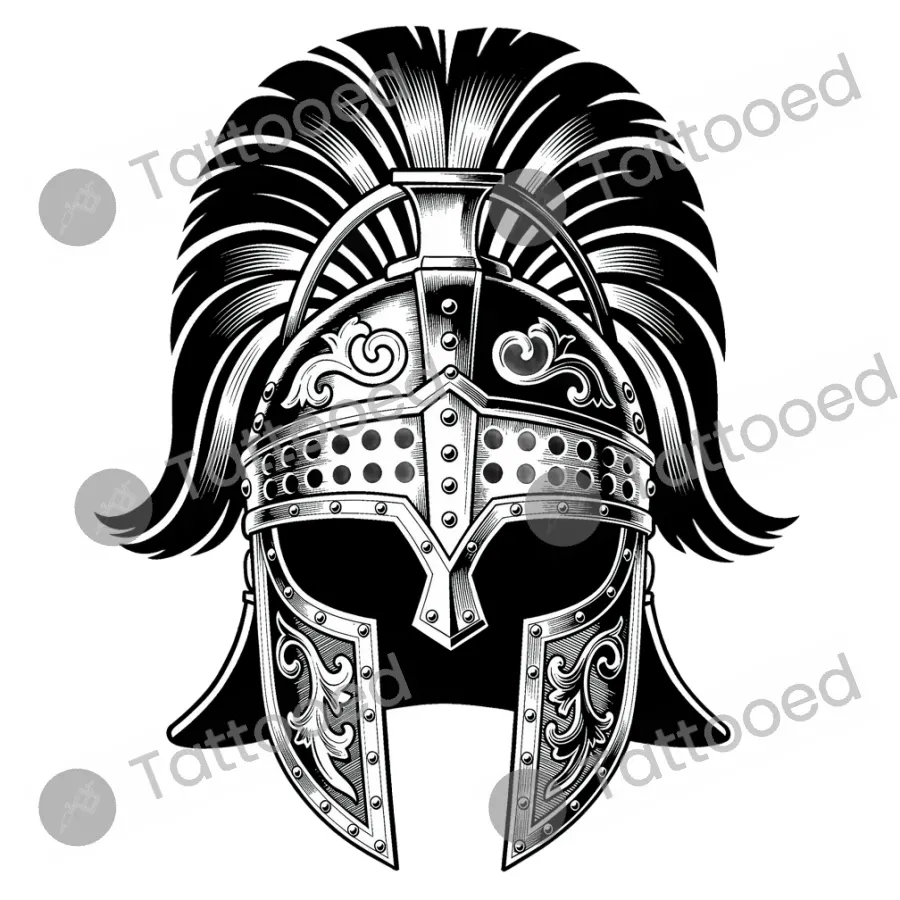
 Praying Hands with Rosary
A frontal-facing gladiatorial or Corinthian-style helmet reads as a symbol of combat readiness, discipline and armored resilience. It draws on Roman military and arena imagery, often chosen to represent strength, protection or a warrior mindset rather than any specific historical figure. Some wearers connect it to stoic endurance, others simply like the aggressive, ceremonial look of the design.
Where it sits
The tall, symmetrical shape with a wide plume at the top and narrower jaw at the bottom suits the upper arm, shoulder or upper back, where the vertical flow of the crest has room to run. It would also work well on the calf or forearm if scaled to fit the limb's length. Shrinking it too far would blur the engraved scrollwork on the cheek guards and the rows of small rivets, which need some surface area to stay legible.
Making it yours
Ask an artist for any of these.