 Polynesian Sun Compass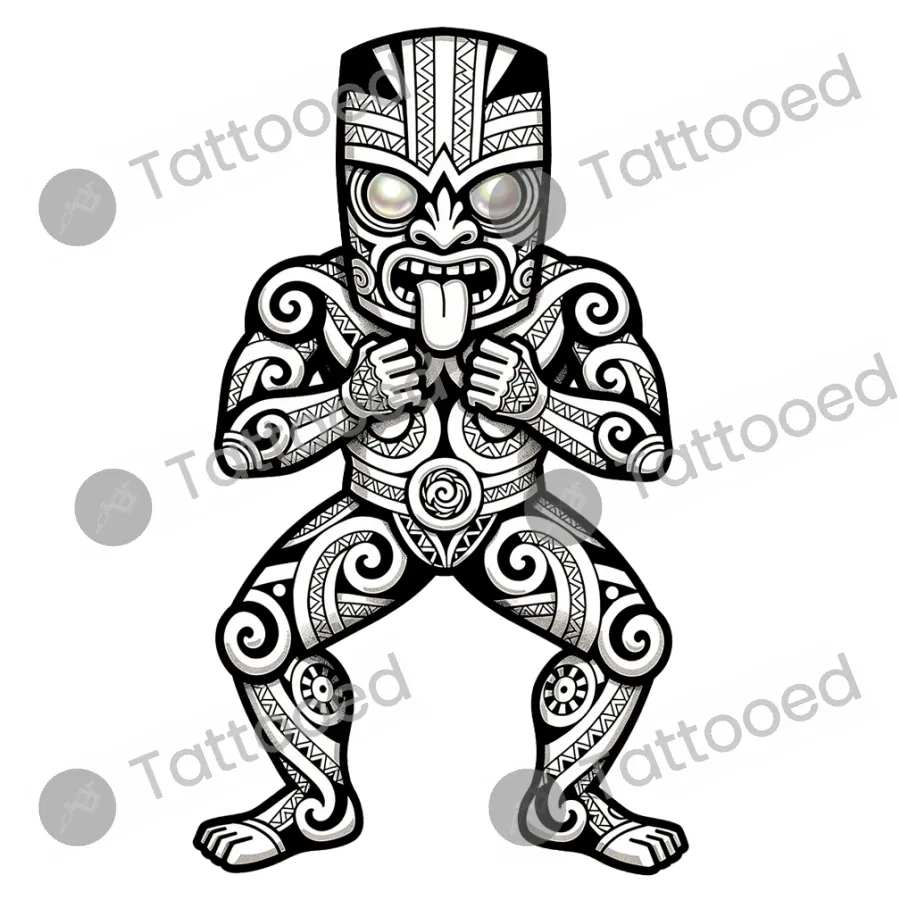
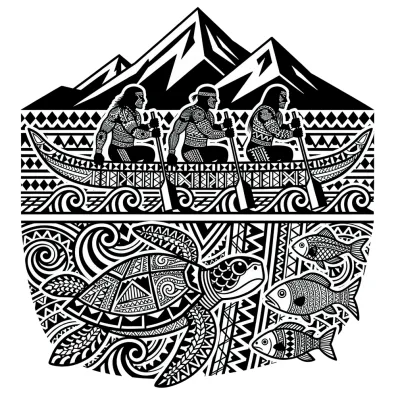 Polynesian Ocean Voyager Scene
This figure draws on Maori tiki and moko-style spiral and geometric patterning, symbols historically tied to ancestry, protection and mana in Maori culture. In tattoo culture more broadly it tends to be worn as a bold, guardian-like figure or a nod to Polynesian-inspired body art rather than a literal cultural claim. Given its cultural origin, some wearers choose it as tribute while others treat it purely as a striking blackwork character, so it is worth considering that distinction before committing.
Where it sits
The tall, symmetrical standing pose with a wide stance suits a vertical canvas such as the outer forearm, shin, or full back where the crouching legs and raised fists have room to read clearly. It could also work on the upper arm or thigh if scaled down, but the fine spiral work on the hands, feet, and facial mask would blur at small sizes. Avoid tight curved areas like the wrist where the wide shoulder-to-hip spread would get distorted.
Making it yours
Ask an artist for any of these.