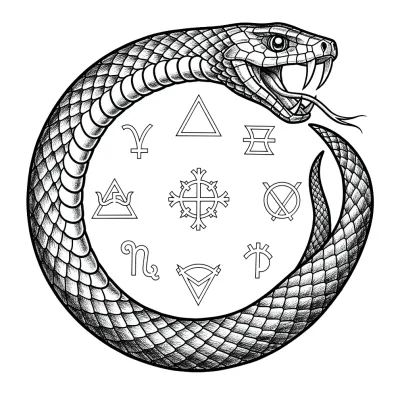
 Ouroboros Serpent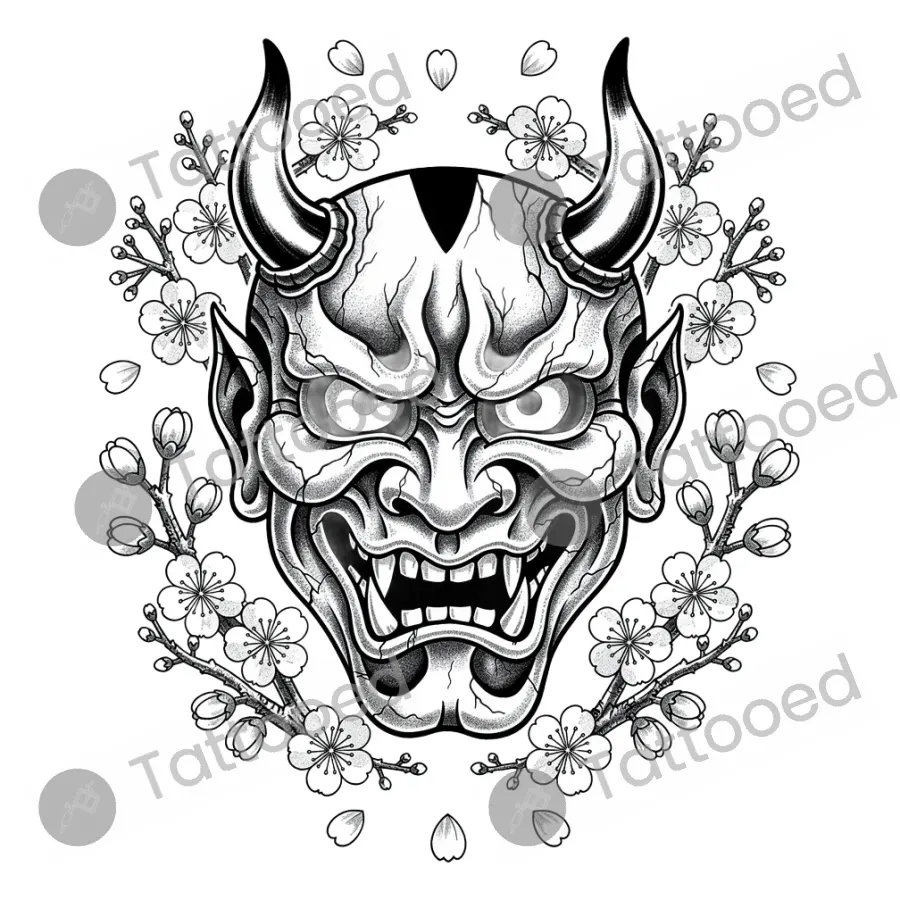
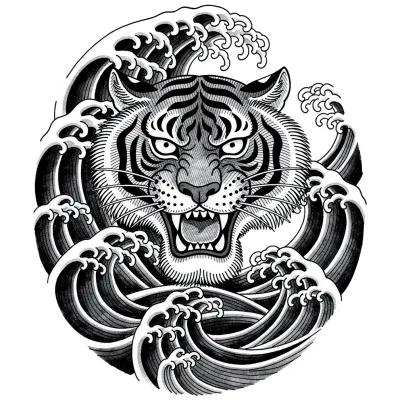 Tiger in Waves
The Hannya mask comes from Japanese Noh theatre, representing a woman consumed by jealousy and rage to the point of becoming a demon, though it also carries a layer of sorrow beneath the fury. Paired with cherry blossoms as seen here, the design leans into the contrast between violent emotion and fleeting beauty, since sakura symbolise the transience of life. People choose it for that duality: strength and danger alongside impermanence and grace.
Where it sits
This is a rounded, symmetrical composition that suits a circular canvas like the shoulder, upper arm, chest plate or back of the calf. The blossom branches extend outward on both sides, so it also works well as a large back piece or thigh panel where the full radial spread has room to breathe. Shrinking it below forearm size will lose the cracked shading detail across the mask and blur the smaller blossom clusters.
Making it yours
Ask an artist for any of these.