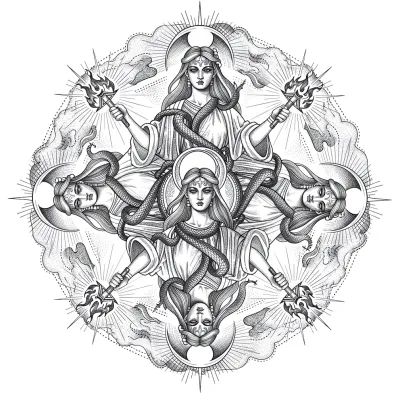
 Hecate Triple Goddess of Magic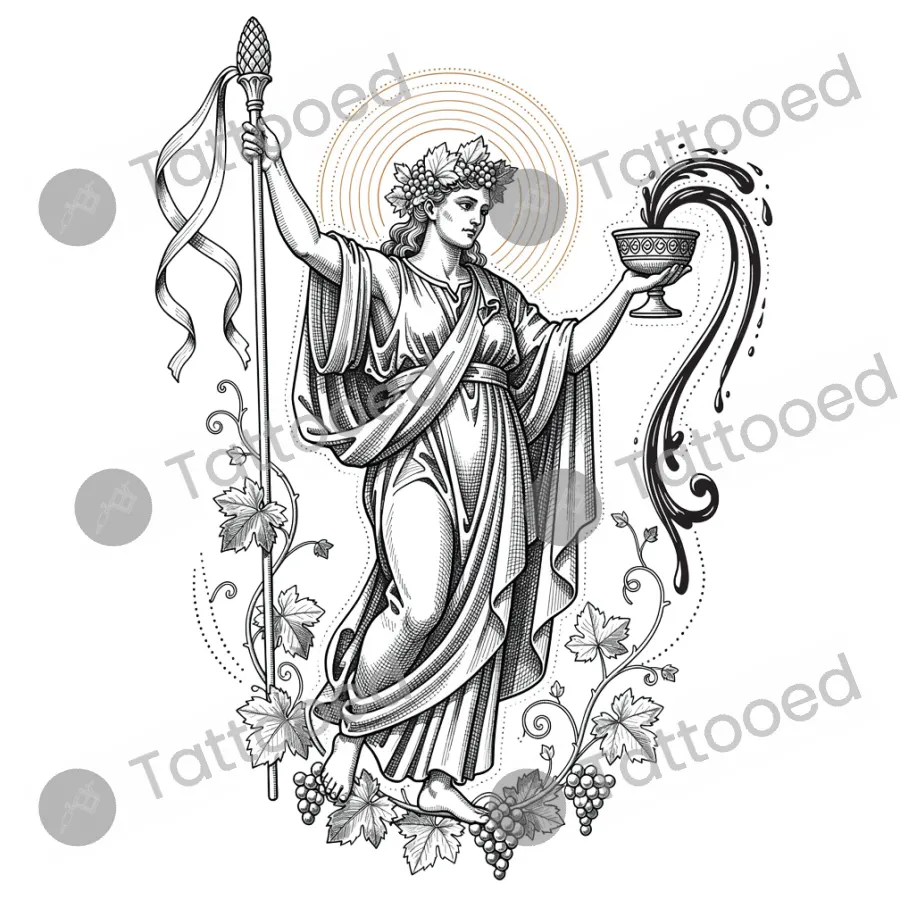
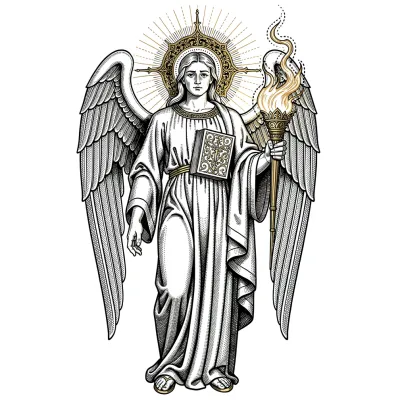 Archangel Uriel with Sacred Flame
This figure draws on the classical image of a robed deity crowned with leaves, holding a thyrsus staff and a libation bowl, motifs tied to Greco-Roman depictions of wine, revelry and ritual offering. People choose it to represent hedonism, creative freedom or a connection to classical mythology and art history. Some read it as a celebration of pleasure and abundance, others focus more on the artistic, statue-like aesthetic than any specific religious meaning.
Where it sits
This is a tall, vertical composition with the staff and flowing robes stretching top to bottom, so it suits the forearm, shin, spine or side ribs where that length can be used. The spread of grape vines and drapery at the base needs width too, making the upper arm or thigh good options where both height and girth are available. Shrinking it much below forearm size will blur the linework in the face, crown and bowl details.
Making it yours
Ask an artist for any of these.