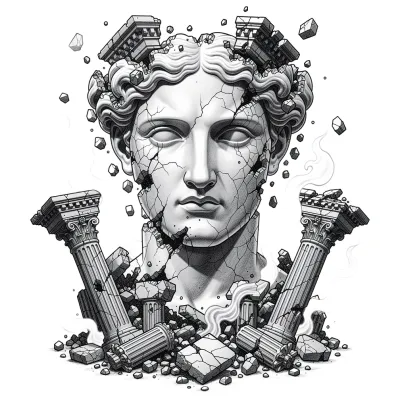
 Deconstructed marble face
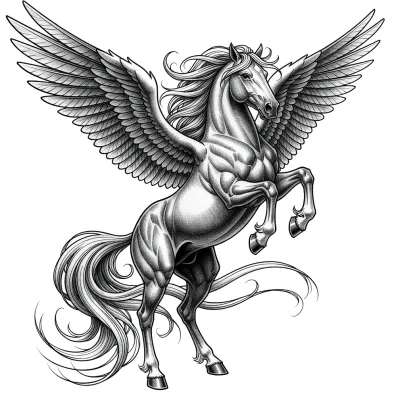 Pegasus
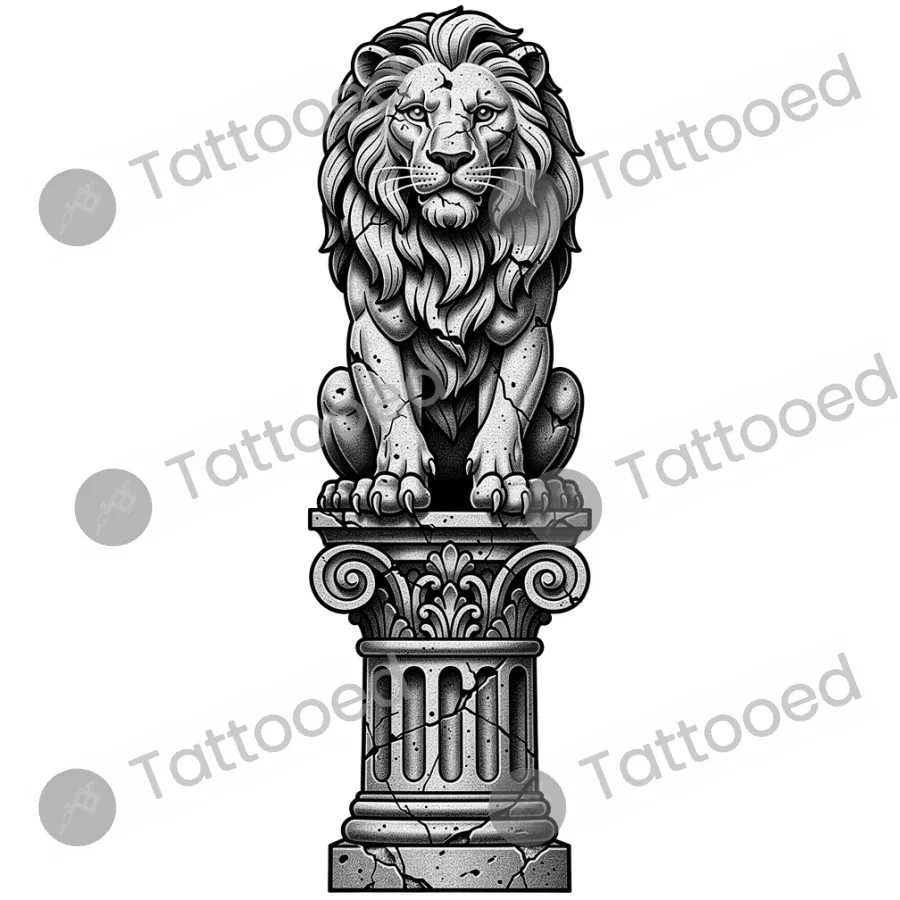
A lion carved in stone atop a classical column reads as a guardian figure, drawing on the long tradition of lion statues flanking gates, libraries and grand estates. It carries associations of nobility, protection and permanence rather than raw predatory power, since the stone-and-cracks treatment emphasises endurance over ferocity. Some wear it purely for the aesthetic of statuary and texture, with less interest in the guardian symbolism.
Where it sits
This is a tall, narrow composition, so it suits the forearm, calf or spine where the vertical column and seated lion can run in a single unbroken line. It would also work well on the outer thigh or upper arm if wrapped slightly to follow the limb's curve. Shrinking it down costs the pediment scrollwork and the fine mane striations first, so it needs decent length to stay legible.
Making it yours
Ask an artist for any of these.