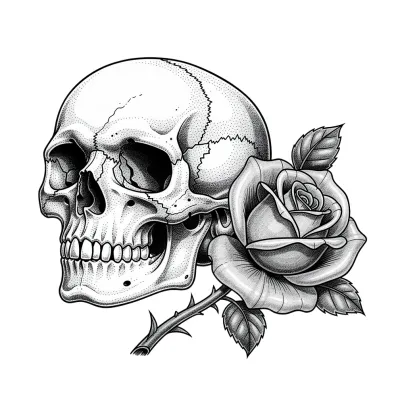
 Realistic skull and rose
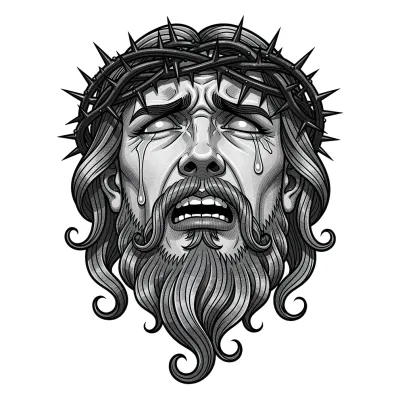 Christ portrait
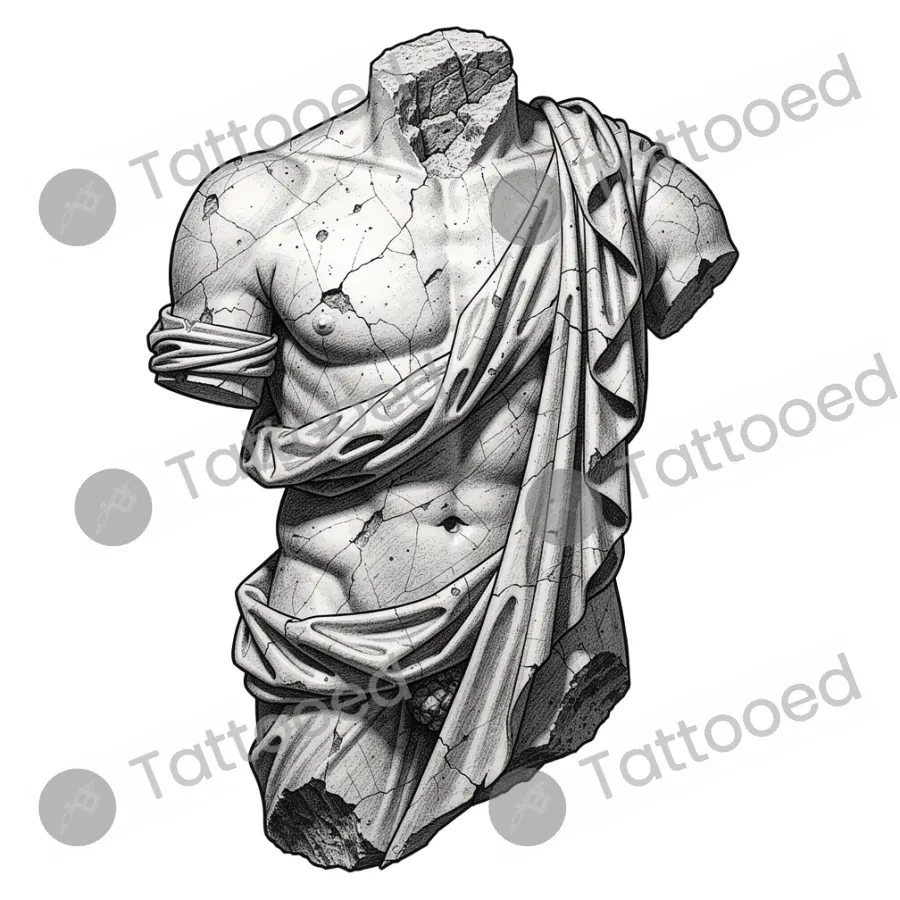
A broken classical torso draws on the fragmented statuary of Greco-Roman antiquity, symbolizing the passage of time, lost history, and the idea that beauty and strength persist even in ruin. It is often chosen to represent resilience, imperfection, or the stripping away of identity down to something essential. Some read it as a comment on masculinity and the body as an unfinished or eroded ideal rather than a fixed one.
Where it sits
The tall vertical torso shape follows the line of the body closely, making it suited to the ribs, side of the thigh, or full back where the elongated form has room to breathe. The draped fabric and cracked textures need width as well as height, so upper arm or forearm placement would crush the folds and stone detailing. Kept small, the broken neck and cracked surface pattern lose their contrast against the smooth marble skin.
Making it yours
Ask an artist for any of these.