Becoming a tattoo artist is one of the most rewarding creative careers there is — and one of the most misunderstood. It is not a job you apply for with a résumé, and it is not something you can fully teach yourself from videos. The path runs through an apprenticeship, demands years of unpaid work before you ever touch skin, and rewards persistence far more than raw talent. Here is exactly how the path works, what it takes, and how to give yourself the best chance of getting started.
Understand What the Job Actually Is
Before committing years to this path, it helps to be honest about what tattooing is day to day. It is part fine art, part customer service, part small business, and part medical hygiene. You will spend as much time consulting with nervous clients, drawing on a deadline, and sterilizing equipment as you will tattooing. The artists who last are the ones who genuinely enjoy all of it — not just the tattooing itself.
It is also a career with no guaranteed paycheck, especially in the early years. Most tattoo artists are independent contractors who rent a booth and build their own client base. Income is inconsistent until you have an established following. If you need financial stability immediately, plan for that reality before you start.
Build Your Art Skills First
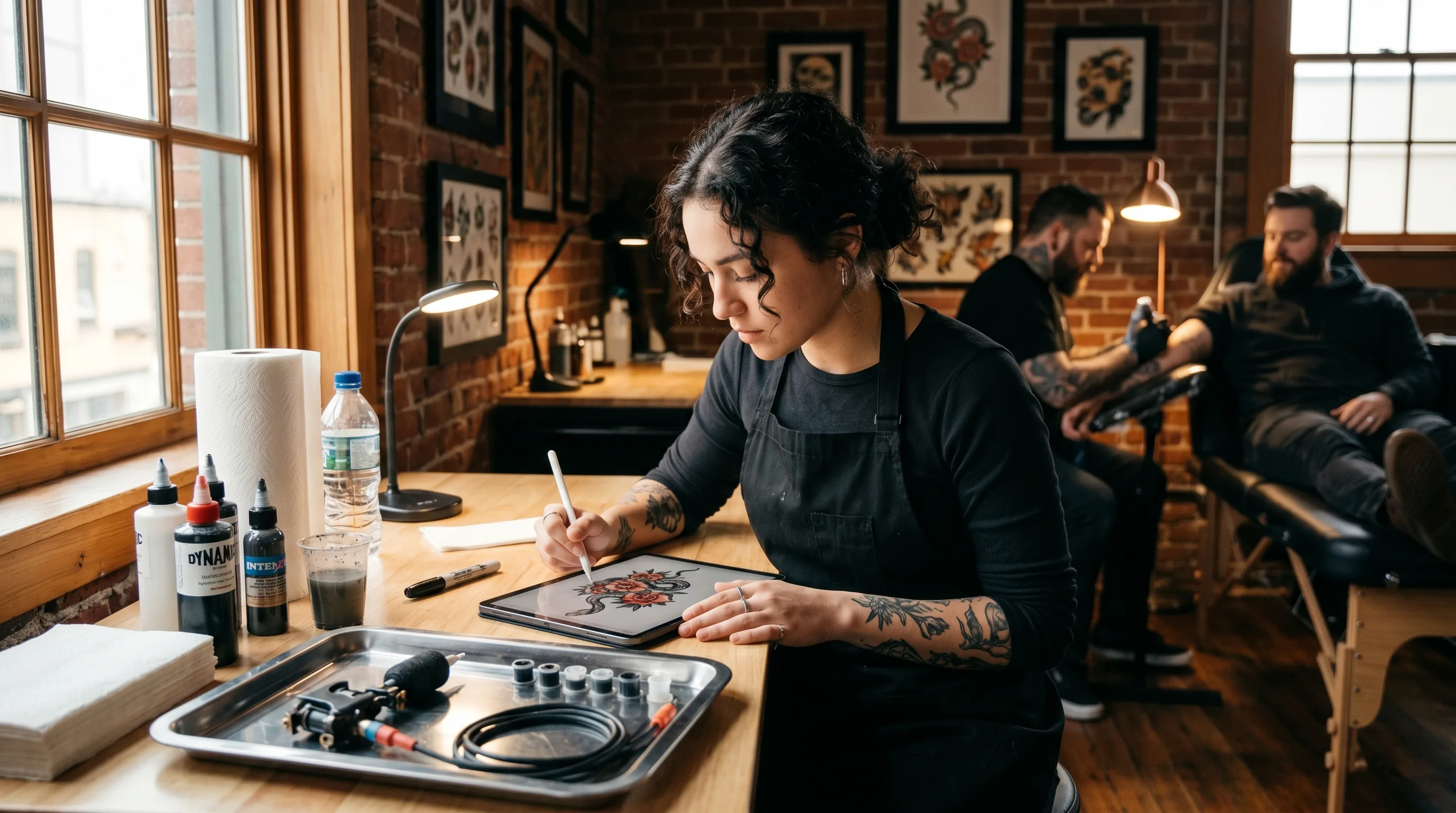
The single biggest mistake aspiring artists make is focusing on tattoo machines before they can draw. No reputable shop will take on an apprentice who cannot demonstrate strong fundamental art skills. The machine is just a tool — your value is in the drawing behind it.
Spend serious time developing the fundamentals that translate directly to tattooing:
- Line work — clean, confident, consistent lines are the foundation of nearly every tattoo style.
- Shading and value — understanding how to build smooth gradients and contrast is what makes black and grey work read well.
- Composition — how a design sits on and flows with the body, not just on flat paper.
- Drawing from reference — being able to take a client's idea and turn it into a clean, tattooable design.
Draw every day. Fill sketchbooks. The goal is not to become a gallery painter — it is to build the speed, consistency, and control that tattooing demands under pressure.
Put Together a Portfolio That Gets You an Apprenticeship
Your portfolio is your application. It is the only thing a shop owner has to judge whether you are worth investing years of mentorship into. A strong portfolio is the difference between getting an apprenticeship and getting turned away at the counter.
Build a portfolio of 20 to 40 of your best original pieces. Curate ruthlessly — a tight book of excellent work beats a thick book padded with mediocre drawings. Show range, but also show that you can produce clean, finished, tattoo-ready designs. Avoid filling it with copied tattoo flash from other artists; shop owners want to see your own ideas and your ability to execute them.
Many artists keep both a physical portfolio and an active social media presence. A well-maintained Instagram showing consistent drawing practice signals that you are serious, disciplined, and producing work regularly — all things a mentor wants to see.
The Apprenticeship: The Standard Path In
An apprenticeship is the traditional and still by far the most respected route into tattooing. You learn under an established artist in a working shop, absorbing not just technique but hygiene, professionalism, client handling, and the culture of the trade. There is no substitute for it.
What an Apprenticeship Actually Involves
For the first several months — sometimes longer — you will not tattoo at all. You will clean. You will set up and break down stations, sterilize equipment, sweep floors, run the front desk, and watch. This phase is partly about earning trust and partly about learning the non-glamorous foundations of running a safe, hygienic station. Treat it as the price of admission, not a hazing ritual to be resented.
As you prove yourself, your mentor will gradually introduce machine work — building needles, learning machine setup, drawing flash for the shop, and eventually tattooing on synthetic skin or fruit. Your first human tattoos are usually done on yourself, on willing friends, or sometimes on the mentor, under close supervision. Progress is earned step by step.
How Long It Takes
A traditional apprenticeship typically lasts one to three years. The timeline depends on your starting skill, how much time you commit, and your mentor's standards. There is no fixed graduation date — you are ready when your mentor believes you can work safely and professionally on your own, not when a calendar says so.
Apprenticeships Are Often Unpaid — and Sometimes Cost Money
This surprises many people: apprenticeships are usually unpaid, and some shops charge a fee for the training. You are receiving years of expert mentorship and access to a working shop, and that has value. Plan to support yourself with other income during this period. Be cautious of any arrangement that takes a large upfront fee without a clear structure, real mentorship, or a working shop behind it — that is a common scam targeting hopeful beginners.
How to Find and Land an Apprenticeship
Apprenticeships are rarely advertised. They are earned through relationships, persistence, and showing up. Here is how serious candidates approach it:
- Research shops whose work you admire. Apprentice under someone whose style and reputation you respect — you will absorb their approach.
- Become a client first. Getting tattooed at a shop builds a genuine relationship and lets you observe how they work.
- Visit in person with your portfolio. Be respectful of their time, ask when they are not slammed with clients, and be ready for honest, sometimes blunt feedback.
- Expect rejection. Most artists are turned down repeatedly before someone says yes. Use the feedback, improve your book, and come back stronger.
- Be genuinely useful and humble. Mentors choose apprentices they want to spend years around. Attitude often matters as much as raw skill.
Licensing, Certification, and Legal Requirements
Tattooing is regulated, and the requirements vary significantly by state, country, and even county. Before you can legally tattoo the public, most jurisdictions require some combination of the following:
- Bloodborne Pathogens (BBP) certification — training on preventing the spread of infections like hepatitis and HIV. This is almost universally required and is often available online or through the Red Cross.
- A tattoo artist license or permit — issued by your local or state health department, sometimes requiring a minimum number of documented apprenticeship hours.
- First aid / CPR certification — required in some areas.
- A licensed establishment — you can generally only work in a shop that holds a valid health department permit.
Check the exact requirements with your local health department early. Some areas require apprenticeship hours to be logged and verified, which affects how you document your training from day one.
Equipment and Startup Costs
Your mentor will guide what to buy and when — do not rush to fill a kit before you are ready to use it. Over the course of an apprenticeship and into your first working months, expect to invest in:
- A quality tattoo machine or two (coil or rotary), or a pen-style machine
- A reliable power supply, foot pedal, and clip cords
- Needles, cartridges, tubes, and grips
- Professional-grade ink
- Gloves, barrier film, and a full hygiene and sterilization setup
- Practice skins, transfer paper, and stencil supplies
Beginner setups can start in the low hundreds of dollars, but professional, reliable equipment adds up quickly. Resist the temptation to buy a cheap all-in-one kit off the internet before an apprenticeship — low-quality gear and unsafe practices are exactly what a mentorship exists to steer you away from.
A Word on Teaching Yourself
The internet is full of tutorials, and cheap kits are a click away. It is tempting to skip the apprenticeship and learn alone. Don't. Self-taught "scratchers" who tattoo without proper hygiene training are a genuine danger — to their clients and to themselves. They risk spreading serious infections, they produce work that often needs covering or removing later, and they damage their reputation in an industry that runs heavily on respect and word of mouth.
Reputable shops will not hire someone with a history of scratching, and clients increasingly know to avoid it. The apprenticeship exists for good reasons: it protects the public and it produces artists who can actually sustain a career. There is no real shortcut.
Building Your Career After the Apprenticeship
Finishing your apprenticeship is the beginning, not the destination. Most new artists start by renting a booth in an established shop, building a client base from walk-ins and early bookings while continuing to develop their style. Your early years are about reps, consistency, and reputation.
From there, the artists who thrive treat it like the business it is: they build a strong portfolio, maintain an active social media presence, develop a recognizable style, and deliver a professional client experience that earns repeat business and referrals. Some eventually pursue guest spots at other shops to broaden their audience, and a few go on to open their own studios. The foundation for all of it is laid in those first years of disciplined, humble work.
How to Become a Tattoo Artist FAQ
How long does it take to become a tattoo artist?
Most tattoo artists complete an apprenticeship lasting one to three years before working independently. The exact timeline depends on your starting art skills, how much time you commit, and your mentor's standards. There is no fixed graduation date — you are considered ready when your mentor judges that you can tattoo safely and professionally on your own.
Do you need a license to be a tattoo artist?
Yes, in most places. Requirements vary by state, country, and county, but they commonly include Bloodborne Pathogens certification, a tattoo artist license or permit from the local health department, and sometimes first aid or CPR certification. You also generally must work in a shop that holds a valid health department establishment permit. Always check the specific rules with your local health authority.
Can you become a tattoo artist without an apprenticeship?
It is technically possible in some areas, but strongly discouraged. The apprenticeship teaches hygiene, safety, technique, and professionalism that cannot be reliably self-taught. Self-taught "scratchers" risk spreading serious infections and producing poor work, and reputable shops will not hire someone with a history of tattooing without proper training. The apprenticeship is the standard, respected path for good reason.
How much does a tattoo apprenticeship cost?
Apprenticeships are usually unpaid, and some shops charge a fee for the training — ranging from a few thousand dollars to significantly more — in exchange for years of mentorship and access to a working shop. You should also plan to support yourself with other income during this period. Be cautious of arrangements that demand a large upfront fee without a structured program, genuine mentorship, or a legitimate working shop behind them.
What skills do you need to become a tattoo artist?
Strong drawing fundamentals come first: clean line work, shading and value control, composition, and the ability to turn a client's idea into a tattoo-ready design. Beyond art, you need patience, discipline, strict attention to hygiene, good communication and customer-service skills, and the business sense to build and manage your own client base. Tattooing rewards persistence and professionalism as much as raw artistic talent.