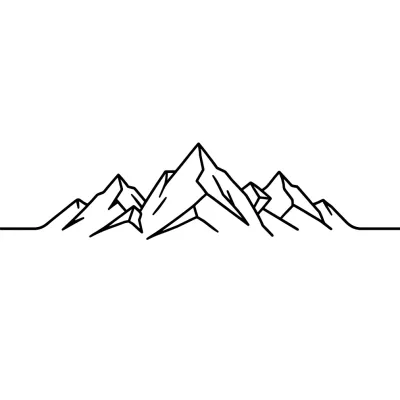
 Minimalist Mountain Range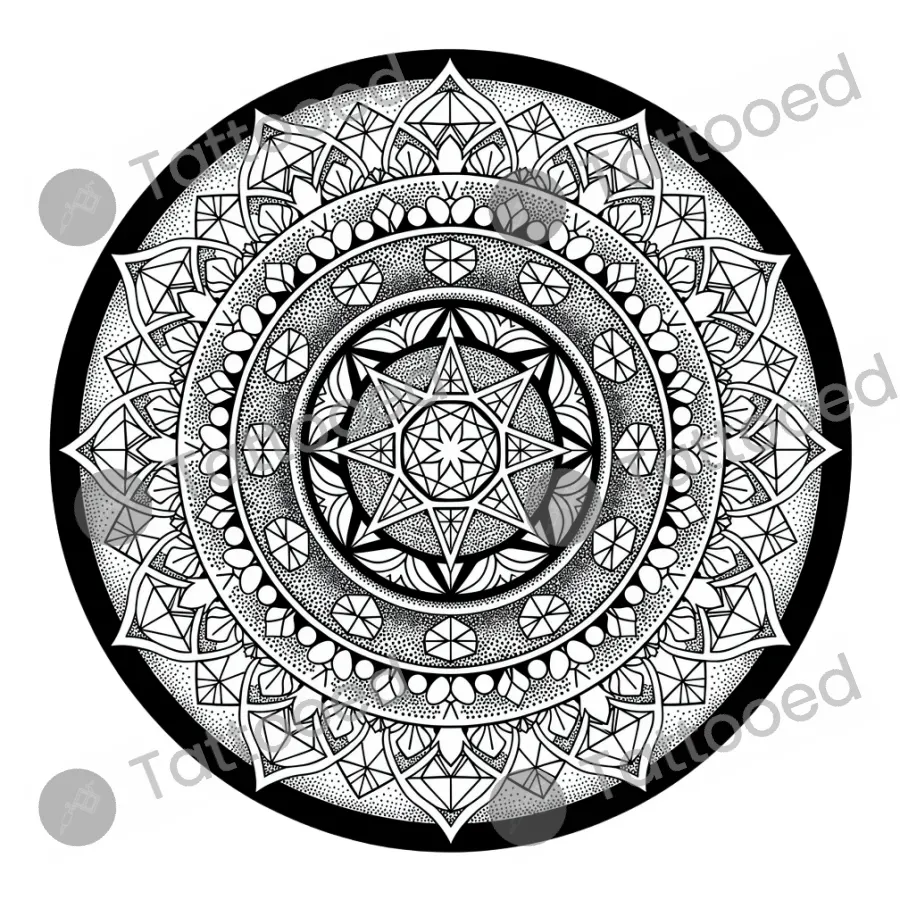
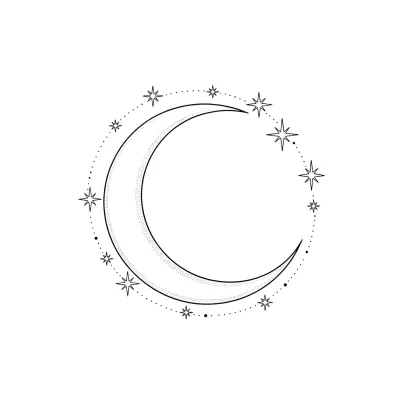 Crescent Moon & Stars
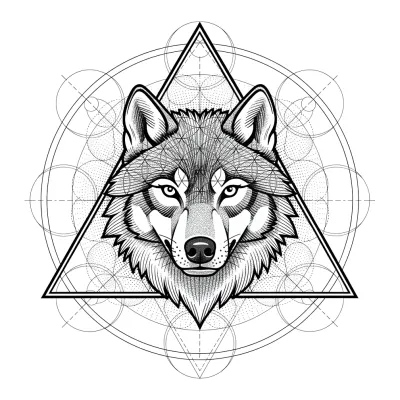
Mandala designs derive from Hindu and Buddhist traditions where the circular form represents wholeness, the universe, and a focal point for meditation. The layered symmetry with nested stars and lotus petals is often chosen for its associations with balance, order, and spiritual focus, though for many wearers it functions simply as decorative geometric art rather than a religious statement. Because the symbol has been widely adopted outside its original context, readings vary between devotional meaning and pure aesthetic appeal.
Where it sits
This is a true circular composition with radial symmetry, so it suits flat, round areas like the upper back, chest, shoulder cap, or the front of a thigh where the full ring can lie undistorted. It also works well on the forearm or calf if wrapped carefully, but the outer lotus petal points need enough flat space to avoid warping. Shrunk below palm size, the innermost star and the dotted shading bands will lose definition and start to look like a smudge.
Making it yours
Ask an artist for any of these.