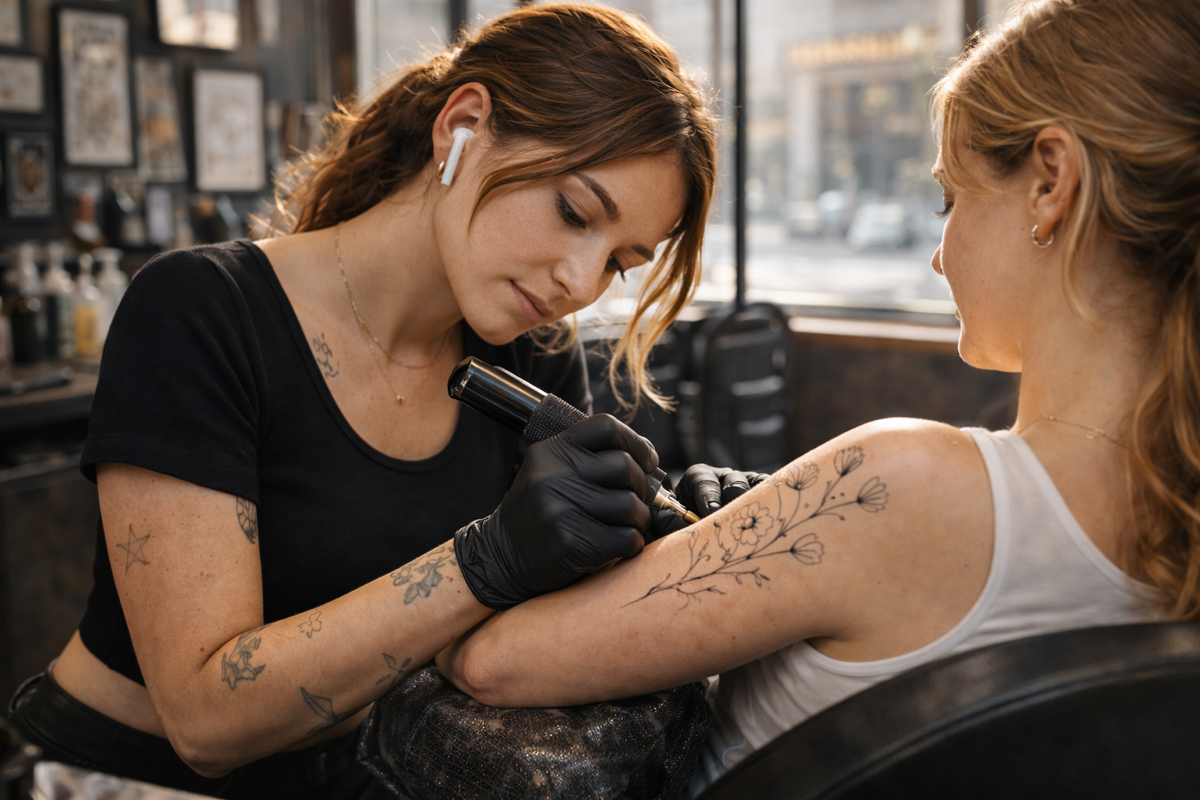
Tattoo pricing can feel confusing, especially for first-timers. One shop quotes an hourly rate, another gives a flat price, and prices can vary wildly between artists—even for similar designs. Understanding how tattoo pricing works helps set realistic expectations and makes it easier to recognize the difference between fair pricing and red flags.
At its core, tattoo pricing reflects a combination of time, expertise, preparation, and risk. Unlike mass-produced products, tattoos are custom services performed on living skin, where mistakes are permanent. That reality fundamentally changes how pricing works compared to other creative industries.
Hourly Rates vs Flat Pricing
Most professional tattoo artists price their work using either an hourly rate or a flat fee, depending on the nature of the tattoo. Hourly rates are common for large-scale, highly detailed, or fully custom pieces where the total time is difficult to predict. Flat pricing is more common for flash tattoos, small designs, or clearly defined projects with predictable time requirements.
Hourly pricing is best understood as paying for active tattooing time plus the artist’s real-time decision-making. Each hour includes not just needle-to-skin work, but constant adjustments for skin response, saturation, and detail execution. Flat pricing, by contrast, bundles time, preparation, and execution into a single agreed amount.
Neither pricing model is inherently better or more expensive. Hourly pricing reflects the actual time spent tattooing and allows flexibility for complex designs, while flat pricing provides clarity upfront for simpler tattoos. A reputable artist will choose the pricing structure that best fits the tattoo—not the one that benefits them at your expense.
It’s also worth noting that a higher hourly rate does not always mean a higher final cost. Skilled artists often work more efficiently, producing cleaner, more consistent results in less time than a cheaper, less experienced artist.
Experience and Skill Level
An artist’s experience level plays a major role in pricing. Artists with years—or decades—of professional experience charge more because they’ve invested countless hours refining their technique, understanding skin behavior, and mastering consistency. This experience directly impacts the quality, longevity, and safety of your tattoo.
From an outcomes perspective, experience reduces risk. Experienced artists are less likely to cause blowouts, uneven line weight, scarring, or premature fading. They also know how different skin types, placements, and healing patterns affect the final result.
Beyond technical skill, experienced artists bring artistic judgment to the table. They know when to simplify a design, increase size for longevity, or adjust placement to avoid distortion. That judgment is difficult to quantify—but it is one of the most valuable components of tattoo pricing.
Demand also affects pricing. Artists with strong portfolios, healed work examples, and recognizable styles often have waitlists. Limited availability combined with consistent demand naturally increases rates—not as a markup, but as a reflection of sustained quality.
Shop Overhead and Hygiene
Professional tattoo shops operate under strict health and safety standards, and maintaining those standards is expensive. Single-use needles, disposable tubes, gloves, barrier film, high-quality inks, and hospital-grade disinfectants are non-negotiable costs for reputable studios.
These hygiene practices are not optional extras—they are baseline requirements for safe tattooing. Pricing that fails to account for proper sterilization and infection control often signals risk rather than value.
In addition to supplies, shops must cover rent, utilities, insurance, licensing fees, continuing education, and regular inspections. These overhead costs are built into tattoo pricing to ensure a clean, compliant environment for every client.
When a tattoo price seems suspiciously low, it often means corners are being cut—whether in hygiene, materials, training, or insurance coverage. Safe tattooing isn’t cheap, and cheap tattooing often isn’t safe.
Custom Design Work
A significant portion of tattoo pricing happens before the appointment even begins. Custom tattoos require consultations, concept development, sketching, digital rendering, stencil creation, and placement planning. This design work can take hours or days, even if the tattoo itself is completed in one session.
From a creative standpoint, custom tattoo design involves translating abstract ideas into forms that will age well on skin. Artists must account for line weight, spacing, body movement, and long-term ink behavior—constraints that do not exist in traditional illustration.
Revisions and collaboration are also part of the process. Artists invest creative energy into refining designs so they fit both the client’s vision and the realities of tattooing. That creative labor is part of what you’re paying for, even if it happens outside the appointment window.
Commissioning a custom tattoo is closer to commissioning a piece of permanent body art than purchasing a service. You’re paying for originality, creative problem-solving, and artistic accountability—not just ink.
Why Cheap Tattoos Cost More Long-Term
Cheap tattoos often come with hidden costs that appear later. Poor line work, uneven shading, blowouts, fading, or improper healing can turn a low upfront price into a long-term issue requiring correction.
Cover-ups typically require larger designs, darker saturation, or multiple sessions—each adding to the total cost. In many cases, clients end up paying significantly more to fix a tattoo than they would have spent on quality work initially.
Laser tattoo removal is another common consequence of poor-quality tattoos. Removal requires multiple sessions over months or years, can be painful, and may still leave scarring or residual ink.
Investing in quality upfront usually results in better healing, longer-lasting ink, and greater satisfaction. A well-executed tattoo minimizes the likelihood of touch-ups, cover-ups, or removal later on.
Tattoo pricing reflects far more than time and ink. It represents experience, artistic skill, preparation, hygiene standards, and long-term reliability. When viewed through that lens, professional tattoo pricing becomes easier to understand—and justify.
Choosing an artist based on quality rather than price leads to better outcomes, fewer complications, and tattoos that age with integrity. In tattooing, long-term value almost always outweighs short-term savings.