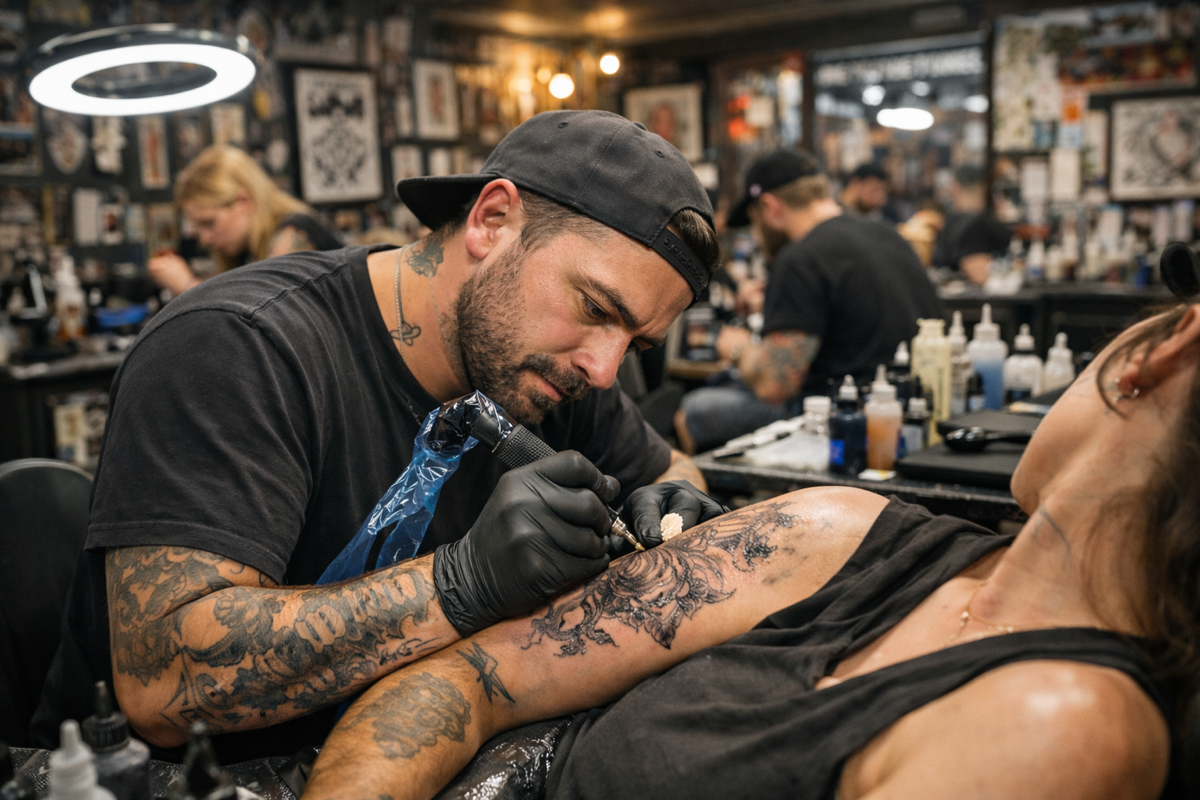
Tattoo placement is just as important as the design itself, yet it’s often treated as an afterthought. Where you place your tattoo affects how much pain you experience, how the ink settles and ages, how often the tattoo is visible, and how well it fits into your lifestyle years down the road. A thoughtfully chosen placement can elevate a great design—while a rushed decision can lead to discomfort, faster fading, or long-term regret.
Pain Levels by Body Area
Pain is one of the first things people consider when choosing tattoo placement, and for good reason. While pain tolerance varies from person to person, certain areas of the body are consistently more or less painful due to differences in nerve density, bone proximity, and skin thickness. Areas with more muscle and fat—such as the outer upper arm, shoulder, thigh, calf, or buttocks—tend to absorb the sensation better and are often recommended for first-time tattoos.
In contrast, areas like the ribs, spine, collarbone, sternum, ankles, hands, feet, and knees are known for being significantly more intense. These locations have thinner skin, less padding, and are closer to bone and nerve endings, which can amplify discomfort—especially during long sessions. While pain shouldn’t be the sole deciding factor, understanding how placement affects the experience helps you prepare mentally and physically.
How Placement Affects Aging and Fading
Tattoo aging is heavily influenced by placement. Areas that receive frequent sun exposure—such as forearms, hands, neck, and feet—tend to fade faster over time due to UV damage breaking down ink particles beneath the skin. Similarly, areas exposed to constant friction from clothing, movement, or daily activities can experience faster ink degradation.
Placements like the upper arm, back, chest, and outer thigh generally age more gracefully because they’re protected from excessive sun and friction. Tattoos in these areas often retain sharper lines and richer color for longer periods, making them ideal for detailed designs or tattoos you want to look good decades later—not just in the first few years.
High-Maintenance vs Low-Maintenance Placements
Some tattoo placements are considered high-maintenance, meaning they are more likely to fade, blur, or require touch-ups over time. Hands, fingers, feet, and areas with thin or highly mobile skin often experience ink fallout during healing and increased wear over the years. Many artists will clearly explain that these areas may never look as crisp or long-lasting as tattoos placed elsewhere.
Low-maintenance placements—such as the shoulder, upper arm, back, or thigh—tend to heal more predictably and require fewer touch-ups. These areas offer more stable skin, allowing ink to settle evenly and maintain its integrity with minimal long-term upkeep.
Visibility and Lifestyle Considerations
Tattoo visibility plays a major role in placement decisions, especially when factoring in work environments, family expectations, and personal comfort. Highly visible tattoos can feel empowering and expressive, but they may not be practical for every career path or social situation. Even in more accepting industries, visibility can still influence how and when you feel comfortable showing your tattoo.
If flexibility is important, placements that can be easily covered by everyday clothing—such as the upper arm, ribs, torso, or thigh—offer the best of both worlds. You maintain personal expression without sacrificing control over when your tattoo is visible.
Design and Placement Compatibility
Not every design works well in every location. Placement should enhance the design, not fight against it. Flowing designs like florals, vines, script, or organic shapes tend to work best along areas that follow the body’s natural lines, such as arms, legs, ribs, or spine. These placements allow the tattoo to move naturally with the body.
Symmetrical, geometric, or highly detailed designs often benefit from flatter surfaces like the chest, upper back, or outer thigh. These areas provide a stable canvas that preserves symmetry, readability, and balance—especially for designs meant to be visually striking.
Movement, Stretching, and Body Dynamics
Skin is not static—it stretches, bends, and shifts constantly. Areas with frequent movement, such as elbows, knees, wrists, stomach, and lower back, can distort tattoos over time. Fine line work and small details are especially vulnerable in high-motion zones, where lines may blur or lose definition faster.
Experienced artists account for body mechanics when recommending placement, considering how the tattoo will look both at rest and in motion. Trusting this guidance can significantly improve long-term results.
Future-Proofing Your Tattoo
Bodies change with age, weight fluctuations, muscle growth, and life events like pregnancy. While no placement is completely immune to change, some areas are far more stable than others. Tattoos placed on areas that experience frequent stretching or volume changes may shift, warp, or lose proportion over time.
If longevity and consistency matter to you, choosing a placement with relatively stable skin can help your tattoo maintain its original appearance for many years. Thinking long-term now can prevent disappointment later.
First Tattoo vs Experienced Collector
First-time tattoo clients often benefit from choosing placements that are lower in pain, lower in visibility, and easier to heal. These areas allow you to understand the tattooing process, aftercare, and healing cycle before committing to more challenging placements.
Experienced collectors often think more strategically, considering how new tattoos fit into existing work, future plans, or full-body compositions. Placement becomes less about comfort and more about flow, balance, and long-term cohesion.
Tattoo placement is a decision that deserves just as much thought as the design itself. Comfort, aging, visibility, movement, and lifestyle all play a role in how your tattoo looks and feels over time. Taking the time to choose the right placement leads to better healing, stronger longevity, and a tattoo that continues to feel intentional and meaningful for years to come.