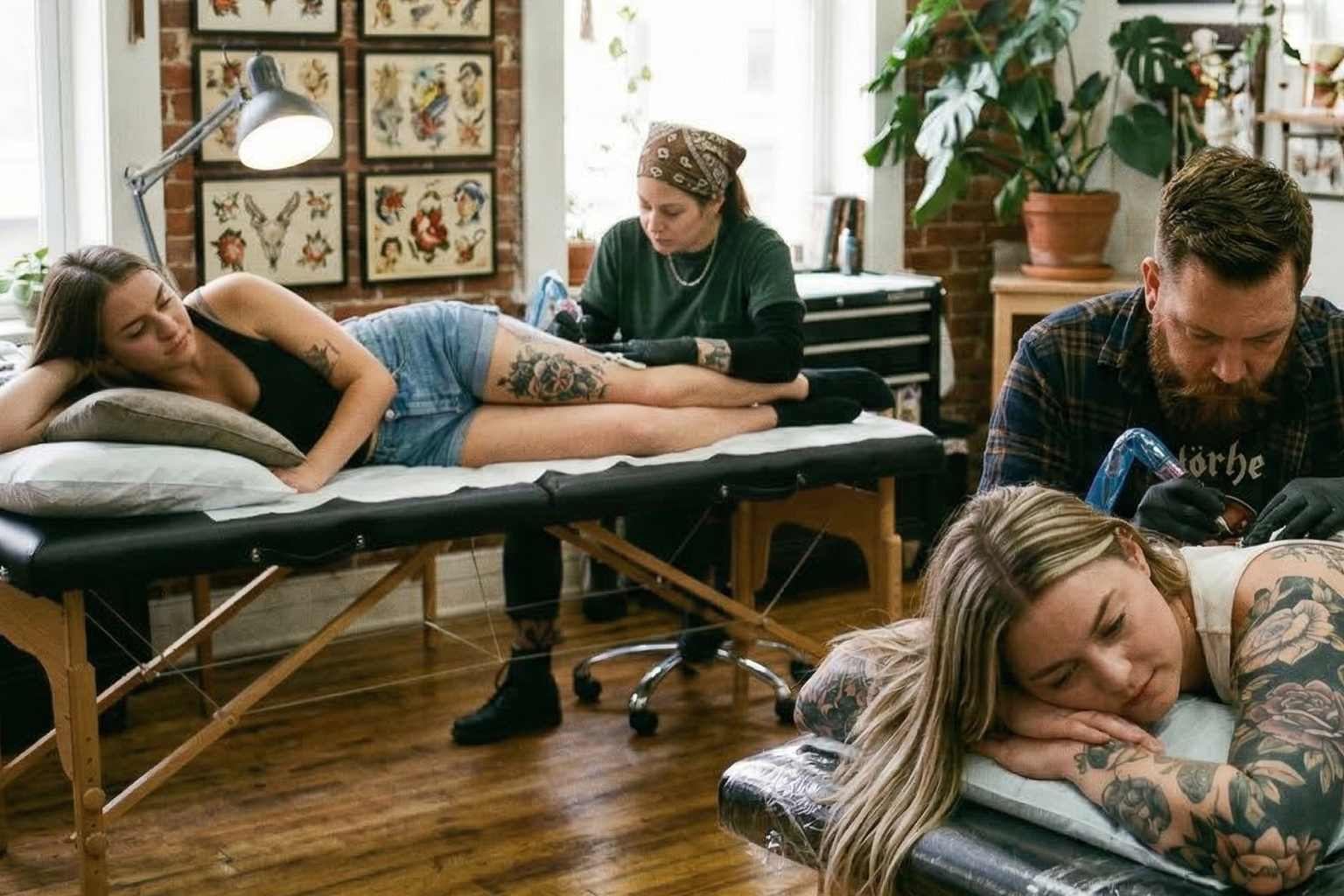
Whether it’s a poorly aged impulse decision, a falling out with an ex, or just a shift in your personal taste, almost everyone has a tattoo they wouldn't mind changing. The good news? You have options. Before you book an appointment to hide that old ink, you need to understand the mechanics of cover-ups, the rugged appeal of blast-overs, and the strict rules of tattoo color theory.
Cover-Up vs. Blast-Over: What’s the Difference?
While both techniques deal with old tattoos, they have completely different end goals and aesthetic styles.
- The Cover-Up: The goal is complete camouflage. A successful cover-up tricks the eye so perfectly that nobody can tell there was an older tattoo underneath. It requires strategic placement, dense shading, and specific color choices.
- The Blast-Over: The goal is creating layers. Instead of hiding the old piece, the artist tattoos a bold, heavy design (usually in solid blackwork) directly over the faded tattoo. The old tattoo acts as a chaotic, colorful background. It’s a punk-rock approach that embraces your tattoo history rather than erasing it.
The Golden Rules of Tattoo Cover-Ups
Covering a tattoo isn't as simple as painting a wall. Skin is a living, translucent canvas. When you tattoo over old ink, the new pigment mixes with the old pigment in the dermis. Here is what you need to know:
1. Size Matters (It Must Be Bigger)
You cannot cover a 2-inch black star with a 2-inch delicate flower. To properly hide an old design, a cover-up generally needs to be two to three times larger than the original tattoo. The extra space allows the artist to draw the eye away from the covered area using negative space and dynamic shapes.
2. Color Theory is Unforgiving
Tattoo ink is not opaque; it acts more like a watercolor filter. You cannot put light colors over dark colors.
- Black covers everything. It is the ultimate cover-up tool.
- Cool colors cover warm colors. Dark blues, deep purples, and dark greens work well to hide old faded reds or oranges.
- Light colors hide nothing. Yellow, pale pink, white, and light blue will not cover black outlines. If you try, the old black lines will heal right through the new light color, making it look muddy.
3. Texture and Scarring
If your old tattoo is heavily scarred or raised, the texture will remain even after new ink is applied. A highly skilled artist will use the natural flow of the new design—like the texture of a dark rose petal or dragon scales—to disguise the raised skin.
Why Your Artist Might Recommend Laser Fading First
Sometimes, an artist will look at a dense, dark tattoo and say, "I can't cover this yet. You need a few sessions of laser removal."
This isn't because they lack skill; it’s because they want to give you a great tattoo. You don't need to laser the tattoo away completely. Usually, just 2 to 4 sessions are enough to break down the heavy black lines into a light grey. This opens up your options dramatically, allowing the artist to use a wider range of colors and a less dense design for the final piece.
The Best Tattoo Styles for Cover-Ups
Certain styles naturally lend themselves to hiding old ink, while others are physically impossible to use for cover-ups.
Styles That Work Great:
- Traditional & Neo-Traditional: Bold lines, heavy black shading, and dense color packing make these styles perfect for camouflage. Panthers, roses, and eagles are classic cover-up motifs for a reason.
- Japanese (Irezumi): The large scale, heavy black backgrounds (wind bars and finger waves), and dense subjects like koi fish or dragons are excellent for hiding extensive old work.
- Heavy Blackwork & Floral: Large, dark peonies or mandalas with deep black shading can easily swallow old, faded designs.
- Bio-Mechanical / Bio-Organic: The dense, chaotic textures and deep shadows of this style easily distract the eye from whatever is underneath.
Styles to Avoid (They Won’t Work):
- Fine Line / Single Needle: The delicate, airy nature of this style provides zero coverage.
- Watercolor: The lack of black outlines and reliance on soft, pale gradients cannot mask old, solid lines.
- Minimalism: You need density to hide ink; minimalism is the opposite of dense.
How to Find the Right Cover-Up Artist
Cover-ups require a completely different skill set than tattooing on blank skin. Not every great tattoo artist is a great cover-up artist.
- Check their portfolio specifically for cover-ups. Look for before-and-after photos.
- Look at healed results. A fresh cover-up might look solid, but as the new ink settles, the old tattoo can sometimes "ghost" through. A master cover-up artist knows how to prevent this.
- Be flexible. If you go to a cover-up specialist with a rigid, highly specific idea, you might be disappointed. Trust the artist to design something that works with the existing shapes and darkness on your skin.
Cover-Ups & Blast-Overs FAQ
Can any tattoo be covered up?
Most tattoos can be covered, but it depends on the darkness, size, and density of the original ink. Extremely dark, heavy, and raised tattoos may require a few sessions of laser tattoo removal to lighten them before a successful cover-up can be applied.
How much bigger does a cover-up tattoo need to be?
As a general rule, a cover-up tattoo usually needs to be at least two to three times larger than the original tattoo. This gives the artist enough room to use negative space, shading, and distraction to hide the old design.
What colors are best for a tattoo cover-up?
Black is the absolute best color for a cover-up because it absorbs all light and completely masks underlying pigment. Dark blues, deep purples, and dark greens are also effective. Light colors like yellow, pink, and white cannot cover dark ink.
What is the difference between a cover-up and a blast-over?
A cover-up aims to completely hide the old tattoo so it is no longer visible. A blast-over is a new, usually heavy black design tattooed directly over the old, faded tattoo, intentionally allowing the original ink to peek through as a colorful background.